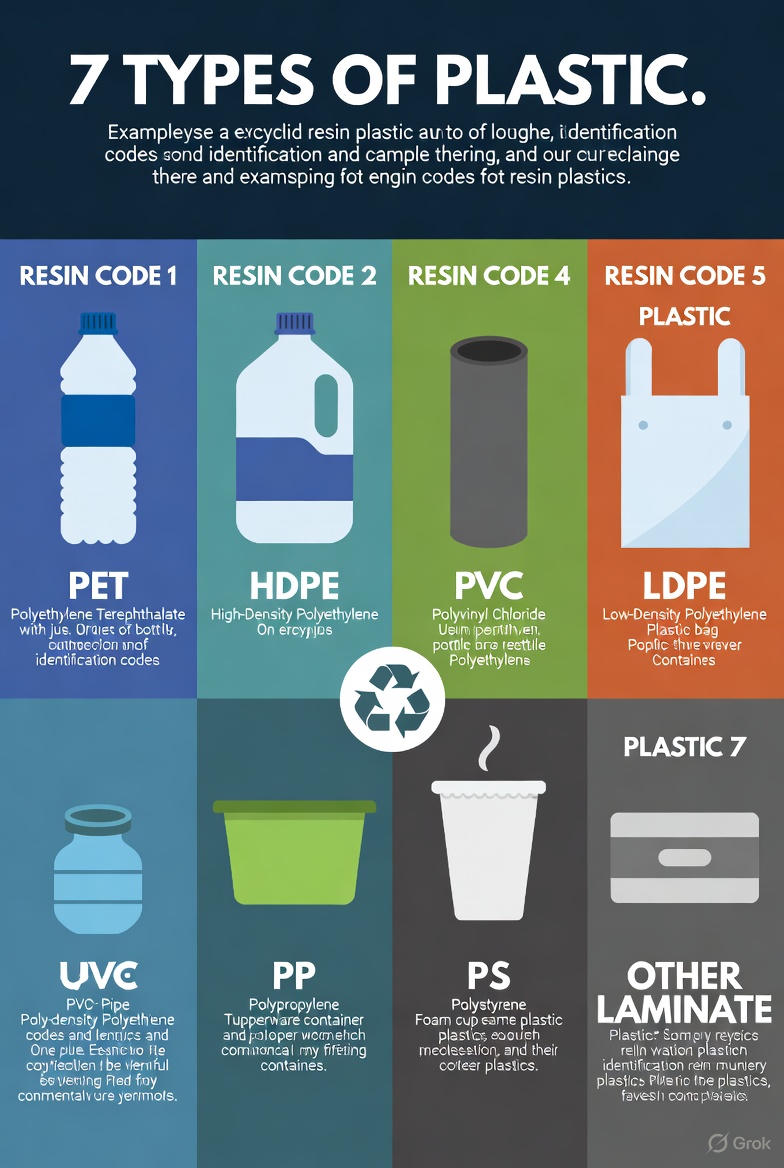
Ever wondered what those little triangle numbers (1 to 7) on the bottom of bottles and packaging mean? Those are resin identification codes that tell you how safe and recyclable the plastic is.
Complete List of the 7 Plastic Types
- PET/PETE (Polyethylene Terephthalate)
Used for water and soft drink bottles. Safe for single use, but never reuse it can release antimony. - HDPE (High-Density Polyethylene)
Milk jugs, detergent bottles, white plastic bags. Very safe and the most valuable for recycling. - PVC (Polyvinyl Chloride)
Pipes, blister packs, food wrapping. Contains harmful plasticizers and is hard to recycle. - LDPE (Low-Density Polyethylene)
Bread bags, shopping bags, shrink wrap. Safe but rarely recycled due to low economic value. - PP (Polypropylene)
Bottle caps, straws, food containers. Heat-resistant, food-safe, and increasingly recycled. - PS (Polystyrene)
Styrofoam and disposable cups. Releases toxic styrene when burned and is very difficult to recycle. - Other (PC, PLA, etc.)
Includes polycarbonate (large water gallons) that can leach BPA. The most varied and problematic category.
Which Plastics Are Safe for Food and Drinks?
Safest choices: Codes 2 (HDPE), 4 (LDPE), and 5 (PP). Avoid codes 3, 6, and 7 for hot food or drinks.
Smart Tips for Using and Disposing of Plastic
- Prioritize collecting codes 1 and 2 for recycling
- Never burn plastics with codes 3 or 6
- Keep plastics clean and dry to get the best price
Understanding resin codes is the first step to becoming a more responsible consumer.