Outer space, often simply called “space,” fascinates millions with its vast emptiness, stunning galaxies, and mysterious phenomena. But what exactly is outer space, and why is it considered a vacuum? In this in-depth guide, we’ll break down the science behind these questions, backed by explanations from NASA and astronomy experts. Whether you’re curious about the universe or researching for school, this article covers everything you need to know.
What Is Outer Space?
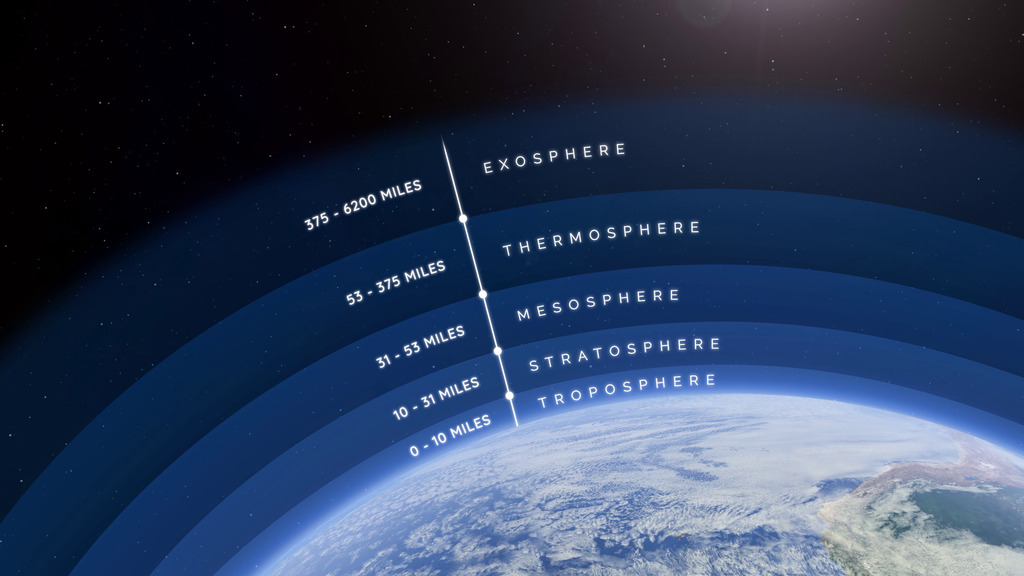
Outer space is the immense expanse beyond Earth’s atmosphere and between celestial bodies like stars, planets, and galaxies. According to Wikipedia and NASA definitions, it begins roughly at the Kármán line about 100 km (62 miles) above sea level where the atmosphere becomes too thin to support aeronautical flight.
Key characteristics:
- Vast and expansive: The observable universe spans about 93 billion light-years, mostly filled with this “empty” region.
- Not completely empty: It contains low-density particles, radiation, cosmic rays, magnetic fields, and dust.
- Harsh environment: Extreme temperatures, radiation, and near-zero pressure make it uninhabitable without protection.
Space transitions gradually from Earth’s dense atmosphere. The layers (troposphere, stratosphere, mesosphere, thermosphere, exosphere) thin out until they blend into the vacuum.
Why Is Outer Space Called a Vacuum?
A vacuum is a space devoid of matter, or more precisely, a region with extremely low pressure and particle density. Outer space is the closest natural approximation to a perfect vacuum, but it’s not absolutely empty.
Here’s why it’s called a vacuum:
- Extremely low density: In interstellar space (between stars), there’s typically about 1 atom per cubic centimeter. Intergalactic space can have as few as 1-100 particles per cubic meter. Compare this to Earth’s atmosphere: ~10^19 molecules per cubic centimeter at sea level!
- Gravity’s role: Over billions of years, gravity has pulled most matter into stars, planets, and galaxies. What’s left spreads out thinly across the vast universe.
- No “sucking” force: The vacuum isn’t actively pulling it’s just the absence of air pressure. On Earth, gravity holds our atmosphere; beyond that, particles are too sparse to create significant pressure.
Particle Density in Space: A Closer Look
- Interstellar medium: Mostly hydrogen and helium, with densities from 0.1 to 1,000 atoms/cm³ in denser clouds.
- Intergalactic space: Even emptier, often just a few hydrogen atoms per cubic meter.
- Not a perfect vacuum: Quantum effects create “virtual particles,” and sparse matter like cosmic dust and radiation fills the void.
Common Myths About the Vacuum of Space
- Myth: Space “sucks” things in: No it’s low pressure causing rapid expansion of gases (like in unprotected exposure).
- Myth: Absolutely nothing there: Space has radiation, dark matter, and occasional particles enough to pose risks to spacecraft over time.
- Myth: Cold emptiness: Space doesn’t conduct heat well; objects cool slowly via radiation.
Why Does This Matter?
Understanding space as a vacuum is crucial for space travel. Astronauts wear suits to maintain pressure, and spacecraft design accounts for the lack of air resistance. Missions like Voyager have crossed into interstellar space, confirming these ultra-low densities.
Outer space’s vacuum-like nature makes it one of the universe’s most extreme environments yet it’s key to cosmic evolution, allowing light to travel vast distances unimpeded.