Many wonder Is outer space truly dark? At first glance, yes the night sky appears mostly black, dotted with stars. But science reveals a more nuanced story. Space is dark to our eyes, yet filled with faint light we can’t see. This guide explains why space looks dark, the famous Olbers’ paradox, and what deep-space images reveal.
Why Does Space Appear Dark?
Human eyes detect only visible light, and stars are point sources separated by immense distances. Most light from distant objects is too faint or redshifted beyond visibility.
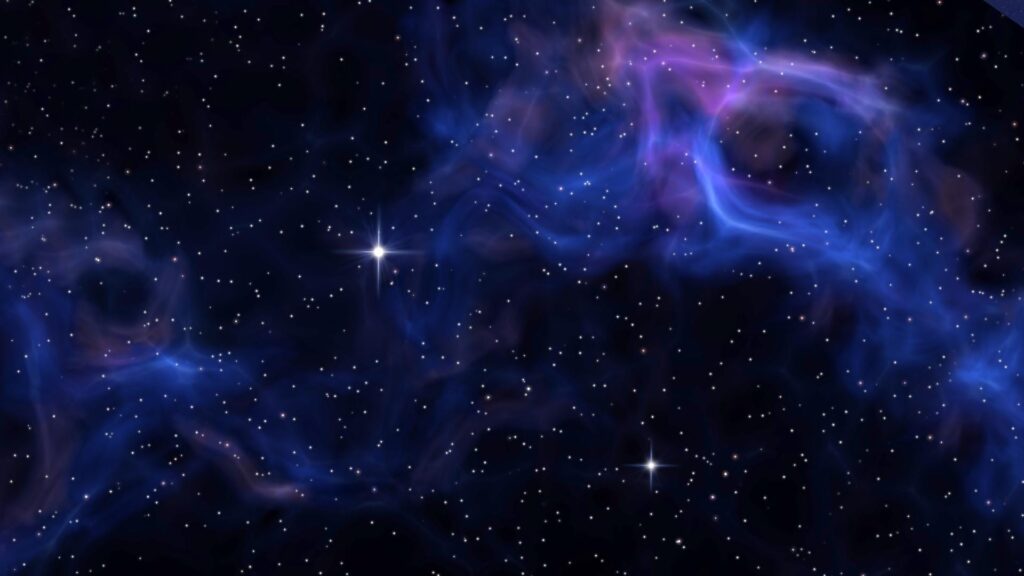
Away from city lights or Earth’s atmosphere, the night sky is darker but still not completely black. The Milky Way glows faintly, and billions of stars create a subtle backdrop.
Olbers’ Paradox: Why Isn’t the Sky Bright Everywhere?
In an infinite, eternal universe full of stars, every line of sight should end on a star making the sky as bright as the Sun’s surface, day and night. This 19th-century puzzle, called Olbers’ paradox, highlights the issue.
Solutions:
- The universe has a finite age (13.8 billion years) → light from farther stars hasn’t reached us yet.
- Cosmic expansion redshifts distant light → making it invisible or faint.
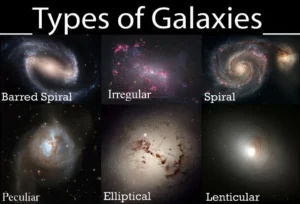
- Not infinitely many stars → they’re clustered in galaxies with vast empty spaces.
Hidden Light in Space
Space isn’t truly dark it’s bathed in radiation:
- Cosmic Microwave Background (CMB): Faint microwave glow from the Big Bang, equivalent to a dim 2.7 K blackbody radiation everywhere.
- Starlight and Galaxies: Integrated light from all stars and galaxies adds a subtle glow.
- Other Sources: Zodiacal light, cosmic rays, and infrared from dust.
Telescopes like Hubble and JWST capture this by long exposures, turning “black” voids into galaxy-filled vistas.
Is Space Completely Black?
No it’s mostly dark to human perception, but filled with light across the spectrum. In true interstellar voids, away from nearby stars, it would appear profoundly black, yet instruments reveal the universe’s hidden illumination.