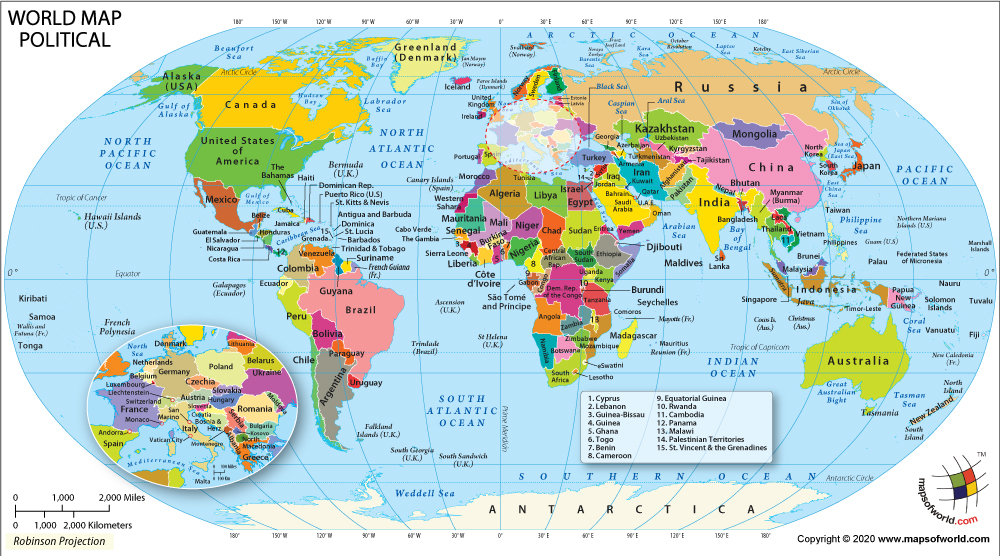
One of the most frequently asked geography questions is: How many countries are there in the world?
As of today, the officially recognized number of countries in the world is 195.
This number is widely accepted by international organizations, governments, and educational institutions.
The Official Breakdown of Countries in the World
The total of 195 countries consists of:
- 193 member states of the United Nations (UN)
- 2 non-member states with international recognition, namely:
- Vatican City (Holy See)
- Palestine
Total: 195 countries worldwide
Why Is the Number of Countries Sometimes Confusing?
The number of countries can be confusing because some regions claim independence but are not universally recognized as sovereign states.
Examples include:
- Taiwan
- Kosovo
- Western Sahara
- Northern Cyprus
These territories may function as independent countries in practice, but due to political and diplomatic disputes, they are not included in the official global count of 195 countries.
How Does the United Nations Define a Country?
To be recognized as a country by the United Nations, an entity generally must:
- Have a permanent population
- Control a defined territory
- Possess a functioning government
- Maintain the ability to engage in international relations
Only countries meeting these criteria and receiving broad international recognition become UN members.
Countries by Continent
Here is a general distribution of countries by continent:
- Africa: 54 countries
- Asia: 49 countries
- Europe: 44 countries
- North America: 23 countries
- South America: 12 countries
- Oceania: 14 countries