Afghanistan, often referred to as the “crossroads of Asia,” has a rich and tumultuous history spanning thousands of years. Located at the intersection of ancient trade routes like the Silk Road, this landlocked nation has been shaped by invasions, empires, and cultural exchanges. From ancient civilizations to modern conflicts, the history of Afghanistan reflects resilience amid constant change. This article explores key periods, events, and figures that define Afghanistan’s past and present.
Ancient and Classical Periods
Human settlement in Afghanistan dates back to the Paleolithic era, with evidence of early inhabitants around 50,000 years ago. The region’s strategic location made it a hub for major empires.
- Persian and Greek Influences: In the 6th century BCE, Afghanistan fell under the Achaemenid Empire of Cyrus the Great and Darius I. Later, Alexander the Great conquered the area in 330 BCE, founding cities and blending Greek and local cultures (Hellenistic period).
- Kushan and Buddhist Era: The Kushan Empire (1st–3rd century CE) promoted Buddhism, leading to iconic sites like the Buddhas of Bamiyan massive statues carved into cliffs, symbolizing Afghanistan’s historical religious diversity.
These ancient landmarks highlight Afghanistan’s role as a center for Zoroastrianism, Buddhism, and later Hinduism before the arrival of Islam.
Islamic Conquest and Medieval Empires
Islam arrived in the 7th–8th centuries through Arab conquests. Afghanistan became a key province in Islamic caliphates.
- Ghaznavid and Ghurid Dynasties: Mahmud of Ghazni (10th–11th century) expanded from Afghanistan into India.
- Mongol Invasion: Genghis Khan devastated the region in the 13th century, followed by Timur (Tamerlane) in the 14th century.
- Mughal and Safavid Influences: Parts of Afghanistan were contested between the Mughal Empire and Safavids.
Historical landmarks from this era, such as mosques and ancient sites, showcase Afghanistan’s enduring cultural heritage.
The Founding of Modern Afghanistan
The modern nation-state emerged in the 18th century:
- Durrani Empire (1747): Ahmad Shah Durrani united Pashtun tribes and established the empire, earning the title “Father of the Nation.” This marked the foundation of Afghanistan as a unified entity.
- Anglo-Afghan Wars (1839–1919): Three wars with Britain defined Afghanistan’s independence. The Third Anglo-Afghan War (1919) led to full sovereignty under King Amanullah Khan.
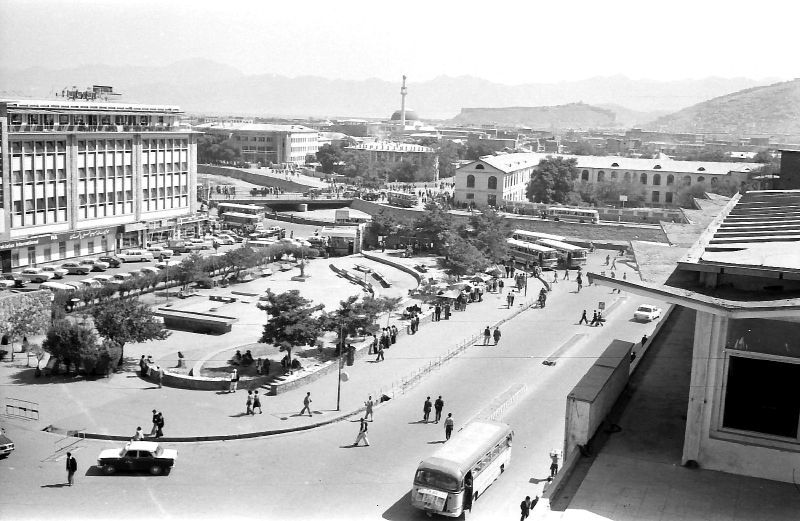
Views of historic Kabul illustrate the city’s evolution through these turbulent times.
20th Century: Monarchy, Reforms, and Instability
- Monarchy Era (1929–1973): King Zahir Shah ruled for 40 years, bringing relative stability and modernization.
- 1973 Coup and Republic: Mohammed Daoud Khan overthrew the monarchy, establishing a republic.
- 1978 Communist Revolution: The Saur Revolution brought a socialist government, sparking resistance.
Soviet Invasion and Civil War (1979–1992)
The Soviet Union invaded in 1979 to support the communist regime, leading to a decade-long war. Mujahideen fighters, backed by the U.S., Pakistan, and others, resisted fiercely. The Soviets withdrew in 1989, but civil war ensued among mujahideen factions.
Taliban Rule and U.S.-Led Intervention (1996–2021)
- Taliban Era (1996–2001): The Taliban seized power, imposing strict Islamic law and harboring al-Qaeda.
- Post-9/11 Invasion: Following the September 11 attacks, U.S.-led forces ousted the Taliban in 2001. A new democratic government was established under Hamid Karzai and later Ashraf Ghani.
- Insurgency and Withdrawal: The Taliban regrouped, leading to a prolonged conflict. NATO forces ended combat operations in 2014, with full U.S. withdrawal by 2021.
Recent History: Taliban Return (2021–Present)
In August 2021, as foreign troops withdrew, the Taliban rapidly recaptured Kabul, reestablishing the Islamic Emirate of Afghanistan. Under Supreme Leader Hibatullah Akhundzada, the regime has imposed strict policies, particularly restricting women’s rights to education and work. The country faces ongoing humanitarian challenges, economic crisis, and international isolation as of 2026.
The history of Afghanistan is a story of cultural richness intertwined with conflict. From ancient empires to contemporary struggles, it continues to captivate historians and global observers. Understanding Afghanistan’s past provides insight into its complex present and uncertain future.