Have you ever wondered why there is no sound in space? The famous tagline from the movie Alien “In space, no one can hear you scream” is actually rooted in real science. Outer space is completely silent because sound waves cannot travel through the vacuum of space. In this article, we’ll explore the scientific reasons behind this phenomenon, debunk common myths, and explain why explosions in sci-fi movies are dramatically exaggerated.
What Is Sound and How Does It Travel?
Sound is a type of mechanical wave that requires a medium to propagate. On Earth, when you speak or an object vibrates, it creates pressure waves by compressing and rarefying air molecules. These vibrations travel through the air (or water, solids, etc.) until they reach your ears, where they’re interpreted as sound.
The key point: sound needs particles to bump into each other. Without a medium like air, there are no molecules to carry the vibrations.
Why Space Is a Vacuum and Silent
Outer space is not completely empty, but it’s an near-perfect vacuum. The density of matter in interstellar space is incredibly low — often just a few atoms per cubic meter. There’s simply not enough material for sound waves to travel efficiently.
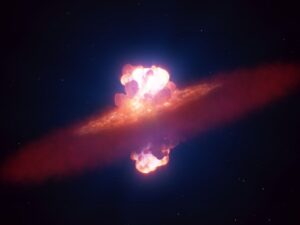
In contrast to Earth’s atmosphere, where air molecules are densely packed, the vast emptiness between stars and planets provides no medium for sound propagation. Even massive events like supernova explosions or asteroid collisions produce no audible “boom” in the vacuum the energy dissipates without creating pressure waves that we can hear.
This is why astronauts communicate via radio waves, which can travel through vacuum as electromagnetic radiation (just like light).
Common Myths: Explosions and “Sounds” in Space Movies
In films like Star Wars, space battles feature roaring engines and explosive sounds. In reality, these would be silent. The dramatic audio is added for entertainment without it, scenes would feel unnaturally quiet!
If two spaceships collided or exploded nearby, you might feel vibrations through your spacecraft’s hull (if it’s in contact), but no sound would travel through the vacuum to your ears.
Are There Any “Sounds” in Space?
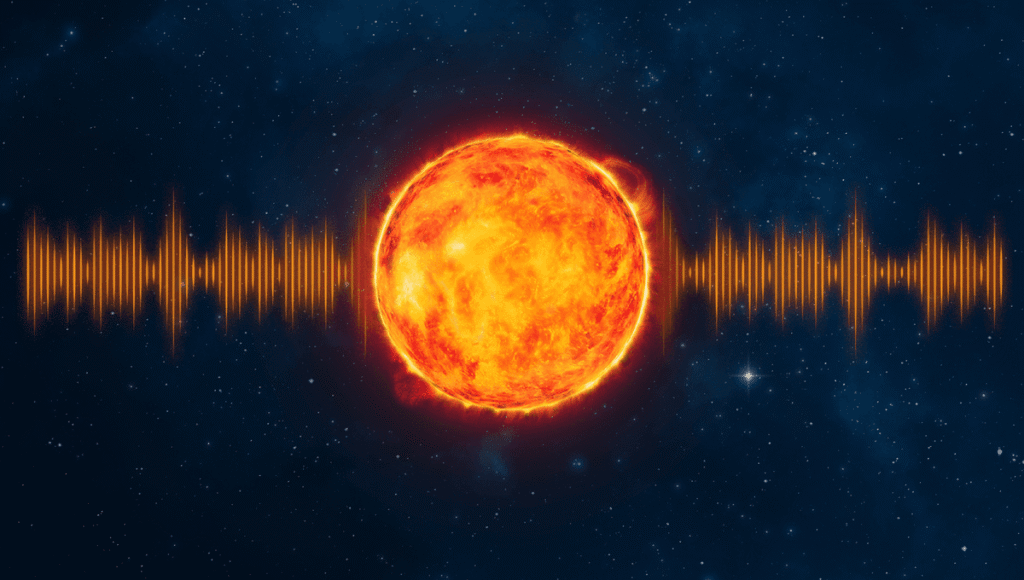
While conventional sound doesn’t exist in space, scientists have detected phenomena that can be converted into audio through a process called sonification. For example:
- Plasma waves from the Sun or black holes create electromagnetic vibrations.
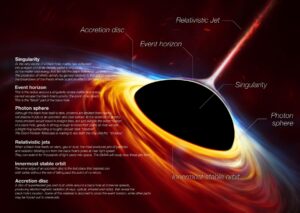
- NASA’s recordings of black holes (like in the Perseus cluster) are pressure waves in hot gas, translated into audible frequencies.
- Gravitational waves from merging black holes, detected by LIGO, produce “chirps” when converted to sound.
These aren’t true sounds traveling through space but data interpretations that help us “hear” cosmic events.
Conclusion: The True Silence of the Cosmos
The reason there is no sound in space boils down to physics: sound requires a medium, and space’s vacuum lacks one. This silence makes the universe both eerie and fascinating. Next time you watch a space movie, remember the real cosmos is far quieter and more mysterious.