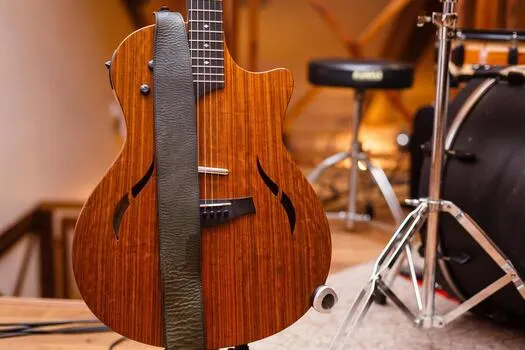
The guitar is one of the most recognizable and widely played musical instruments in the world. From classical concerts to rock stages and casual campfire sessions, the guitar has a timeless appeal. However, many people still ask an important question: who invented the guitar? The answer is not as simple as naming one person. The guitar evolved through centuries of cultural exchange, craftsmanship, and musical innovation.
Early String Instruments Before the Guitar
Long before the modern guitar existed, ancient civilizations were already experimenting with stringed instruments. Archaeological evidence shows that instruments resembling lutes existed in Mesopotamia and ancient Egypt more than 4,000 years ago. These early instruments had wooden bodies, strings made from animal gut, and were played by plucking or strumming.
In ancient Greece, instruments such as the kithara and lyre played a crucial role in music and education. Although they were not guitars, they introduced core concepts like fretted strings and resonating bodies.
The Moorish Influence in Europe
One of the most significant ancestors of the guitar was the oud, a short-necked lute brought to Europe by the Moors during their occupation of Spain in the 8th century. The oud had a rounded back and multiple strings, and it heavily influenced European instrument design.
At the same time, Europe developed its own version known as the lute. These instruments became extremely popular during the Middle Ages and Renaissance, especially among court musicians and composers.
The Birth of the Spanish Guitar
The direct ancestor of the modern guitar emerged in Spain during the 15th and 16th centuries. Early Spanish guitars typically had four courses of strings and a flat wooden soundboard. Over time, instrument makers experimented with string numbers, tuning systems, and body shapes.
By the 18th century, the guitar evolved into a six-string instrument, closely resembling what we know today. This version offered greater musical range and versatility, making it popular across social classes.
Antonio de Torres and the Modern Guitar
Although no single person invented the guitar, Antonio de Torres Jurado is widely considered the father of the modern classical guitar. In the mid-19th century, Torres redesigned the guitar’s structure by enlarging the body, improving internal bracing, and enhancing sound projection.
His innovations significantly improved tone, volume, and balance, setting the standard for modern guitar construction. Most classical and acoustic guitars today still follow Torres’ design principles.
The Rise of Electric Guitars
The 20th century introduced another major transformation: the electric guitar. Musicians and engineers sought ways to amplify sound for larger audiences. This led to the invention of magnetic pickups and solid-body designs.
Innovators like Les Paul and Leo Fender played key roles in popularizing electric guitars, which revolutionized jazz, blues, rock, and pop music.
The guitar was not invented by a single person but evolved through thousands of years of musical history. From ancient string instruments to Spanish craftsmanship and modern electric innovation, the guitar reflects human creativity across cultures and eras. Its rich history explains why the guitar remains one of the most beloved instruments worldwide.