A Sky Full of Light
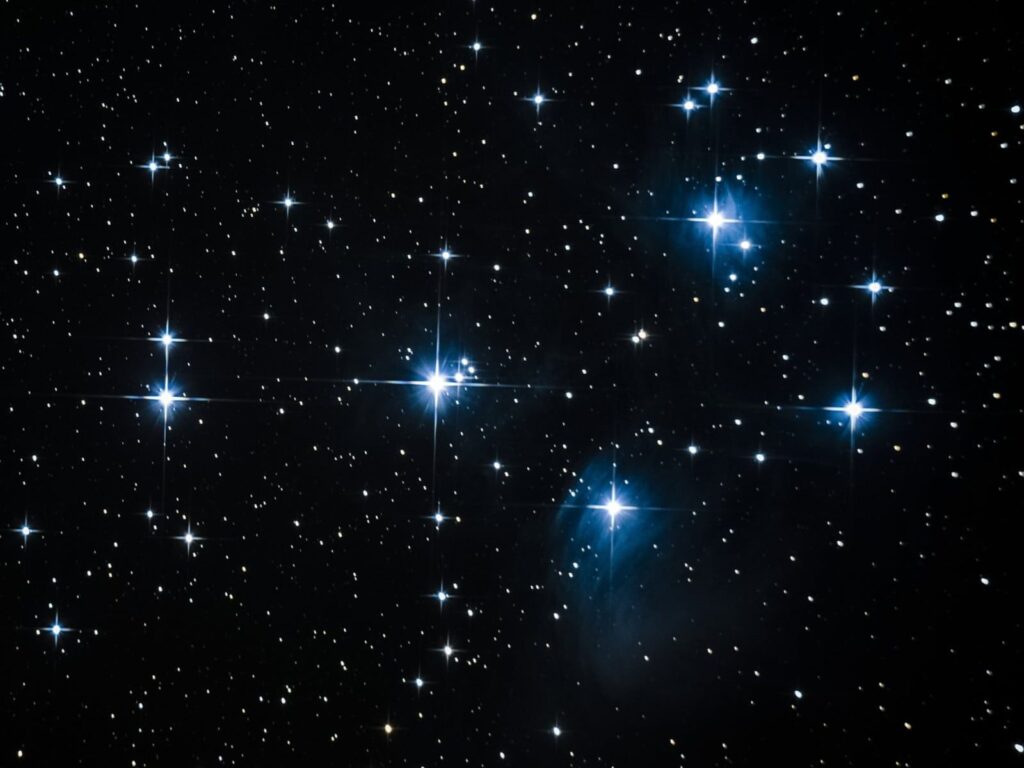
Every night, stars illuminate the sky with their steady glow. But have you ever wondered why stars shine? The answer lies deep within their cores, where extreme physics produces unimaginable energy.
The Power Source Inside a Star
Stars shine because of nuclear fusion, a process that converts matter into energy. Inside a star’s core, hydrogen atoms collide under intense pressure and temperature, fusing into helium.
This process releases energy in the form of light and heat, following Einstein’s famous equation E = mc², where mass is converted into energy.
Nuclear Fusion Explained Simply
In simple terms, fusion occurs when:
- Temperatures exceed millions of degrees
- Pressure forces atomic nuclei together
- Hydrogen becomes helium
- Energy is released as radiation
This energy travels outward from the core and eventually escapes into space as visible light.
How Energy Reaches the Surface
Energy produced in the core takes thousands or even millions of years to reach the surface. It moves through two main zones:
- Radiative zone, where energy moves as radiation
- Convective zone, where hot gas rises and cooler gas sinks
Once energy reaches the surface, it radiates into space.
Why Stars Have Different Colors
Star color depends on temperature:
- Blue stars are the hottest
- White and yellow stars are medium-hot
- Red stars are cooler
The Sun appears yellow-white because of its surface temperature of about 5,500°C.
Why Stars Don’t Burn Out Quickly
Despite their brightness, stars can shine for billions of years because nuclear fusion is extremely efficient. The Sun, for example, is expected to shine for about 10 billion years.
Stars shine because they are cosmic fusion reactors. The light we see is the result of atomic reactions happening deep inside their cores. Every sparkle in the night sky is powered by physics on a massive scale.