Imagine waking up to eternal darkness the Sun, our life-giving star, vanishes in an instant. While physically impossible under current physics, this hypothetical explores profound consequences for Earth and the solar system. From immediate chaos to long-term cosmic drift, the absence of the Sun would spell doom for life. This article breaks down the timeline, scientific implications, and what it teaches us about our dependence on this yellow dwarf.
Immediate Effects: Darkness and Communication Breakdown
If the Sun disappeared, we wouldn’t notice for about 8 minutes and 20 seconds the time light takes to reach Earth. Suddenly, the sky goes black, plunging the day side into night. Artificial lights might flicker on, but confusion reigns. Photosynthesis halts instantly, dooming plants within days.
More alarmingly, without sunlight, Earth’s temperature plummets. The planet retains heat briefly due to its atmosphere and oceans, but surface temperatures drop to -18°C (0°F) within a week, freezing oceans over years. The core’s geothermal heat offers minor warmth, but not enough for surface life.
Gravitational Chaos: Orbits Unravel
The Sun’s mass provides 99.8% of the solar system’s gravity. Its sudden removal would fling planets into interstellar space. Earth, traveling at 30 km/s, would shoot off tangentially, becoming a rogue planet. Without orbital stability, collisions with asteroids or comets become likely.
The Moon, bound to Earth, would accompany us, but tidal forces weaken over time. Other planets like Jupiter might capture smaller bodies, but the system dissolves into chaos.
The Freezing of Earth: A Barren Ice World
As temperatures drop, the atmosphere condenses. Nitrogen and oxygen liquify, raining down as exotic fluids. Only extremophiles in deep-sea vents or underground might survive briefly on chemical energy. Human civilization collapses: no power without solar-dependent grids, food chains fail, and society descends into survival mode.
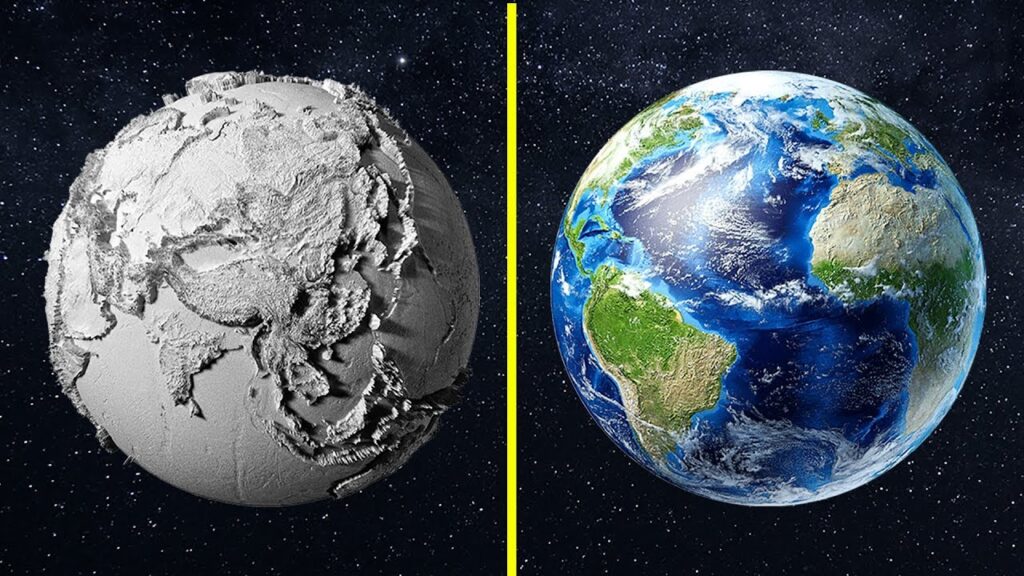
Oceans freeze solid within a millennium, turning Earth into a snowball planet. Volcanic activity might create temporary habitable zones, but overall, it’s extinction-level.
Long-Term Fate: Wandering Through the Cosmos
Drifting at 30 km/s, Earth could encounter other stars in millions of years, potentially getting captured or disrupted. Cosmic radiation increases without the heliosphere, eroding any remaining atmosphere. Over billions of years, the planet cools to near absolute zero, a frozen relic.
This scenario underscores stellar importance. In reality, the Sun won’t vanish but will evolve into a red giant in 5 billion years, boiling oceans anyway.
Lessons from This Hypothetical Catastrophe
Such thought experiments highlight our fragility. They inspire preparations for real threats like solar flares or asteroids. Science fiction, like in “The Wandering Earth,” explores similar ideas, blending drama with science.
In conclusion, the Sun’s disappearance would end life rapidly, teaching us to appreciate our stable star. It reminds us that in the vast universe, our existence is precarious yet miraculous.