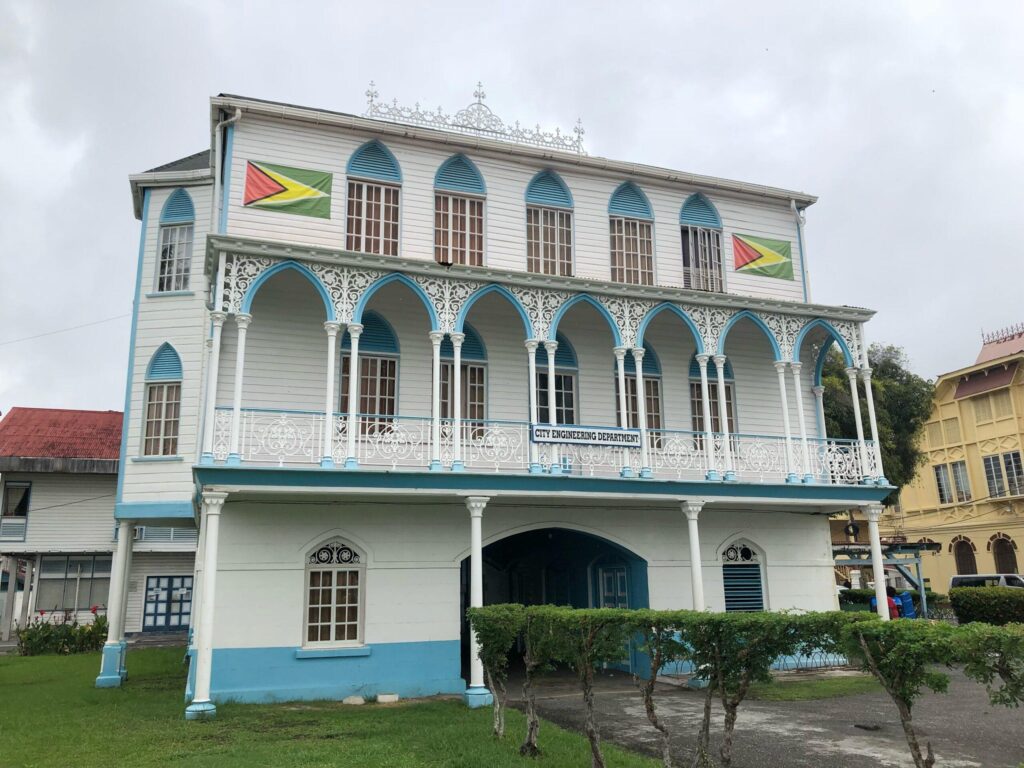
Guyana, South America’s only English-speaking nation, boasts a history rich in indigenous roots, colonial rivalries, resource booms, and post-independence aspirations. Known for its vast rainforests, Kaieteur Falls, and multicultural society, Guyana’s story reflects the Caribbean and Amazonian influences that shaped this “Land of Many Waters.”
Indigenous Peoples and Early European Contact
Human settlement dates back 35,000 years, with Arawak, Carib, and Warao groups thriving on fishing, farming, and trade. Christopher Columbus sighted the coast in 1498, but Dutch traders established posts in the 1580s. By the 1620s, the Dutch West India Company imported enslaved Africans for sugar plantations in Essequibo, Demerara, and Berbice.
The colonies changed hands during European wars, with Britain gaining control by 1814 and uniting them as British Guiana in 1831.
British Colonial Era and the Plantation Economy
Slavery defined early British rule until abolition in 1834 and full emancipation in 1838. Freed Africans left plantations, prompting indentured labor from India (starting 1838), Portugal, and China. Indians became the majority ethnic group, shaping Guyana’s diverse society.
The 19th century saw gold discoveries and economic shifts, but sugar remained dominant. Georgetown, with its wooden colonial architecture, emerged as the capital.
Path to Independence and Political Evolution
Post-WWII decolonization brought Cheddi Jagan and Forbes Burnham’s People’s Progressive Party (PPP) in 1950. Ethnic tensions—Indo-Guyanese supporting Jagan, Afro-Guyanese backing Burnham—complicated progress. Guyana gained independence on May 26, 1966, becoming a republic in 1970 under Burnham’s People’s National Congress (PNC).
Burnham’s socialist policies nationalized industries but led to economic decline and authoritarianism. Janet Jagan’s brief presidency (1997–1999) and Bharrat Jagdeo’s rule followed.
Modern Guyana: Oil Boom and Challenges
The 21st century brought political alternation between PPP and PNC-led coalitions. The 2015 discovery of massive offshore oil reserves transformed the economy, positioning Guyana as one of the fastest-growing nations.
Yet, border disputes with Venezuela, environmental concerns, and inequality persist. Guyana’s natural wonders, like Kaieteur Falls, and cultural fusion make it a unique destination.