Guinea, a West African nation rich in bauxite and cultural diversity, has a history intertwined with ancient empires, colonial exploitation, and post-independence turmoil. Bordered by the Atlantic and neighbors like Senegal and Mali, Guinea’s story spans from prehistoric settlements to modern political upheavals, offering insights into Africa’s complex past. This detailed account explores its evolution, highlighting key figures, conflicts, and transformations.
Prehistoric Roots and Early Kingdoms
Human presence in Guinea dates back 30,000 years, with hunter-gatherers transitioning to farming around 3000 BCE. By 900 CE, the Susu and Malinke peoples settled, influenced by the Ghana Empire (300–1100 CE), a gold-trading powerhouse. The Mali Empire (13th–15th centuries), under Sundiata Keita, incorporated Upper Guinea, spreading Islam and Mandingo culture. Mansa Musa’s pilgrimage in 1324 showcased Mali’s wealth, impacting Guinea’s trade routes.
The Songhai Empire supplanted Mali in the 15th century, dominating until Moroccan invasions in 1591 fragmented it into smaller kingdoms. In the Fouta Djallon region, Fulani jihadists established an Islamic theocracy in the 18th century, blending herding traditions with governance. These empires fostered ethnic diversity, with over 24 groups like the Fulani, Malinke, and Susu coexisting.
European Contact and the Slave Trade
Portuguese explorers arrived in the 15th century, establishing coastal forts for trade in gold, ivory, and slaves. The “Guinea” name derives from the Berber term for “land of the blacks.” By the 17th century, British, Dutch, and French competed, but the transatlantic slave trade ravaged communities, exporting millions from the region.
French influence grew in the 19th century amid the Scramble for Africa. Samori Touré, a Malinke warrior, resisted colonization from 1882–1898, building a vast empire through guerrilla tactics. Despite his ingenuity, French forces captured him in 1898, marking the end of organized resistance.
French Colonial Rule: Exploitation and Resistance
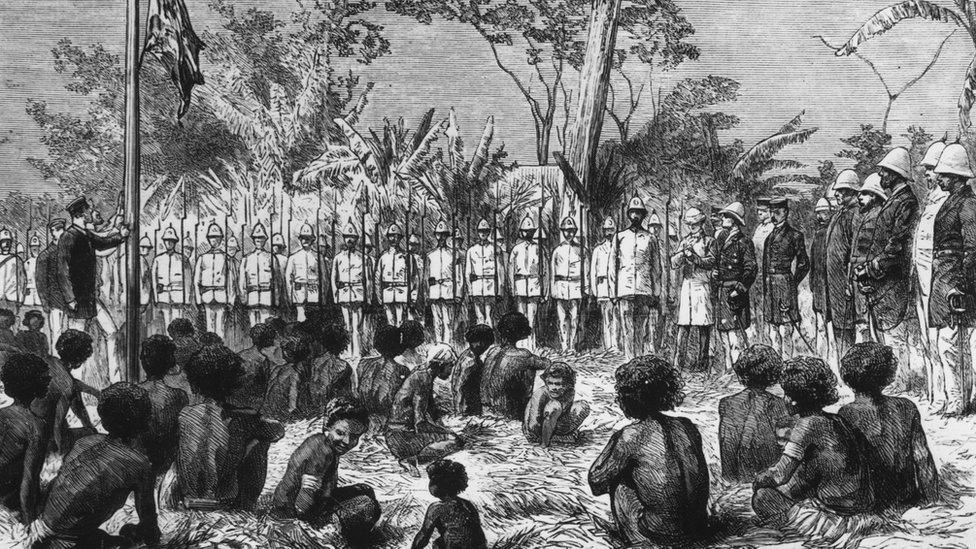
France formalized control in 1891, incorporating Guinea into French West Africa. Conakry, founded in 1884 on Tombo Island, became the capital. Colonial policies focused on resource extraction—rubber, coffee, and bananas—while imposing forced labor and taxes, sparking revolts like the 1911 uprising.
World War II strained resources, and post-war reforms under the Fourth Republic granted limited autonomy. Ahmed Sékou Touré, a trade union leader, founded the Democratic Party of Guinea (PDG) in 1947, mobilizing against colonialism.
Independence and the Touré Regime
In 1958, Charles de Gaulle’s referendum offered French Community membership or independence. Guinea voted overwhelmingly for sovereignty on September 28, becoming independent on October 2—the first French West African colony to do so. France retaliated by withdrawing aid, but Touré aligned with the Soviet bloc for support.
As president, Touré implemented socialist policies: nationalizing industries, promoting education, and women’s rights. However, his rule turned authoritarian, with purges, labor camps like Camp Boiro, and suppression of dissent. Plots like the 1965 “traders’ plot” led to executions, and ties with Ghana and Mali formed short-lived unions.
Post-Touré Era: Military Coups and Instability
Touré’s death in 1984 prompted a coup by Colonel Lansana Conté, who liberalized the economy but maintained one-party rule. Multi-party elections in 1993 confirmed Conté, though marred by fraud. His regime faced mutinies, ethnic tensions, and refugee crises from Sierra Leone and Liberia.
Conté’s death in 2008 led to Captain Moussa Dadis Camara’s junta, infamous for the 2009 stadium massacre killing 157 protesters. International pressure forced elections in 2010, won by Alpha Condé, Guinea’s first democratically elected president.
Condé’s Rule and the 2021 Coup
Condé’s tenure brought infrastructure growth, like the Souapiti Dam, but controversies over term limits sparked protests. A 2020 referendum allowed a third term, won amid violence. Economic gains from mining contrasted with poverty and inequality.
On September 5, 2021, Colonel Mamady Doumbouya overthrew Condé, citing corruption. The junta promised transitions but delayed elections, facing ECOWAS sanctions.
Contemporary Challenges and Cultural Resilience
Guinea grapples with Ebola outbreaks (2014–2016), COVID-19, and climate impacts on agriculture. Yet, its bauxite reserves (world’s largest) promise prosperity. Culturally, Guinea shines with balafon music, Sosso-Bala traditions, and festivals celebrating diversity.
Guinea’s Path Forward
Guinea’s history reflects Africa’s resilience: from empires’ grandeur to independence’s trials. As it navigates democracy, its people united by rivers like the Niger hold the key to a stable future. Exploring Conakry’s markets or Fouta Djallon’s highlands reveals a nation poised for greatness.