Ireland, with its prehistoric monuments, Celtic heritage, Viking settlements, Norman invasions, and fight for independence, offers a story of cultural endurance and literary brilliance. From ancient passage tombs to modern EU member, Ireland’s past shapes its vibrant present.
Prehistoric and Celtic Foundations
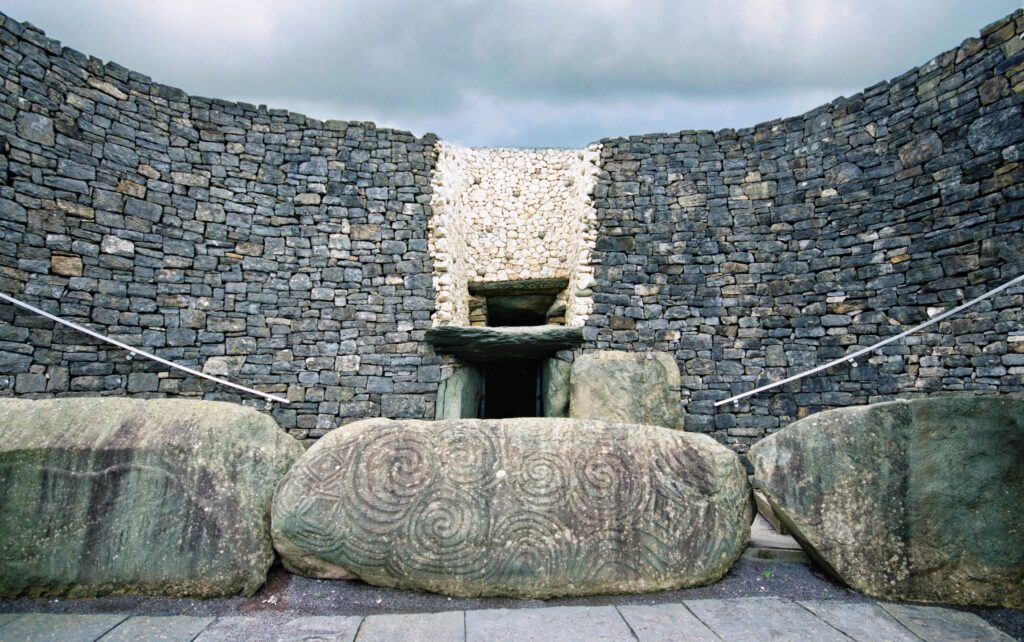
Settlement began around 8000 BCE. Neolithic farmers built Newgrange (3200 BCE), older than pyramids, with solar-aligned chambers.
Celts arrived around 500 BCE, bringing Iron Age culture, druids, and myths. Gaelic society thrived with ring forts and high kings at Tara.
Christianization and Golden Age
St. Patrick introduced Christianity (432 CE). Monasteries like Clonmacnoise produced illuminated manuscripts (Book of Kells). Viking raids (795 CE) led to Dublin’s founding.
Norman Invasion and English Rule
Normans arrived in 1169, establishing lordships. By 1366, Statutes of Kilkenny aimed to preserve English culture. Tudor conquest intensified under Henry VIII, leading to plantations.
Cromwell, Penal Laws, and Rebellion
Cromwell’s 1649 campaign devastated Catholics. Penal Laws (1690s–1700s) suppressed Catholicism. The 1798 United Irishmen rebellion failed.
Famine, Home Rule, and Independence
The Great Famine (1845–1852) killed or displaced millions. Nationalist movements grew; Easter Rising (1916) sparked revolution. The Anglo-Irish Treaty (1921) created the Irish Free State; civil war followed.
Modern Republic and Troubles
The Republic declared in 1949. The Troubles (1968–1998) in Northern Ireland ended with Good Friday Agreement. Today, Ireland thrives economically and culturally.
Ireland’s history from ancient mysticism to peaceful progress defines its spirit.