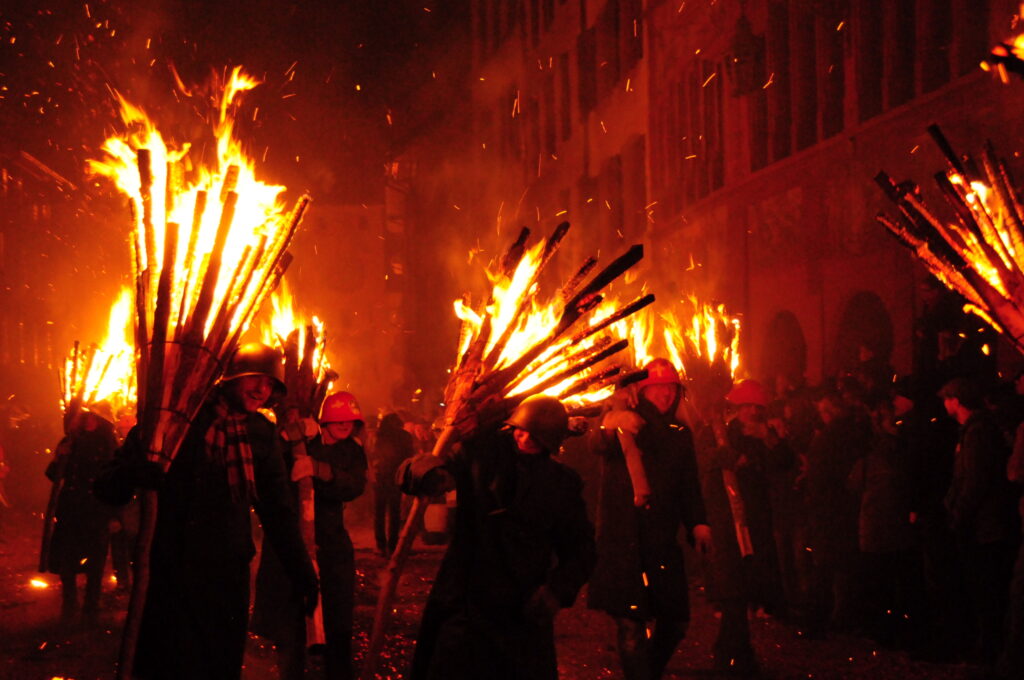
In the canton of Basel-Landschaft, the Chienbäse tradition ignites the streets of Liestal with a dramatic fire parade, marking the Sunday after Ash Wednesday. Participants carry blazing brooms through the town, creating a mesmerizing inferno that symbolizes the banishing of winter and the arrival of spring in true Swiss style.
Origins of the Chienbäse Custom
Dating back to the 19th century, Chienbäse (“burning brooms”) evolved from pagan fire rituals to ward off evil spirits, later tying into Carnival season. It’s unique to Liestal, where locals build and ignite massive bundles of pinewood brooms, parading them to honor community resilience and the cycle of seasons.
The Blazing Procession and Safety Measures
Hundreds of marchers in protective gear hoist flaming brooms—some up to 5 meters tall—through narrow streets, showering sparks amid cheers from spectators. Fire wagons and brass bands follow, with strict safety protocols ensuring no injuries. The heat and roar create an intense, unforgettable atmosphere.
Cultural Significance and Visitor Appeal
Chienbäse represents Swiss ingenuity in blending danger with tradition, drawing crowds for its raw energy and photographic drama. Held in late February or early March, it’s a thrilling alternative to typical carnivals. Experiencing it in Liestal offers a fiery insight into regional folklore.
This blazing ritual highlights Switzerland’s passion for elemental celebrations.