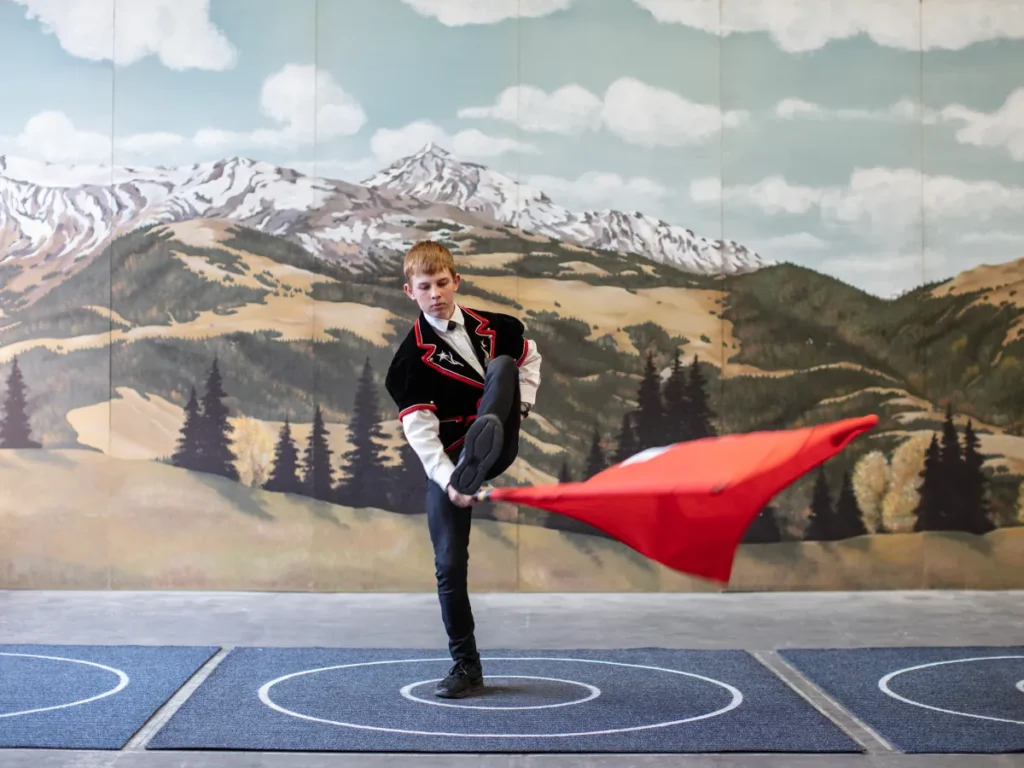
Switzerland’s folk heritage comes alive in the rhythmic spins and throws of Fahnenschwingen, or flag throwing—a graceful, acrobatic art performed at festivals and competitions nationwide. This UNESCO-recognized skill showcases precision, strength, and national pride, turning a simple flag into a dancing symbol of Swiss identity.
Origins and Cultural Roots of Flag Throwing
Fahnenschwingen dates back to the 16th century, originally a military exercise to signal troops or demonstrate discipline. Today, it’s a beloved folk sport practiced by both men and women in traditional costumes, often alongside yodeling and alphorn playing. The Swiss flag (or cantonal flags) is twirled in complex patterns, symbolizing unity and heritage.
Mastering the Technique
Performers use a wooden pole to manipulate a large flag in circular motions, figure-eights, and overhead throws—requiring balance, timing, and athleticism. Competitions feature solo and group routines judged on style, height, and control. It’s often seen in “Schwingfest” events or national gatherings, with practitioners training from a young age in local clubs.
Where to Witness Fahnenschwingen Live
Catch performances at the Swiss National Day (August 1), regional folk festivals in Appenzell or Emmental, or the Federal Festival of Flag Throwers. Visitors can even try basic throws at workshops. This tradition blends artistry and athleticism, offering a mesmerizing window into Swiss culture.
Fahnenschwingen proves that Switzerland’s traditions are as dynamic as they are ancient.