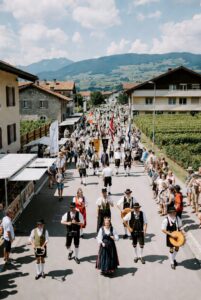
Amid Switzerland’s festivals and gatherings, folk dancing pulses with energy, uniting communities in rhythmic steps and colorful costumes. Rooted in rural celebrations, these dances—accompanied by accordions and yodels—reflect regional identities, from waltzes in the German-speaking areas to lively polkas in French-speaking cantons. For those seeking immersive cultural experiences, Swiss folk dancing embodies joy, history, and social harmony.
Historical Roots of Folk Dancing
Dating back to medieval times, folk dances originated as harvest rituals or courtship displays in alpine villages. Each canton has variations, like the “Schottisch” in Central Switzerland or the “Mazurka” in Romandie, influenced by neighboring countries yet distinctly Swiss. Organized groups, or “Trachtenvereine,” keep the steps alive through rehearsals and performances at national events.
Steps, Costumes, and Performances
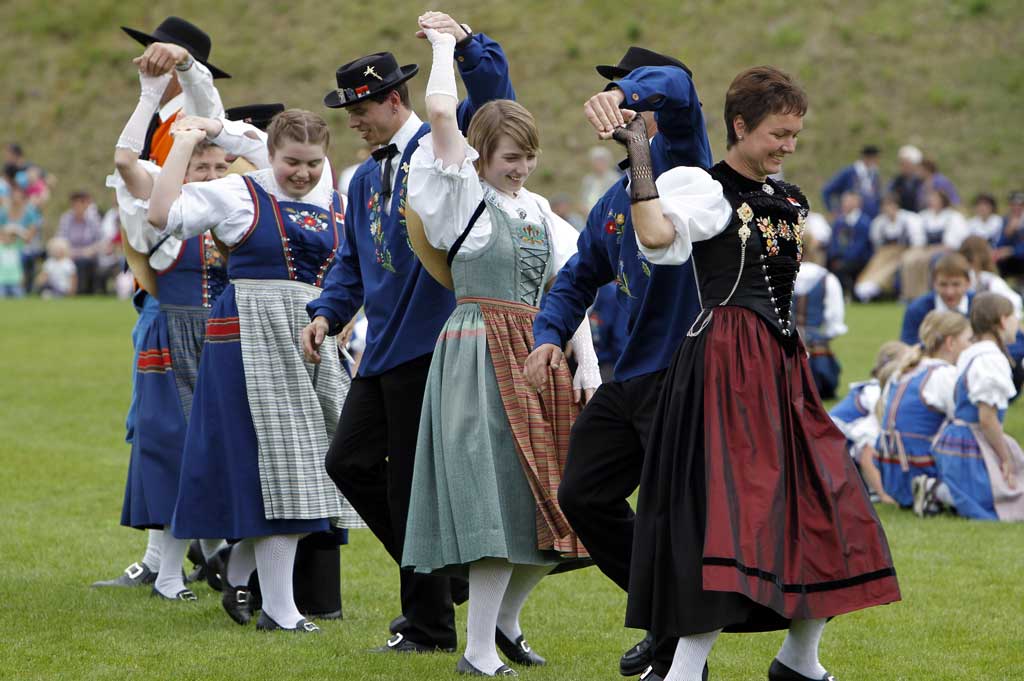
Dancers wear embroidered dirndls, lederhosen, and hats, twirling in circles or lines to live music. Techniques involve precise footwork, claps, and spins, often taught in clubs from childhood. Highlights include dances at the Unspunnen Festival or local “Älplerfeste,” where groups compete or entertain crowds amid mountain scenery.
Why Folk Dancing Remains Vital
This tradition fosters community bonds, physical fitness, and cultural pride, with youth involvement ensuring its future. Tourists can join open sessions in Lucerne or Zurich, experiencing the infectious rhythm firsthand. Folk dancing showcases Switzerland’s diverse yet unified spirit.
A swirling celebration that invites everyone to step into Swiss folklore and fun.