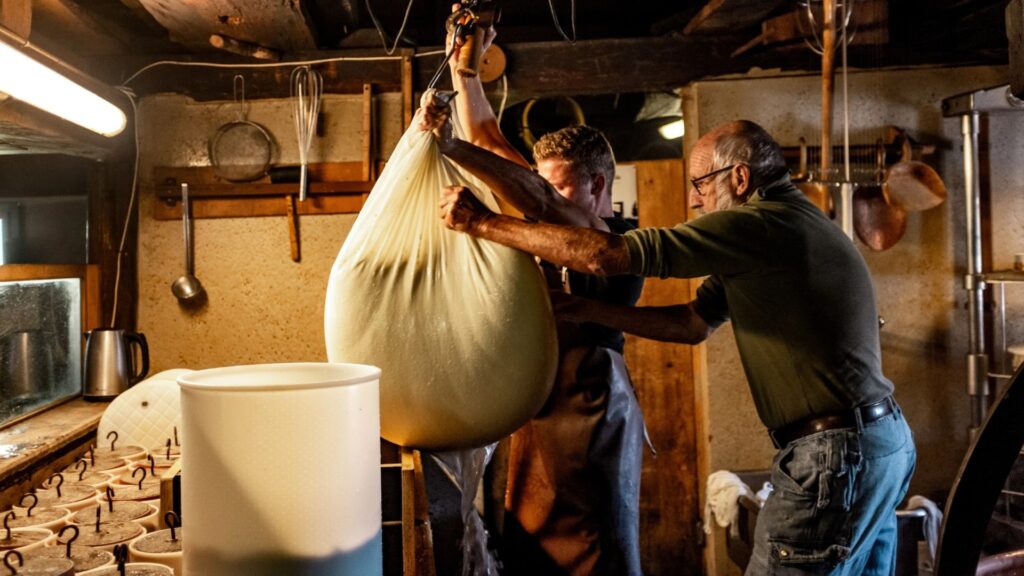
No Swiss tradition is more iconic than cheese making in Emmental, home to the famous holey Emmentaler cheese. This centuries-old process in the rolling hills of the Emmental Valley combines science, skill, and alpine milk to create wheels of nutty delight. For foodies and cultural explorers, it offers a savory insight into Switzerland’s dairy heritage.
Roots of Emmental Cheese Making
Dating back to the 13th century, cheese production in Emmental started as a way for farmers to preserve surplus milk from grass-fed cows. The region’s cooperative dairies formalized the method in the 1800s, with “eyes” (holes) formed by natural bacteria. Today, it’s protected by AOC status, ensuring authentic production in traditional chalets.
The Step-by-Step Process
Fresh milk is heated in copper vats, curdled with rennet, cut, and stirred to form grains. The curd is pressed into massive molds (up to 100 kg), brined, and aged in cellars for months, where propionic bacteria create the signature holes and flavor. Artisans flip and brush wheels regularly, blending manual labor with precise timing.
Why It Defines Swiss Culinary Culture
Emmental cheese making sustains rural economies, featured in festivals and tours like the Emmentaler Show Dairy. Visitors can watch live demonstrations, taste fresh samples, and learn about sustainable farming. It’s a global export that embodies Swiss quality and innovation.
This cheesy tradition melts hearts, proving Switzerland’s mastery in alpine gastronomy.