Nestled in the vast expanse of northwest Africa, Mauritania is a land where the Sahara Desert meets the Atlantic Ocean, shaping a history as dynamic as its shifting dunes. Officially the Islamic Republic of Mauritania, this nation spans over a million square kilometers, with a population of around 4.6 million people blending Arab-Berber (Moor) and sub-Saharan African cultures. From ancient Berber kingdoms to colonial struggles and modern challenges, Mauritania’s past is a mosaic of migrations, conquests, and resilience. This in-depth exploration delves into the key epochs that have defined Mauritania, offering insights for history enthusiasts, travelers, and scholars alike. Discover how this “Land of the Moors” evolved from prehistoric settlements to a sovereign state, highlighting its cultural heritage and ongoing transformations.
Prehistoric Roots “Early Inhabitants and Saharan Settlements”
Mauritania’s human history traces back to prehistoric times, with evidence of Stone Age tools and rock paintings in the Adrar Plateau dating to 10,000 BCE. The region was once a lush savanna, supporting hunter-gatherer communities. Around 2000 BCE, the Bafour people, ancestors of the Soninke, established agricultural societies along river valleys, cultivating millet and herding livestock.
Also See : The History of the Maldives From Ancient Buddhist Kingdoms to a Global Luxury Destination
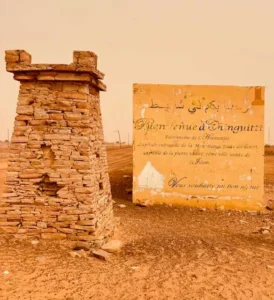
By the 3rd to 7th centuries CE, waves of Berber tribes from North Africa migrated southward, displacing the Bafours and introducing pastoral nomadism. These Sanhaja Berbers formed confederations, trading salt, gold, and slaves across the Sahara. The desiccation of the Sahara forced many to adapt, leading to the rise of oasis towns like Oualata and Chinguetti, which became centers of learning and commerce. Rock art in sites like the Tagant Plateau depicts this era’s daily life, including chariots and cattle, underscoring Mauritania’s role in trans-Saharan networks.
Medieval Empires “Almoravids and the Spread of Islam”
The 9th to 11th centuries marked Mauritania’s integration into larger African empires. Southeastern Mauritania fell under the Ghana Empire, with its capital Koumbi Saleh serving as a hub for gold trade. However, the real transformation came in the 11th century with the Almoravids, a puritanical Islamic reform movement led by Berber warriors.
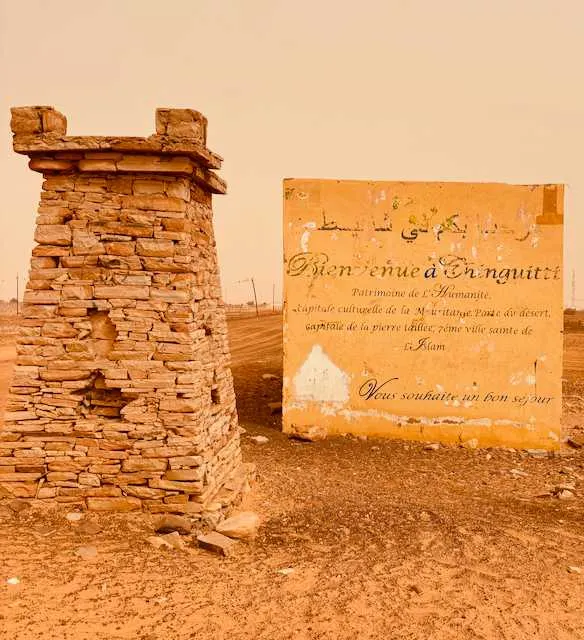
Founded by Abdullah ibn Yasin in the 1040s, the Almoravids (from Arabic “al-Murabitun,” meaning “those who line up in defense of the faith”) conquered southern Mauritania by 1076, defeating the Ghana Empire and spreading an austere form of Islam across North Africa and into Spain. Chinguetti, often called the “seventh holiest city of Islam,” flourished as a scholarly center with libraries housing ancient manuscripts. The Almoravids’ legacy endures in Mauritania’s Islamic identity, with over 99% of the population Sunni Muslim today.
Following the Almoravids’ decline in the 12th century, the region saw the rise of the Mali Empire, influencing trade routes. By the 15th century, Arab Maqil tribes began infiltrating from Yemen, blending with Berbers to form the Hassaniya-speaking Moors who dominate modern Mauritanian society.
Age of Resistance: Arab Invasions and the Char Bouba War
The 17th century brought significant ethnic shifts through the Char Bouba War (1644–1674), a prolonged conflict where local Berber and sub-Saharan groups resisted invading Beni Hassan Arab tribes. The Beni Hassan, claiming Yemeni origins, sought dominance over trade and pastures. Despite fierce resistance, they prevailed, establishing a hierarchical society where Hassaniya Arabic became the lingua franca.
This era solidified the Moorish identity, with a caste system dividing warriors (Hassans), religious scholars (Zawaya), and tributaries. Black African groups like the Wolof, Soninke, and Halpulaar’en were often enslaved or marginalized, setting the stage for enduring social tensions. European explorers, including Portuguese mariners who rounded Cape Blanco in 1442, began sporadic contacts, trading gum arabic and slaves, but no permanent settlements emerged until later.
Colonial Era: French Expansion and Pacification
European colonialism intensified in the 19th century. France, competing with Britain and Spain, claimed southern Mauritania in the 1850s, signing treaties with Trarza and Brakna emirs along the Senegal River. In 1904, Mauritania became a French protectorate under French West Africa, nicknamed “Le Grand Vide” (the Great Void) due to its sparse administration.
“Pacification” campaigns from 1905 to 1934 subdued nomadic resistance, including Reguibat uprisings. French rule introduced borders, taxes, and infrastructure like the Trans-Mauritanian Railway, but exploitation was rife. Slavery, officially banned in 1905, persisted underground. World War II saw Vichy control until 1944, after which Mauritania gained territorial assembly status in 1946.
Path to Independence and Post-Colonial Challenges
Mauritania achieved autonomy in 1958 and full independence on November 28, 1960, under President Moktar Ould Daddah. The capital, Nouakchott, was founded from a small village to symbolize unity. Early years focused on nation-building, but ethnic divides between Moors and black Africans led to unrest.
In 1975, Mauritania annexed southern Western Sahara (Tiris al-Gharbiyya) amid the Spanish withdrawal, sparking conflict with the Polisario Front. The costly war ended in 1979 with withdrawal, but coups plagued the nation. Colonel Maaouya Ould Sid’Ahmed Taya ruled from 1984 to 2005, facing ethnic violence in 1989–1991, where thousands of black Mauritanians were expelled.
Slavery, abolished in 1981 but criminalized only in 2007, remains a stain, with estimates of up to 20% of the population in bondage-like conditions. The 2008 coup installed Mohamed Ould Abdel Aziz, who stabilized the economy through mining (iron ore, gold) and fisheries. Recent presidents, including Mohamed Ould Ghazouani since 2019, emphasize anti-corruption and climate resilience amid Sahara encroachment.
Modern Mauritania “Cultural Heritage and Future Prospects”
Today, Mauritania balances tradition and modernity. UNESCO sites like the ancient ksour (fortified villages) of Ouadane, Chinguetti, Tichitt, and Oualata preserve medieval architecture. Festivals celebrate nomadic life, while Nouakchott’s markets buzz with diverse ethnic goods.
Challenges include poverty, terrorism from Al-Qaeda in the Islamic Maghreb, and climate change exacerbating desertification. Yet, Mauritania’s history of adaptation from Berber roots to Islamic empires fuels optimism. As a bridge between Arab and African worlds, it plays a key role in regional stability.
In essence, Mauritania’s 2,000-year saga is one of endurance against harsh landscapes and external forces. Whether exploring its dunes or studying its manuscripts, this nation’s history offers profound lessons in cultural fusion and survival. (Word count: 812)