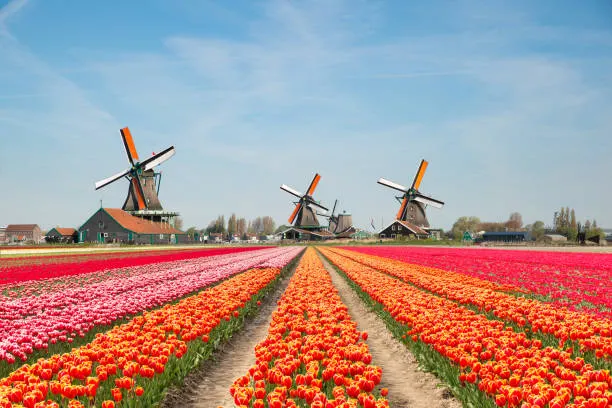
Netherlands, often called Holland, is a European nation known for its canals, windmills, and maritime heritage. Despite its relatively small size, the Netherlands has played a major role in global trade, exploration, and cultural development.
Early Settlements and Medieval Rule
The area now known as the Netherlands was inhabited by Germanic tribes during ancient times. Later, it became part of the Roman Empire and then the Frankish kingdoms after the fall of Rome.
During the Middle Ages, the region was divided into several feudal provinces that were ruled by local nobles and gradually became important trading centers in Northern Europe.
The Dutch Revolt and Independence
In the 16th century, the provinces of the Netherlands were under the control of Spain. Religious tensions and political conflicts eventually led to the Eighty Years’ War (1568–1648), a long struggle for independence.
Also See : Unveiling the Sands of Time The Enigmatic History of Mauritania
The conflict ended with the recognition of the Dutch Republic as an independent state.
The Dutch Golden Age
During the 17th century, the Netherlands entered a period known as the Dutch Golden Age. The country became one of the world’s leading economic and naval powers.
Dutch merchants dominated global trade through powerful organizations such as the Dutch East India Company, while cities like Amsterdam became major financial centers.
Colonial Expansion and Global Influence
The Dutch established colonies and trading posts in many parts of the world, including Southeast Asia, Africa, and the Americas. Their maritime network helped shape international commerce for centuries.
However, many of these colonial territories eventually gained independence during the 20th century.
The Netherlands in the Modern Era
Today, the Netherlands is a constitutional monarchy and a highly developed European nation. It is known for its progressive policies, advanced economy, and strong role in international organizations.
The country also remains famous for its cultural contributions, historic cities, and innovative water management systems that protect the land from the sea.