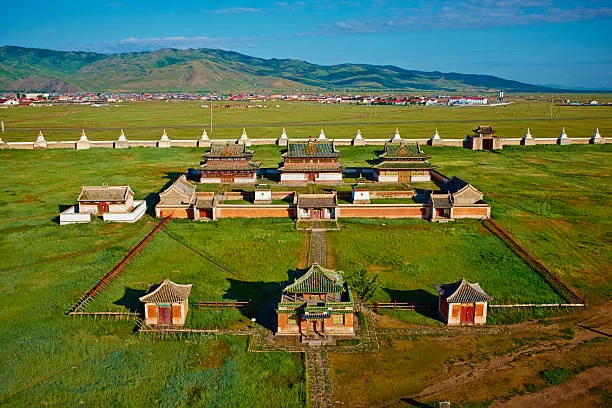
Mongolia has a rich and dramatic history that stretches from ancient nomadic tribes to one of the largest empires the world has ever seen. Situated between China and Russia, Mongolia’s past is deeply connected to the cultures of the Eurasian steppe.
Early Nomadic Civilizations
For thousands of years, Mongolia was inhabited by nomadic tribes who relied on herding and horseback travel across the vast grasslands. Early groups such as the Xiongnu confederation built powerful tribal alliances and frequently interacted with ancient Chinese dynasties.
These nomadic societies developed strong military traditions and exceptional horseback skills, which later played a major role in Mongolia’s rise to power.
Also See : The Fascinating History of Mexico – From Ancient Civilizations to a Modern Nation
The Rise of Genghis Khan and the Mongol Empire
The most important figure in Mongolian history is Genghis Khan. In 1206, he united the Mongol tribes and established the powerful Mongol Empire.
Under his leadership and that of his successors, the Mongol Empire expanded rapidly across Asia and Europe. At its peak, it became the largest contiguous empire in world history, stretching from Eastern Europe to the Pacific Ocean.
The Yuan Dynasty and Mongol Rule in China
In the 13th century, Genghis Khan’s grandson Kublai Khan founded the Yuan Dynasty in China. This period marked the height of Mongol influence in East Asia.
However, Mongol rule in China eventually declined, and the Yuan Dynasty fell in 1368, forcing the Mongols to retreat back to the Mongolian steppe.
Mongolia Under Qing Rule
For several centuries afterward, Mongolia came under the control of the Qing Dynasty of China. During this period, Mongolian political power declined, although the nomadic culture and traditions remained strong.
Independence and Modern Mongolia
In 1911, Mongolia declared independence from Qing rule. Later, it became a socialist state closely aligned with the Soviet Union.
After the peaceful democratic revolution of 1990, Mongolia transitioned into a democratic republic. Today, the country balances modern development with its deep-rooted nomadic heritage, making it one of the most culturally unique nations in Asia.