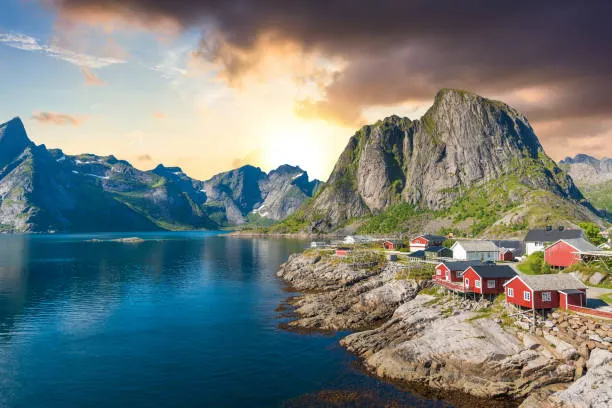
Norway is one of the most fascinating countries in Northern Europe, known for its dramatic fjords, Viking heritage, and strong welfare system. The history of this Scandinavian nation stretches back thousands of years, shaped by seafaring warriors, powerful unions with neighboring kingdoms, and a steady journey toward independence. Today, Norway stands as one of the most prosperous and stable countries in the world.
Early Settlements and the Viking Age
The earliest human settlements in Norway date back more than 10,000 years, shortly after the last Ice Age. However, Norway began to gain wider recognition during the Viking Age (around 793–1066 AD). Norwegian Vikings were skilled sailors, traders, and explorers who traveled across Europe, the British Isles, and even reached North America centuries before Columbus.
Famous Viking leaders helped establish Norway as a unified kingdom. One of the most notable figures was King Harald Fairhair, who is traditionally credited with uniting the Norwegian territories around 872 AD after the Battle of Hafrsfjord.
Also See : “The History of Moldova”From Ancient Principality to Modern European Nation
The Christianization of Norway
During the 10th and 11th centuries, Christianity gradually replaced Norse pagan beliefs. Kings such as Olaf Tryggvason and Olaf Haraldsson (later known as Saint Olaf) played key roles in spreading Christianity throughout the kingdom. This religious transformation also strengthened political unity and connected Norway more closely with the rest of Europe.
Union with Denmark and Sweden
From the late Middle Ages, Norway experienced long periods under foreign rule. In 1380, Norway entered a union with Denmark that lasted for more than four centuries. During this time, political power was largely controlled from Copenhagen.
After the Napoleonic Wars in 1814, Denmark was forced to cede Norway to Sweden. However, Norwegians declared independence and created their own constitution in May 1814, one of the oldest constitutions still in use today. Norway then entered a union with Sweden but retained significant internal autonomy.
Independence in 1905
The peaceful dissolution of the union with Sweden in 1905 marked a major turning point in Norwegian history. Norway officially became an independent constitutional monarchy and chose Prince Carl of Denmark as its new king, who became King Haakon VII.
Norway in the Modern Era
During World War II, Norway was occupied by Nazi Germany from 1940 to 1945. After the war, the country rebuilt rapidly and became a founding member of NATO in 1949.
The discovery of large oil reserves in the North Sea during the late 1960s transformed Norway’s economy. Today, the country is known for its high living standards, strong democratic institutions, and one of the world’s largest sovereign wealth funds.
Norway Today
Modern Norway is a prosperous and progressive society that balances economic success with environmental responsibility. Its long history from Viking exploration to peaceful independence continues to shape its national identity and global reputation.