The History of Vietnamese Tea Ceremony
The Vietnamese tea ceremony is a cultural practice that symbolizes respect, purity, and connection. Although not as widely formalized as Japanese or Chinese tea ceremonies, Vietnam’s tea ritual carries deep cultural meaning. It is found in daily life, family gatherings, weddings, ancestor worship, and spiritual ceremonies.
Tea is a symbol of hospitality. When visitors arrive at a Vietnamese home, offering tea is one of the first gestures of welcome. This simple act communicates friendliness and respect. Families enjoy tea together after meals, during conversations, or while receiving guests.
Traditional Vietnamese tea is often made with green tea leaves harvested from ancient trees in northern regions such as Thai Nguyen, Ha Giang, and Yen Bai. Some teas are scented with lotus, jasmine, or chrysanthemum to create delicate floral aromas.
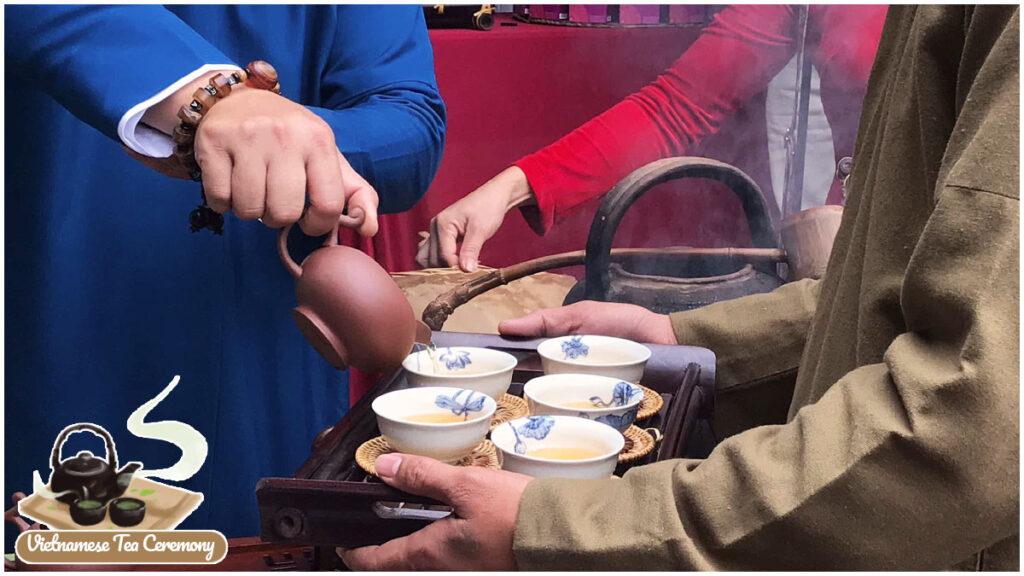
During tea ceremonies, the process of preparing tea becomes a mindful ritual. Hot water is poured into small clay or porcelain teacups. The aroma is appreciated before drinking. Sips are taken slowly to experience the full flavor of the leaves. Silence and calmness are important, allowing participants to connect with the moment.
Tea ceremonies also play a major role in weddings. The bride and groom serve tea to their parents and elders as a sign of respect and gratitude. This ceremonial act symbolizes unity between families and the blessing of the ancestors.
Throughout Vietnam’s history, tea has inspired poetry, art, and philosophy. The tea ceremony remains a refined cultural tradition that embodies harmony, sincerity, and hospitality. Travelers who join tea tastings or visit tea villages gain a deeper understanding of Vietnamese cultural values.