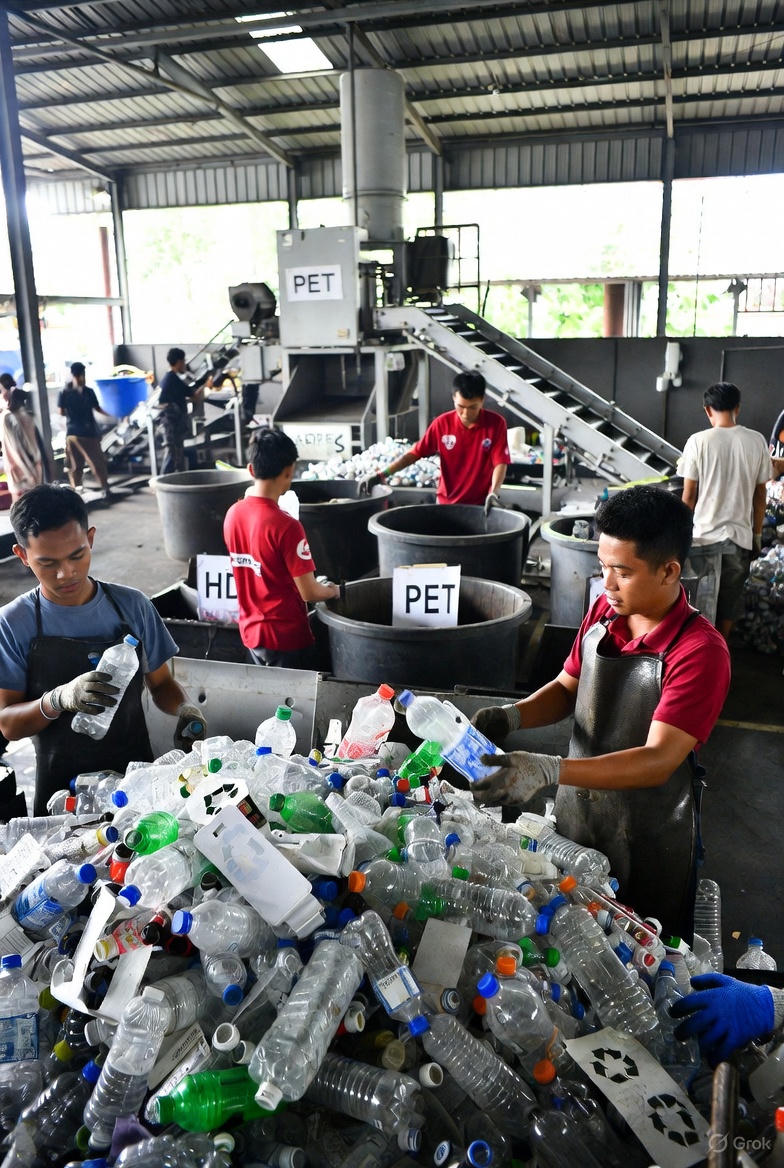
Recycled plastic has become one of the most realistic solutions to tackle Indonesia’s massive plastic waste problem, which exceeds 7.8 million tons annually (SIPSN 2024 data). But what exactly is recycled plastic, and how does the process work?
What Is Recycled Plastic?
Recycled plastic refers to used plastic that has gone through collection, sorting, washing, melting, and reshaping into new products. The resin identification code (numbers 1–7) found on the bottom of packaging determines how easily a plastic can be recycled.
Most Recyclable Plastic Types
- PET (Code 1) → beverage bottles, can be turned into textile fibers or new bottles
- HDPE (Code 2) → detergent/shampoo bottles, highest commercial value
- PP (Code 5) → food containers and bottle caps, demand is rising rapidly
Meanwhile, PVC (Code 3) and “Other” plastics (Code 7) remain difficult and uneconomical to recycle in Indonesia.
The Plastic Recycling Process in Indonesia
The typical steps include:
- Collection by waste pickers and community waste banks
- Manual sorting at collection centers
- Shredding into flakes
- Washing and drying
- Melting into plastic pellets
- Sold to manufacturers to create new products
Benefits of Recycled Plastic
- Reduces landfill waste by 60–70%
- Saves up to 80% energy compared to virgin plastic production
- Creates hundreds of thousands of jobs for waste pickers and workers
- Significantly lowers carbon emissions
Popular Recycled Plastic Products in Indonesia
- Shopping bags made from recycled PET (Avani, Ecobags)
- Paving blocks mixed with LDPE waste
- School uniforms and jackets from recycled PET fiber
- Plant pots and outdoor furniture
With growing public awareness and the Extended Producer Responsibility regulation (Minister of Environment Regulation 75/2019), Indonesia’s plastic recycling industry is projected to grow 15–20% annually.