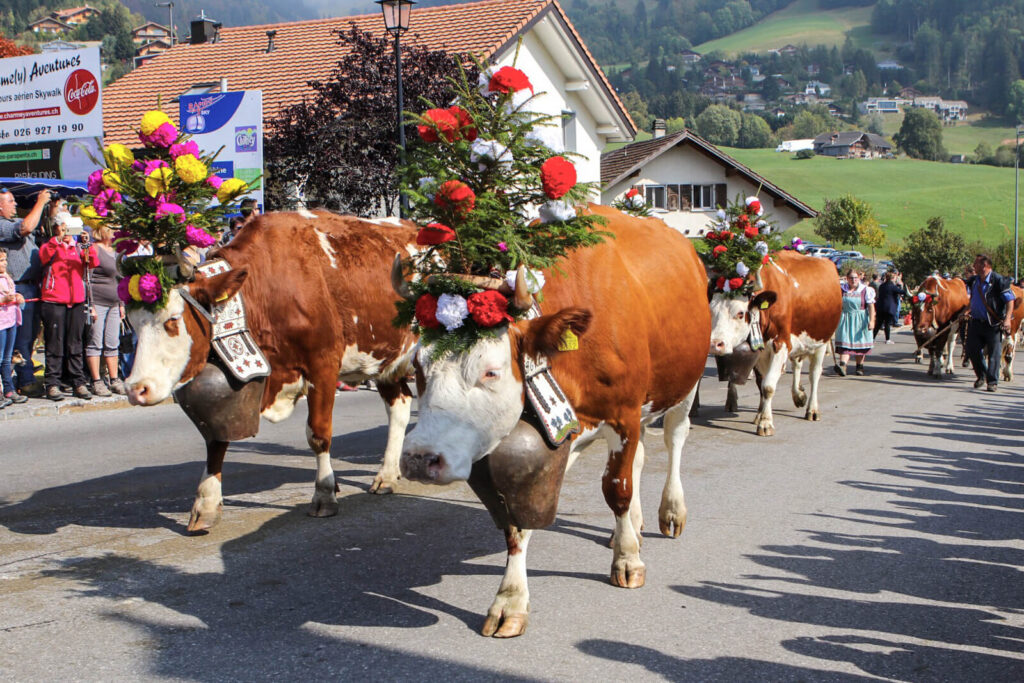
Switzerland’s alpine regions come alive each autumn with one of the country’s most picturesque traditions: the Alpabzug, or cattle descent. Also known as Alpabfahrt or cow parades, this joyful event marks the return of cows from high summer pastures to the valleys below. Adorned in colorful decorations, the herds create a stunning spectacle that celebrates nature, hard work, and rural life.
The Meaning Behind the Alpabzug
Every summer, Swiss farmers take their cattle to high alpine meadows (Alps) for fresh grazing. As autumn approaches and snow threatens, the cows descend in decorated processions. The vibrant flower crowns, giant bells, and festive attire symbolize gratitude for a safe summer and good health. It’s not just practical—it’s a proud display of heritage passed down for generations.
How the Cattle Descent Unfolds
Herds of beautifully adorned cows, led by farmers in traditional clothing, march down mountain paths accompanied by yodeling, brass bands, and cheering locals. The lead cow often wears the most elaborate headdress, and the sound of ringing bells echoes through the valleys. Events include folk music, food stalls, and sometimes wrestling or flag-throwing demonstrations, turning the day into a full community festival.
Best Places and Times to Witness Alpabzug
The tradition peaks in September and October, varying by region and weather. Popular spots include Appenzell, Gruyère, Charmey, and the Bernese Oberland. Visitors can join the crowds, enjoy fresh alpine cheese, and experience authentic Swiss rural culture. It’s a perfect blend of scenic beauty and living tradition that captures the heart of Switzerland.
This enchanting cattle parade is a must-see for anyone seeking an authentic, photogenic slice of Swiss alpine life.