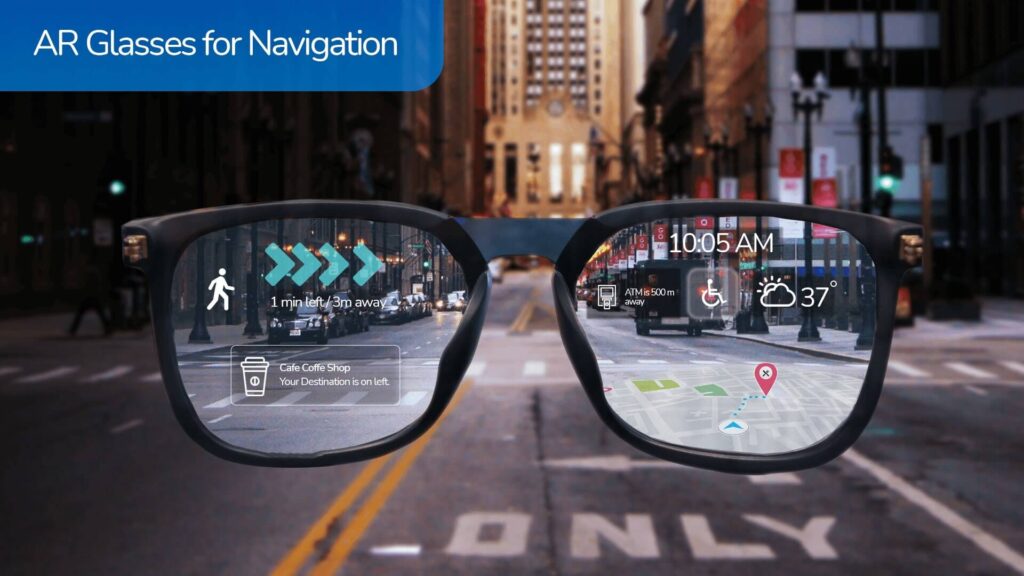
Augmented Reality glasses are quickly becoming one of the most influential technologies in the modern digital ecosystem. These smart glasses overlay digital information onto the real world, allowing users to experience interactive visuals while still staying aware of their surroundings. With rapid improvements in sensors, displays, AI processing, and lightweight materials, Augmented Reality glasses are now moving from experimental concepts to practical everyday tools.
What Are Augmented Reality Glasses
Augmented Reality glasses are wearable devices that project digital elements directly into the user’s field of view. These elements can include text, 3D objects, navigation icons, animations, or real time information based on what the user is looking at. Unlike Virtual Reality headsets that shut out the physical environment, AR glasses blend the digital layer with real world surroundings.
This makes them ideal for tasks that require both hands free, fast data access, and high situational awareness.
Why AR Glasses Are Transforming Modern Technology
AR glasses are designed to enhance real world experiences through digital augmentation. They offer several advantages:
- Hands free information access
- Real time data overlays for navigation, work, and communication
- High mobility and comfort through compact wearable designs
- Improved productivity in professional environments
These benefits make AR glasses a promising solution for both consumers and industries worldwide.
Key Applications Across Industries
1. Navigation and Daily Assistance
AR glasses can project walking directions, traffic data, translation overlays, and notifications directly into the user’s line of sight. This allows for safer and more efficient navigation without constantly checking a phone.
2. Industrial and Manufacturing Workflows
Technicians and engineers can receive step by step instructions, safety warnings, or equipment diagnostics through AR overlays. This significantly reduces errors and boosts operational efficiency in factories and fieldwork environments.
3. Healthcare and Medical Operations
Surgeons can view patient vitals, medical imaging, and procedure guides while performing operations. This enhances accuracy and supports more precise decision making during critical moments.
4. Education and Interactive Learning
Students can explore subjects such as science, history, architecture, and engineering with immersive AR visuals. These glasses turn complex concepts into interactive 3D experiences that improve understanding and retention.
5. Retail and Customer Experience
Stores can offer AR glasses for virtual product try ons, personal shopping assistance, or immersive advertisements. Customers can see how furniture fits into their home or how clothing looks without physically trying it on.
6. Remote Collaboration
AR glasses enable remote experts to guide on site workers through shared visual overlays. This helps companies save time, reduce travel costs, and solve problems faster.
Challenges in AR Glasses Development
Despite their growing potential, AR glasses face several challenges:
- Limited battery life
- The need for high brightness outdoor displays
- Privacy concerns related to video and sensor data
- The challenge of making the device lightweight and comfortable
Continuous innovation is focused on improving processing efficiency and display technology to make AR glasses more reliable.
Augmented Reality glasses are redefining the future of human interaction with digital information. By merging virtual elements with real world surroundings, these glasses create powerful tools for navigation, learning, industry operations, and communication. As technology progresses, AR glasses are expected to become an essential part of everyday life for both personal and professional use.