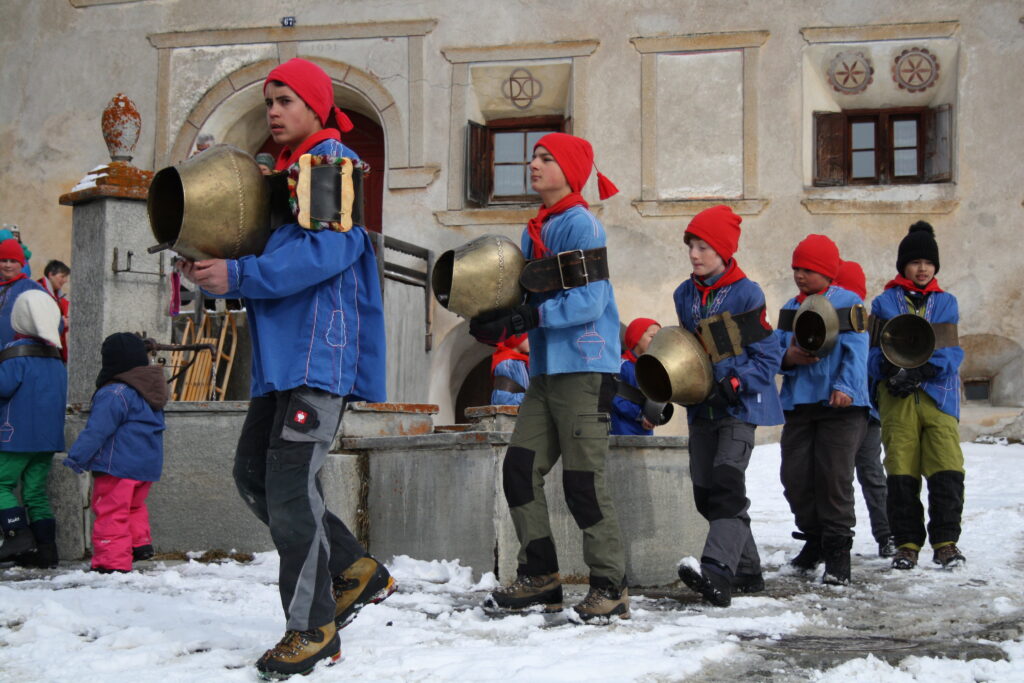
In the picturesque valleys of Graubünden, Switzerland ushers in spring with Chalandamarz, a lively custom where children parade with bells and whips to chase away winter spirits. This UNESCO-listed event, blending pagan roots with modern festivity, symbolizes renewal and community in the Romansh-speaking Engadine region, offering a vibrant glimpse into alpine folklore.
Origins of Chalandamarz
Dating back to pre-Christian times, Chalandamarz (“March Calendar”) evolved from rituals to expel evil and welcome the growing season. Held on March 1st, it features boys (and now girls) donning colorful costumes, reflecting influences from Roman festivals and local harvest beliefs. It’s preserved in villages like Zuoz and Scuol, emphasizing cultural continuity.
The Procession and Rituals
Participants march through snow-dusted streets, cracking whips for thunderous sounds and ringing massive cowbells to awaken the earth. Songs in Romansh dialect praise spring, while symbolic acts like collecting eggs or “fines” from households add playful interaction. The day ends with feasts, dances, and bonfires, fostering joy and unity.
Why Chalandamarz Endures and Where to Join
This tradition highlights Switzerland’s linguistic diversity and ties to nature, drawing visitors for its authentic, family-oriented vibe. Experience it in Upper Engadine towns during early March perfect for cultural immersion amid stunning mountains. Chalandamarz captures the resilient spirit of Swiss rural life.