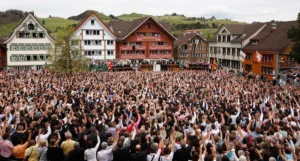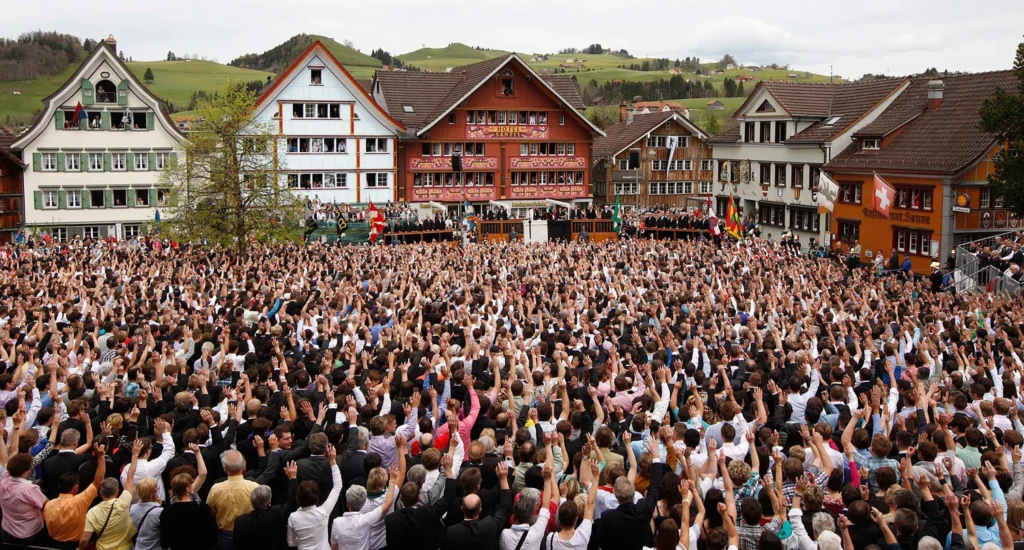
Switzerland’s commitment to direct democracy takes a spectacular form in the Landsgemeinde, an open-air public assembly where citizens vote by raising hands. Held annually in cantons like Appenzell Innerrhoden, this ancient practice embodies Swiss values of participation, transparency, and community decision-making amid picturesque alpine villages.
Origins of the Landsgemeinde Tradition
Dating back to the 14th century, Landsgemeinde was a cornerstone of early Swiss confederation, allowing free men (now all citizens over 18) to debate and vote on laws, budgets, and elections in person. It’s one of the world’s oldest forms of direct democracy, preserved in a few cantons as a living link to medieval governance.
How the Assembly Unfolds
On the last Sunday in April, thousands gather in the village square, often in traditional attire with swords for men symbolizing historical rights. Speakers address the crowd from a platform, debates ensue, and votes are cast by show of hands no secret ballots here. The atmosphere mixes solemnity with festivity, including markets and music.
Cultural Relevance and Visitor Insights
Landsgemeinde highlights Switzerland’s decentralized politics and trust in citizens, contrasting modern voting systems. Attendees in Appenzell can observe (but not vote), offering a unique cultural experience. This tradition reinforces Swiss identity as a nation built on consensus and alpine resilience.