Many people confuse the terms solar system, galaxy, and universe because they all relate to space. But they represent vastly different scales in the cosmic hierarchy. This guide explains the key differences between a solar system, a galaxy, and the universe, with sizes, contents, and examples for easy understanding.
What Is a Solar System?
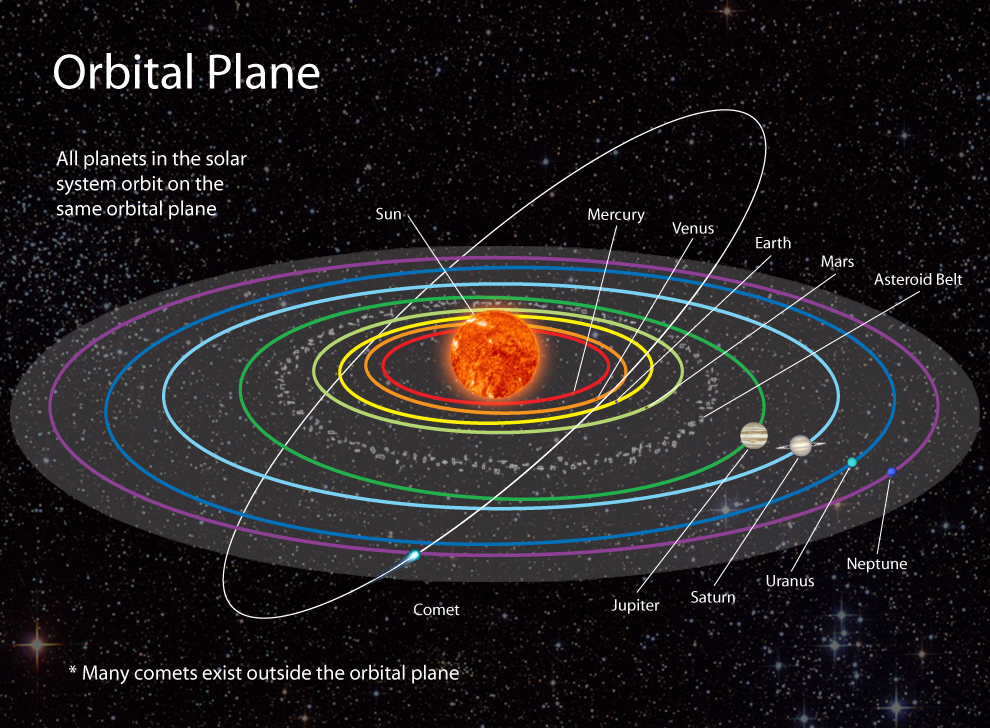
A solar system is a star and all the objects gravitationally bound to it, including planets, moons, asteroids, comets, and dwarf planets.
- Our example: The Solar System, centered on the Sun.
- Size: About 2 light-years across (including the Oort Cloud), but the main planetary orbits span ~0.001 light-years.
- Contents: 1 star (the Sun), 8 planets (Mercury to Neptune), moons, asteroid belt, Kuiper Belt.
- Scale: Tiny compared to larger structures Earth is just one small planet orbiting an average star.
What Is a Galaxy?
A galaxy is a massive, gravitationally bound system of stars, stellar remnants, interstellar gas, dust, and dark matter.
- Our example: The Milky Way Galaxy, a barred spiral galaxy.
- Size: Typically 100,000–180,000 light-years across (Milky Way: ~100,000–120,000 light-years).
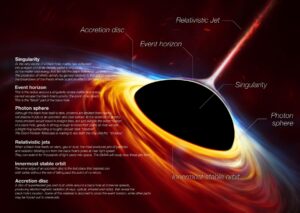
- Contents: Hundreds of billions of stars (Milky Way: ~100–400 billion), multiple solar systems, nebulae, black holes, and a supermassive black hole at the center.
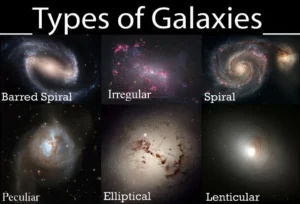
- Types: Spiral (like Milky Way), elliptical, irregular.
- Scale: Contains billions of solar systems our Solar System is just one in the Orion Arm of the Milky Way.
What Is the Universe?
The universe is everything that exists: all matter, energy, space, and time.
- Observable universe: The portion we can see, limited by the speed of light and the universe’s age.
- Size: Observable diameter ~93 billion light-years.
- Contents: An estimated 2 trillion galaxies, countless solar systems, dark matter, dark energy, cosmic microwave background radiation.
- Structure: Galaxies cluster into groups, superclusters, and the cosmic web of filaments and voids.
- Scale: Encompasses everything galaxies are mere “islands” in this vast expanse.
Maps and illustrations of the observable universe and cosmic web.
Quick Comparison Table
| Aspect | Solar System | Galaxy (e.g., Milky Way) | Universe |
|---|---|---|---|
| Scale | ~2 light-years (full extent) | ~100,000 light-years | ~93 billion light-years (observable) |
| Main Components | 1 star + planets/moons | Billions of stars + solar systems | Trillions of galaxies |
| Our Position | Earth’s home system | Home to our Solar System | Contains all galaxies |
| Number in Larger Structure | Billions per galaxy | Trillions in observable universe | One (everything) |
The Hierarchical Order
- Solar System → Part of a Galaxy → Galaxies form clusters → All within the Universe.
This nested structure highlights the mind-boggling scales of astronomy.
Understanding these differences helps appreciate our place in the cosmos: We’re in one solar system, inside one galaxy, in an immense universe.
Sources: NASA, ESA, Britannica, Astronomy resources (updated 2025).