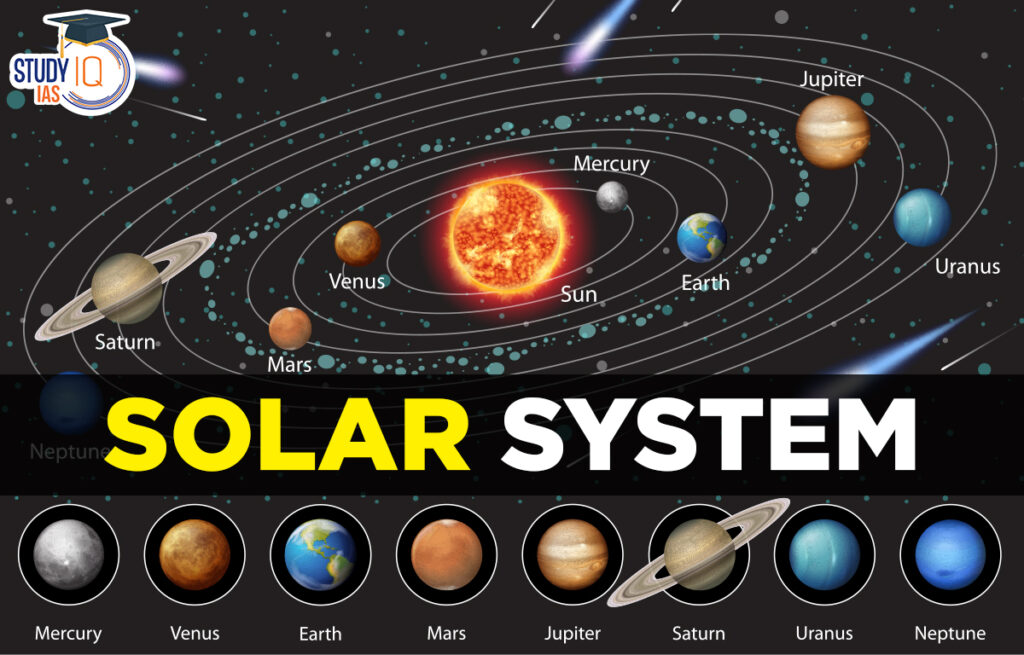
The solar system is divided into two main groups of planets: inner planets (also known as terrestrial planets) and outer planets (also known as gas giants or Jovian planets). Understanding the differences between inner and outer planets helps explain how our solar system formed and why planets vary so dramatically.
These groups are separated by the asteroid belt, with inner planets closer to the Sun and outer planets farther away.
What Are Inner Planets?
The inner planets are Mercury, Venus, Earth, and Mars. They are smaller, rocky worlds with solid surfaces.
What Are Outer Planets?
The outer planets are Jupiter, Saturn, Uranus, and Neptune. These massive gas giants dominate the outer solar system.
Key Differences Between Inner and Outer Planets
Here’s a comparison table highlighting the main inner vs outer planets distinctions:
| Characteristic | Inner Planets (Terrestrial) | Outer Planets (Gas Giants) |
|---|---|---|
| Location | Closer to the Sun (inside asteroid belt) | Farther from the Sun (beyond asteroid belt) |
| Size | Small (Earth is largest at ~12,756 km diameter) | Very large (Jupiter is largest at ~142,984 km diameter) |
| Composition | Rocky, made of silicate rocks and metals | Mostly hydrogen and helium gases; ice giants (Uranus/Neptune) have more ices |
| Density | High (dense and solid) | Low (gaseous and less dense) |
| Surface | Solid, rocky surfaces | No solid surface; thick atmospheres |
| Atmosphere | Thin or none (except Venus’s thick CO2) | Thick atmospheres with clouds and storms |
| Moons | Few or none (Earth: 1, Mars: 2) | Many (Jupiter: 95+, Saturn: 146+) |
| Rings | None | All have ring systems (Saturn’s most visible) |
| Rotation Speed | Slower | Faster |
| Orbital Period | Shorter (faster orbits around Sun) | Longer (slower orbits) |
| Temperature | Warmer (closer to Sun) | Colder (farther from Sun) |
To visualize the dramatic size difference, here’s a comparison between Earth and Jupiter:
Jupiter alone is over 11 times wider than Earth and could fit more than 1,300 Earths inside it!
Additional visuals of terrestrial vs. gas giant comparisons:
Why Are Inner and Outer Planets So Different?
These differences arose during the solar system’s formation about 4.6 billion years ago. Closer to the Sun, temperatures were too high for light gases and ices to condense, so only rocks and metals formed the inner planets. Farther out, cooler conditions allowed gases and ices to accumulate, creating massive outer planets.
This “frost line” explains why inner planets are rocky and small, while outer ones are gaseous giants.
The differences between inner and outer planets showcase the diversity of our solar system. From rocky, Earth-like worlds to enormous gas behemoths with rings and dozens of moons, each group offers unique insights into planetary science. Exploring these contrasts continues to drive missions like NASA’s ongoing studies of Mars and Jupiter’s moons.
If you’re curious about specific planets or solar system facts, dive deeper the universe is full of wonders!