Exploring the Diverse Types of Galaxies in the Universe A Cosmic Guide
The universe is a vast, mysterious expanse filled with billions of galaxies, each a colossal collection of stars, gas, dust, and dark matter bound together by gravity. But not all galaxies are created equal. From the elegant spirals that resemble cosmic pinwheels to the chaotic irregulars that defy neat categorization, the types of galaxies showcase the incredible diversity of our cosmos. Understanding these galactic forms not only helps astronomers classify the universe’s building blocks but also reveals insights into their formation, evolution, and the forces that shape them.
In this comprehensive guide, we’ll dive into the main types of galaxies, exploring their characteristics, examples, and significance. Whether you’re a stargazing enthusiast or a budding astrophysicist, this article will illuminate the wonders of galactic morphology. We’ll cover the classic Hubble classification system and touch on more exotic varieties, all backed by the latest astronomical research. By the end, you’ll appreciate why studying galaxy types is key to unlocking the secrets of the universe’s history.
The Hubble Classification – A Foundation for Galaxy Types
Astronomer Edwin Hubble revolutionized our understanding of galaxies in the 1920s by proposing a classification system based on their visual appearance. Often depicted as a “tuning fork” diagram, this scheme divides galaxies into three primary categories: elliptical, spiral, and irregular, with lenticular galaxies bridging the gap between ellipticals and spirals. This system, while not perfect, remains a cornerstone of galactic studies today.
Elliptical galaxies, denoted as “E” followed by a number from 0 to 7 indicating their ellipticity, are smooth, featureless, and roughly spherical or elongated. They lack the gas and dust needed for new star formation, making them dominated by older, redder stars. Giant ellipticals can contain trillions of stars, while dwarf ellipticals might have just a few million. These galaxies are often found in dense clusters, where gravitational interactions have stripped away their star-forming material
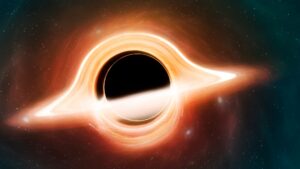
Also See : Black Holes Demystified, Understanding Their Formation and Cosmic Mysteries.
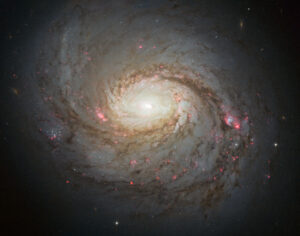
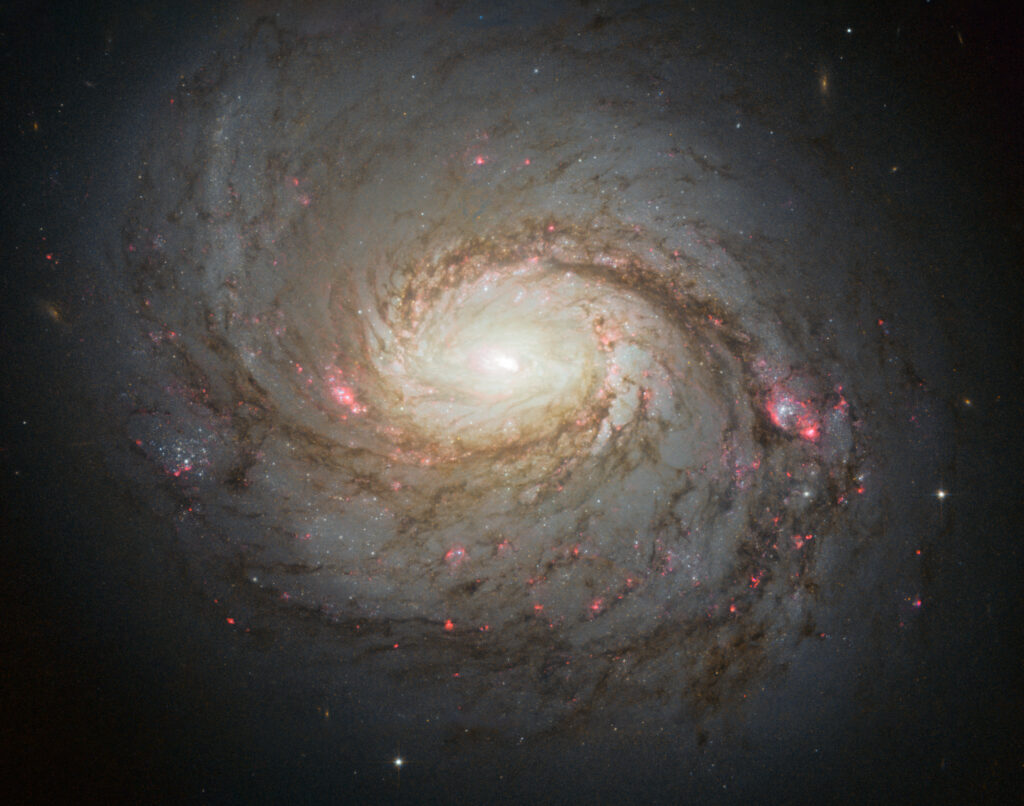
Spiral galaxies, classified as “S” or “SB” (for barred spirals), feature a central bulge surrounded by winding arms of stars, gas, and dust. The arms are sites of active star formation, glowing with young, blue stars. Our own Milky Way is a barred spiral galaxy, with its arms spiraling out from a central bar. Spirals rotate, and their arms are thought to be density waves that trigger star birth as material passes through them.
Lenticular galaxies, or “S0,” combine features of ellipticals and spirals. They have a disk and central bulge like spirals but lack prominent arms and have little gas for star formation. Often called “lens-shaped,” they represent a transitional phase where spirals lose their gas through environmental interactions, such as ram-pressure stripping in galaxy clusters.
Irregular galaxies don’t fit neatly into the other categories. They appear chaotic, with no defined shape, often due to gravitational distortions from nearby galaxies or internal bursts of star formation. The Large and Small Magellanic Clouds, satellites of the Milky Way, are classic examples.
This classification highlights how galaxy shapes correlate with their evolutionary stages and environments, providing a framework for deeper exploration.
Spiral Galaxies – The Dynamic Beauties of the Cosmos
Spiral galaxies are perhaps the most iconic, captivating observers with their graceful arms. These arms aren’t solid structures but rather regions of higher density where stars, gas, and dust compress, sparking new star formation. The rotation of the galaxy maintains this structure, with differential rotation inner parts spinning faster than outer creating the winding pattern.
Barred spirals, like the Milky Way, have a central bar of stars that funnels gas inward, fueling starbursts or feeding supermassive black holes at the core. The Andromeda Galaxy (M31), our nearest large neighbor, is a classic spiral, visible to the naked eye under dark skies. Spirals make up about 60% of galaxies in the local universe and are often isolated or in small groups, allowing them to retain their gas reservoirs.
The formation of spirals is tied to the universe’s early history. They likely form from the collapse of rotating gas clouds, with angular momentum preserving the disk shape. Over time, mergers with smaller galaxies can disrupt arms or create new ones. Advanced telescopes like Hubble have revealed intricate details, such as dust lanes and star clusters, enhancing our understanding of galactic dynamics.
Elliptical Galaxies: The Ancient, Quiescent Giants
In contrast to the vibrant spirals, elliptical galaxies are the elder statesmen of the universe. Lacking gas and dust, they exhibit little ongoing star formation, appearing yellowish due to their population of older stars. Their shapes range from nearly spherical (E0) to highly flattened (E7), determined by random stellar orbits rather than organized rotation.
Giant ellipticals, like M87 in the Virgo Cluster, can span hundreds of thousands of light-years and harbor supermassive black holes billions of times the Sun’s mass. These behemoths often result from multiple galaxy mergers, where spirals collide and lose their structure. Dwarf ellipticals, conversely, are common but faint, making them hard to detect beyond our local group.
Ellipticals dominate dense environments like galaxy clusters, where frequent interactions strip gas and halt star birth. Their study helps astronomers trace cosmic evolution, as they represent the end stage of galactic mergers in a hierarchical universe.
Irregular and Peculiar Galaxies – The Wild Cards
Irregular galaxies challenge the neat Hubble sequence. Classified as “Irr,” they lack symmetry, often appearing as patchy clouds of stars and gas. This irregularity can stem from gravitational tugs by neighbors, as seen in the interacting Antennae Galaxies, or from internal processes like supernova-driven outflows.
Peculiar galaxies, a subset, show unusual features like rings, tails, or double nuclei, often from recent mergers. Active galaxies, including Seyferts and quasars, fit here too their bright cores powered by accreting black holes. Quasars, the most luminous, can outshine entire galaxies.
These types are more common in the early universe, where mergers were frequent, offering clues to how ordered galaxies like ours formed.
Lenticular Galaxies -The Bridge Between Types
Lenticulars, with their flat disks and absent arms, intrigue astronomers as evolutionary intermediaries. They form when spirals exhaust or lose their gas, perhaps through environmental quenching. Examples like NGC 2787 showcase their subtle dust lanes.
Studying lenticulars reveals how galaxies transition over billions of years.
The Bigger Picture – Why Galaxy Types Matter
Galaxy classification isn’t just academic; it informs our understanding of cosmic history. From the Big Bang’s chaotic beginnings to today’s structured universe, galaxy types reflect evolutionary paths influenced by gravity, dark matter, and environment. Future telescopes like the James Webb Space Telescope will uncover even more diversity, pushing the boundaries of our knowledge.