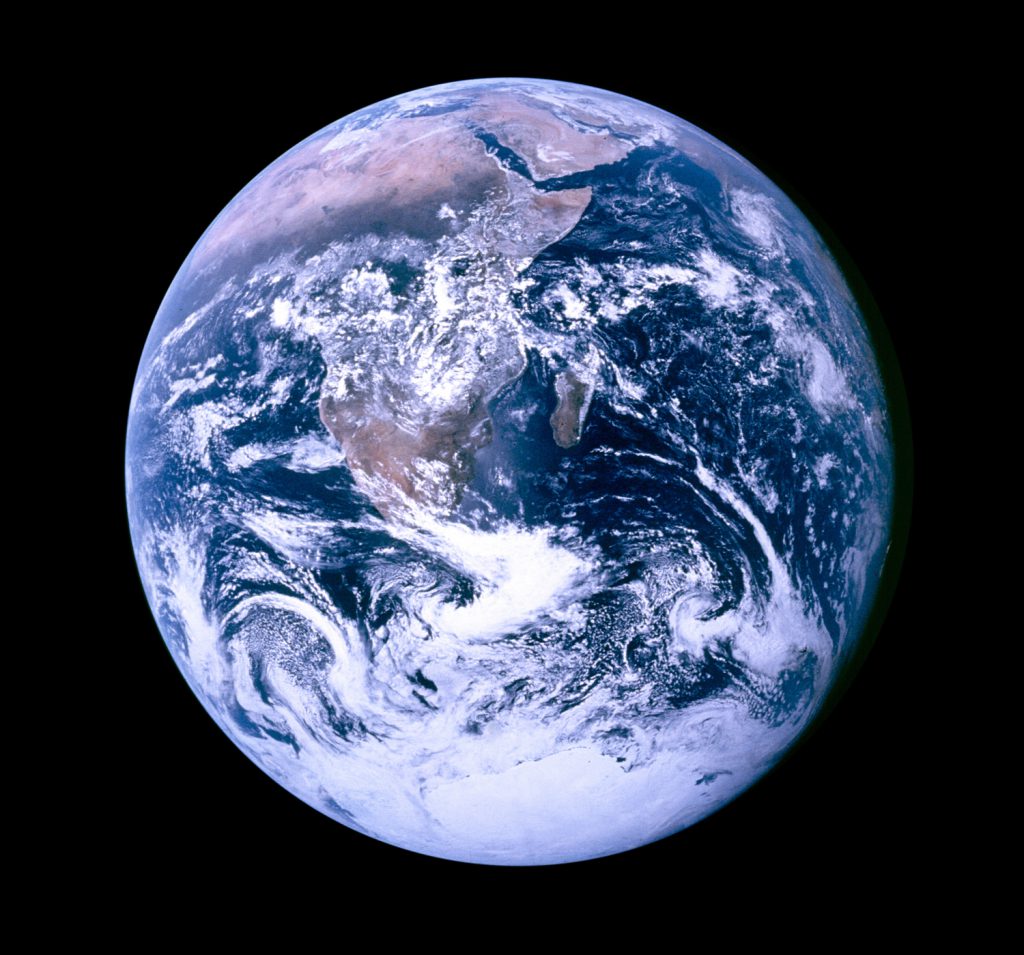
Earth is the third planet from the Sun and the only known place in the universe where life exists. Its unique combination of water, atmosphere, and temperature makes it a rare and remarkable world.
Size, Shape, and Position
Earth has a diameter of about 12,742 kilometers and is slightly flattened at the poles due to its rotation. It completes one orbit around the Sun every 365.25 days and rotates on its axis once every 24 hours.
Earth’s Atmosphere
The atmosphere is made up of:
- 78 percent nitrogen
- 21 percent oxygen
- Small amounts of argon, carbon dioxide, and other gases
This atmosphere protects life by blocking harmful solar radiation and regulating temperature through the greenhouse effect.
Water and the Blue Planet
About 71 percent of Earth’s surface is covered by water, mostly in oceans. Liquid water is essential for all known forms of life and plays a major role in regulating climate.
Earth’s Internal Structure
Earth consists of four main layers:
- Crust
- Mantle
- Outer core
- Inner core
The movement of molten material in the mantle drives plate tectonics, which shapes continents and causes earthquakes and volcanoes.
Magnetic Field and Protection
Earth’s magnetic field is generated by the movement of molten iron in the outer core. This field deflects charged particles from the Sun, protecting the atmosphere from being stripped away.
Life and Biodiversity
Earth is home to millions of species, from microscopic organisms to complex mammals. Biodiversity helps ecosystems remain resilient and balanced.
Conclusion
Earth is a finely balanced planet where physical processes and life are deeply interconnected. Its uniqueness highlights the importance of protecting and preserving it.