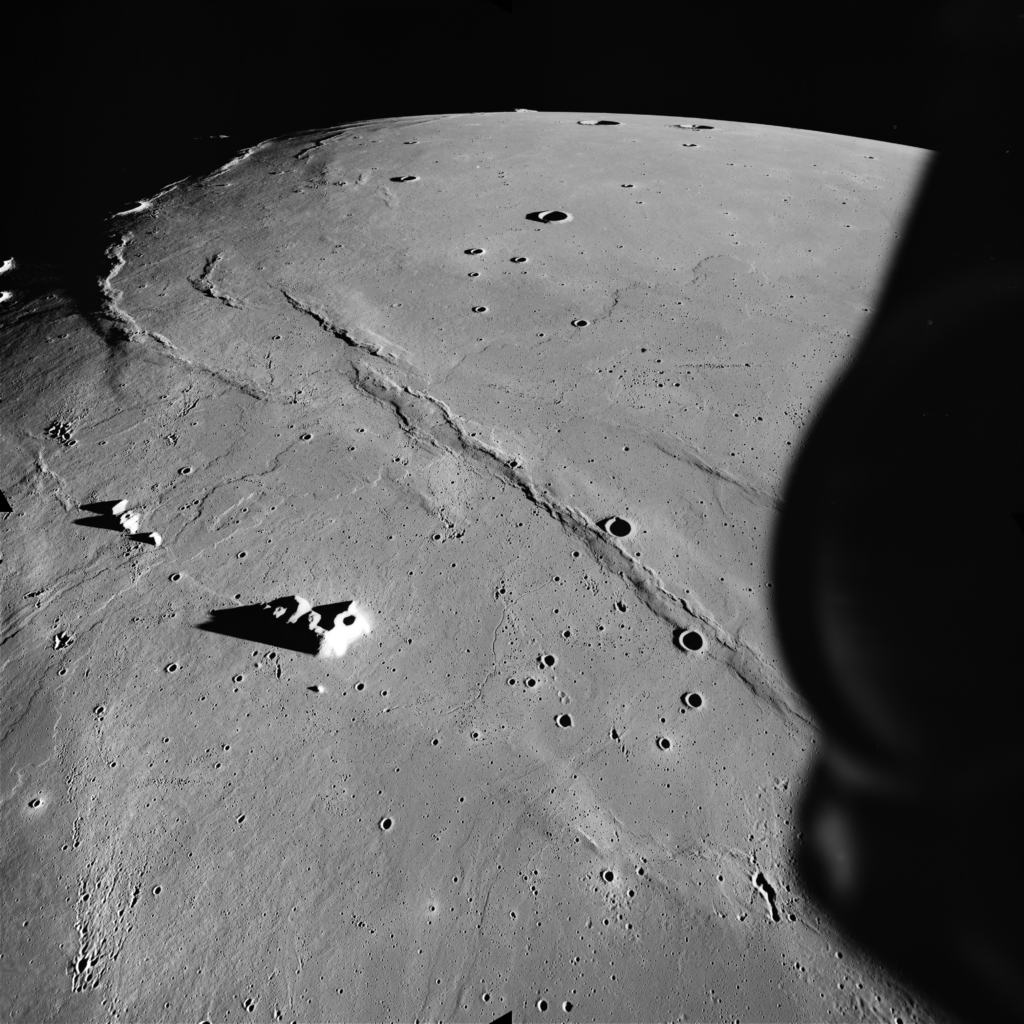
The Moon is Earth’s only natural satellite and one of the most studied celestial objects in the solar system. It plays a crucial role in shaping life on Earth, influencing tides, stabilizing the planet’s rotation, and inspiring human curiosity for thousands of years.
Basic Facts About the Moon
The Moon has a diameter of about 3,474 kilometers, making it the fifth largest moon in the solar system. It orbits Earth at an average distance of 384,400 kilometers and completes one orbit every 27.3 days.
Interestingly, the Moon rotates on its axis at the same rate that it orbits Earth. This phenomenon, known as synchronous rotation, is why the same side of the Moon always faces Earth.
The Surface and Composition
The Moon’s surface is covered with craters formed by asteroid impacts. Because it lacks a thick atmosphere, these craters remain preserved for billions of years.
Major surface features include:
- Lunar maria, which are dark plains formed by ancient volcanic activity
- Highlands, which are older and lighter in color
- Regolith, a layer of fine dust and rock fragments
The Moon is composed primarily of silicate rocks and minerals similar to Earth’s mantle.
Phases of the Moon
The Moon goes through eight primary phases due to its position relative to Earth and the Sun:
- New Moon
- Waxing Crescent
- First Quarter
- Waxing Gibbous
- Full Moon
- Waning Gibbous
- Last Quarter
- Waning Crescent
These phases repeat in a cycle known as the lunar month, lasting about 29.5 days.
The Moon’s Influence on Earth
One of the Moon’s most important roles is controlling ocean tides. Its gravitational pull causes water levels to rise and fall, creating high and low tides.
The Moon also helps stabilize Earth’s axial tilt, which contributes to relatively stable seasons and climate over long periods.
Exploration of the Moon
The Moon was first visited by humans in 1969 during NASA’s Apollo 11 mission. Since then, robotic missions from multiple countries have studied its surface, gravity, and composition.
Modern missions aim to establish a human presence on the Moon and use it as a stepping stone for future Mars exploration.
The Moon is far more than a bright object in the night sky. It is a key partner in Earth’s history, climate, and future space exploration.