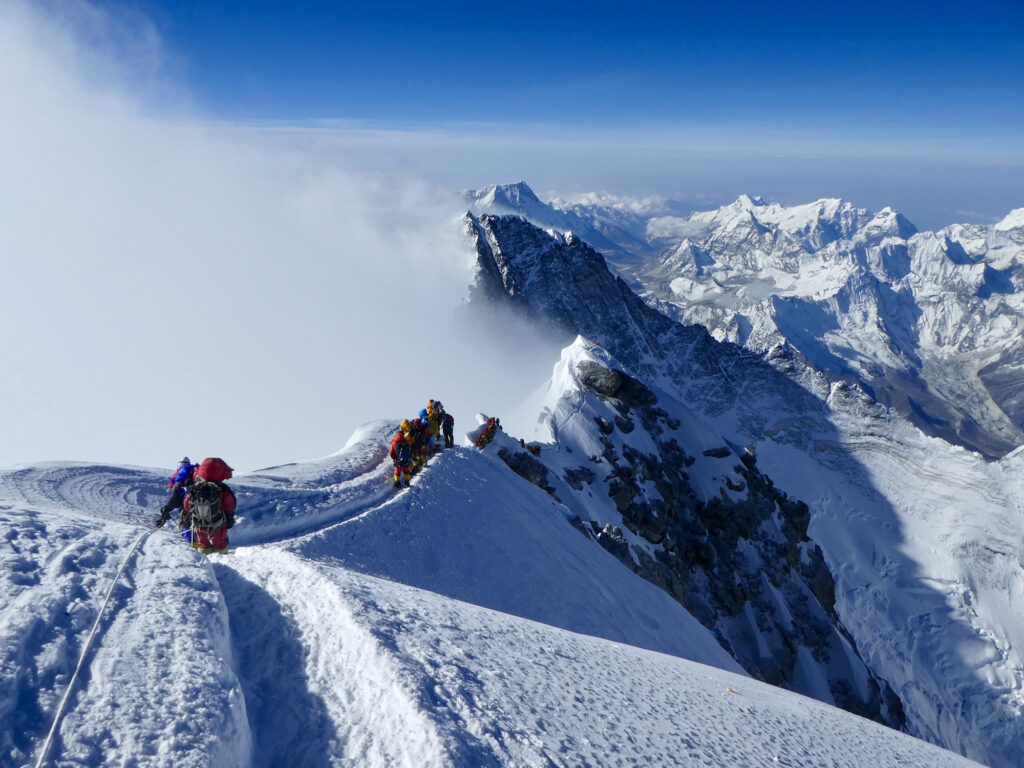
Mount Everest, Earth’s highest peak at 8,848.86 meters (29,031.7 feet), captivates adventurers and scientists alike. Straddling Nepal and Tibet, its history of exploration, triumphs, and tragedies defines human ambition. This comprehensive guide delves into Mount Everest facts, historical milestones, and climbing insights.
Geological Formation and Key Facts
Formed 50-60 million years ago by the Indian-Eurasian plate collision, Everest grows 4mm annually due to tectonics. Named after Sir George Everest in 1865, it’s Sagarmatha in Nepali and Chomolungma in Tibetan. The “death zone” above 8,000m has one-third sea-level oxygen, causing hypoxia.
Everest hosts unique biodiversity, including jumping spiders at 6,700m. Over 300 deaths have occurred, many bodies preserved as landmarks.
Early Expeditions and the Race to the Top
Discovered in 1852 by British surveyors, Everest’s height was confirmed in 1856. The 1921 reconnaissance reached the North Col. In 1924, George Mallory and Andrew Irvine vanished near the summit—Mallory’s body found in 1999.
Post-WWII, Swiss attempts in 1952 paved the way. Edmund Hillary and Tenzing Norgay summited on May 29, 1953, via the Southeast Ridge.
Modern Climbing Expeditions and Records
Seventeen routes exist, but Southeast and North Ridges dominate. Commercial guiding boomed in the 1990s; costs range $30,000-$100,000. Kami Rita Sherpa holds the record with 30 ascents.
Challenges include avalanches, like the 2014 tragedy killing 16 Sherpas. Environmental issues: melting glaciers and trash prompt cleanups.
Cultural Impact and Future Prospects
Sherpas are expedition pillars, with figures like Tenzing inspiring generations. Everest symbolizes perseverance, but overcrowding in 2019 raised safety concerns.
As climate change alters the peak, Everest remains a testament to exploration.