Hungary, a landlocked nation in Central Europe with a rich tapestry of nomadic origins, medieval glory, and modern resilience, has shaped European history through its unique language, fierce independence struggles, and cultural contributions. Known for its thermal spas, paprika-infused cuisine, and the majestic Danube, Hungary’s story spans from the Magyar arrival to its role in contemporary Europe.
The Arrival of the Magyars and Early Kingdom
The Magyars, a Finno-Ugric people from the Ural region, migrated westward and settled the Carpathian Basin around 895–896 CE under Prince Árpád. This conquest, depicted in grand artworks like the Feszty Cyclorama, marked the foundation of Hungarian identity amid battles with local tribes and neighboring powers.
In 1000 CE, Stephen I, a descendant of Árpád, was crowned the first Christian king by Pope Sylvester II, establishing the Kingdom of Hungary and integrating it into medieval Europe. The Árpád dynasty expanded territory, built castles, and fostered Christianity while preserving nomadic traditions.
Golden Age and Mongol Devastation
The 13th–15th centuries brought prosperity under kings like Louis the Great (1342–1382), who expanded influence and founded the University of Pécs. Matthias Corvinus (1458–1490) ushered in a Renaissance era with libraries and arts, making Hungary a cultural hub.
The Mongol invasion of 1241–1242 devastated the land, killing up to half the population. Recovery led to fortified castles, but new threats emerged from the Ottoman Empire.
Ottoman and Habsburg Eras
The Battle of Mohács in 1526 saw Ottoman victory, partitioning Hungary: Habsburgs controlled the west, Ottomans the center, and Transylvania the east as a semi-independent principality. Turkish occupation lasted over 150 years, with constant warfare.
After Habsburg reconquest in the late 17th century, Hungary joined the Austrian Empire. The 1848–1849 Revolution, led by Lajos Kossuth, sought independence but was crushed. The 1867 Compromise created the Austro-Hungarian Empire, granting equality and spurring industrialization and cultural flourishing.
World Wars and the Treaty of Trianon
Hungary allied with the Central Powers in World War I, leading to defeat and the empire’s collapse in 1918. The Treaty of Trianon (1920) reduced territory by two-thirds, losing millions of ethnic Hungarians and fueling revisionism.
In World War II, Hungary aligned with the Axis, suffering occupation and Holocaust atrocities. Post-war Soviet control imposed communism until the 1956 Revolution, a heroic uprising crushed by tanks.
Communist Era and Democratic Transition
From 1949–1989, Hungary endured one-party rule, economic centralization, and repression, though the 1960s “Goulash Communism” brought relative prosperity. The 1989 peaceful transition ended communism, leading to multiparty democracy and EU/NATO membership in 2004 and 1999.
Modern Hungary: Challenges and Identity
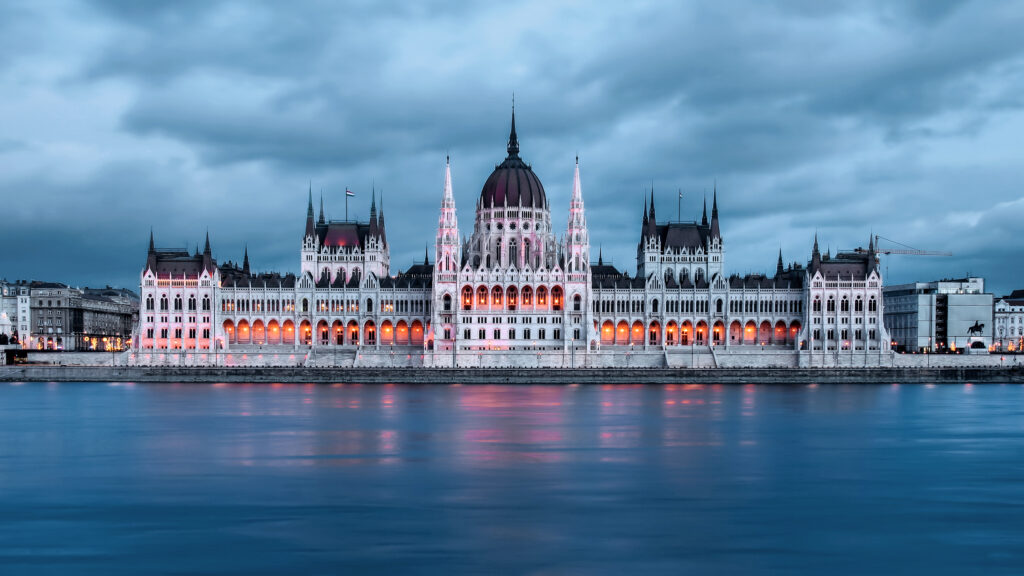
Today, Hungary navigates EU relations, economic growth, and debates over sovereignty under leaders like Viktor Orbán. Its heritage from thermal baths to folk music draws visitors to Budapest’s Parliament and Lake Balaton.
Hungary’s history reflects endurance from steppe warriors to EU member, its spirit endures.