When it comes to unique Swiss traditions, few are as physically intense and culturally rooted as Schwingen, the national sport of Switzerland. Often called “Swiss wrestling,” this ancient practice combines strength, strategy, and tradition, drawing crowds to arenas across the country. For those interested in Swiss customs beyond chocolate and watches, Schwingen offers an exciting glimpse into the nation’s rugged heritage.
A Brief History of Schwingen
Schwingen traces its origins to medieval times, evolving from rural shepherd games in the Alpine regions. It was a way for farmers and herders to test their mettle in friendly competitions, emphasizing fair play and respect. Over the years, it formalized into a structured sport with rules, becoming a symbol of Swiss masculinity and community spirit. Today, it’s governed by the Swiss Schwingen Association, ensuring its preservation.
The Rules and Techniques of the Sport
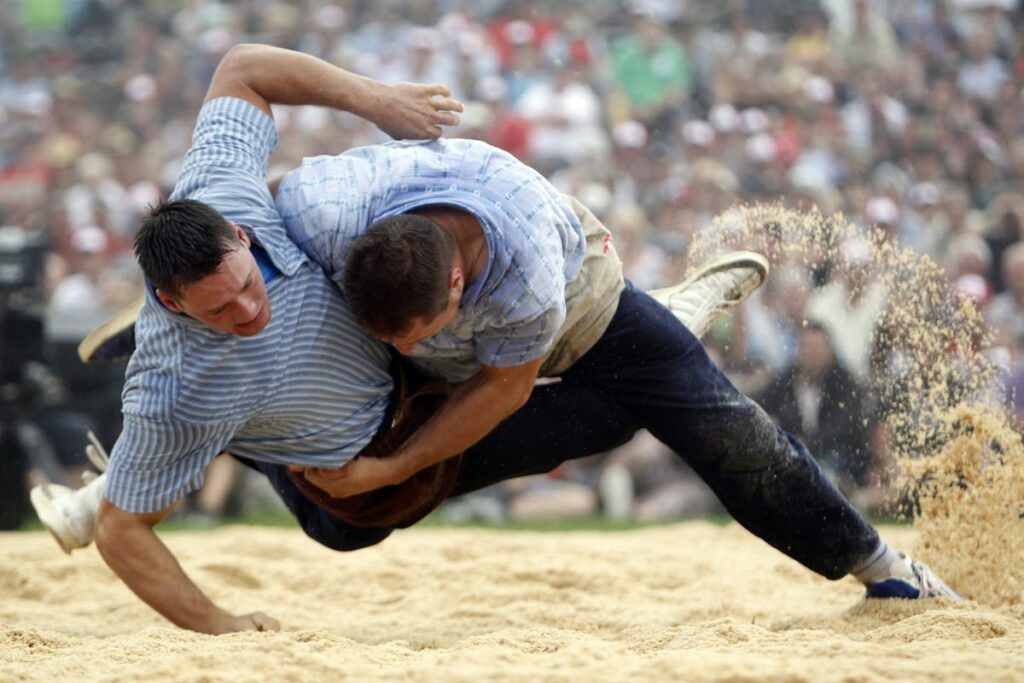
Matches take place in a circular sawdust ring, where two wrestlers, clad in traditional burlap shorts over trousers, grip each other’s belts and attempt to throw their opponent onto their back. Techniques include swings, lifts, and grapples, with bouts lasting until a clear winner emerges. Judges score based on execution, and the emphasis is on technique over brute force, making it accessible yet challenging.
Why Schwingen Remains a Beloved Tradition
Schwingen fosters values like discipline, camaraderie, and national pride, often celebrated at festivals such as the Eidgenössisches Schwing- und Älplerfest (Federal Wrestling and Alpine Festival) held every three years. It’s not just for professionals amateur clubs thrive in villages, welcoming participants of all ages. Experiencing a live Schwingen event in places like the Emmental Valley provides an authentic taste of Swiss culture, complete with yodeling and folk music.
This tradition highlights Switzerland’s blend of athleticism and folklore, making it an unforgettable part of any cultural journey.