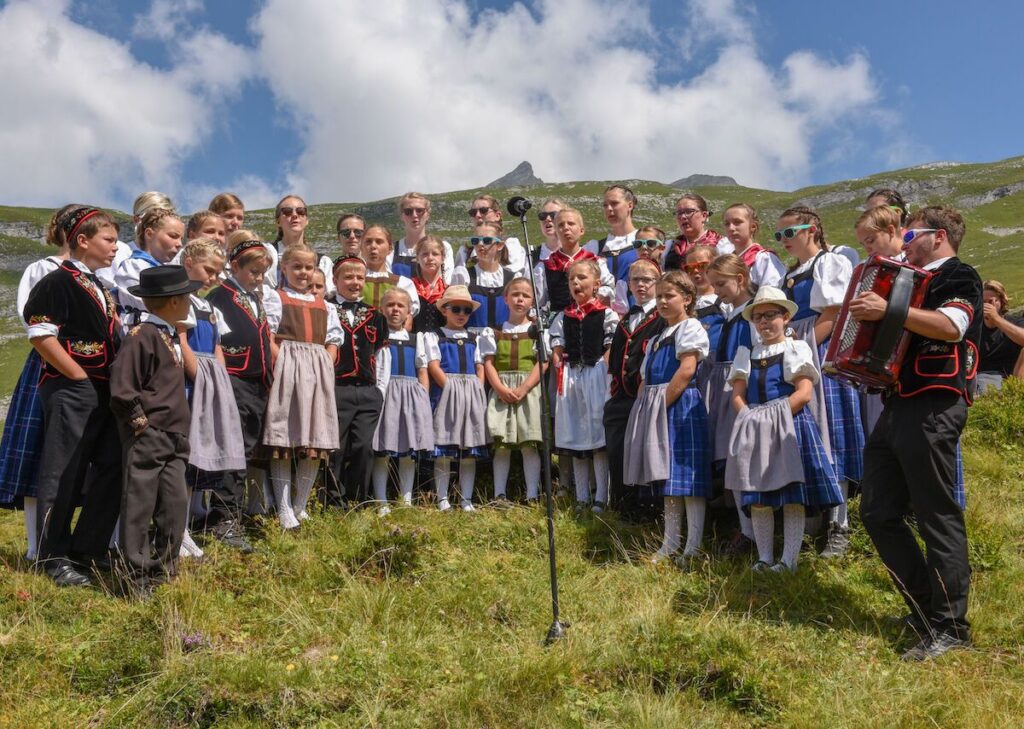
Few sounds capture the essence of the Swiss Alps like yodeling a vocal technique that turns the human voice into an echoing instrument of joy and connection. Recognized by UNESCO as Intangible Cultural Heritage, Swiss yodeling is more than music; it’s a living link to alpine history, community, and the natural landscape.
The Roots and Evolution of Yodeling
Yodeling originated centuries ago among Swiss herders in remote mountain valleys. Without modern communication, they used rapid shifts between chest and head voice to call across vast distances, signal weather changes, or coordinate with fellow shepherds. Over time, it evolved into a formalized folk art, blending natural calls with melodic songs passed down through families and villages.
How Swiss Yodeling is Performed Today
Modern yodelers perform in groups, often accompanied by accordion, alphorn, or hand organ, wearing colorful traditional costumes. The technique requires precise control to alternate between low chest tones and high falsetto notes rapidly—creating that signature “yo-de-lay-hee-hoo” sound that reverberates beautifully in mountain settings. Festivals, choirs, and even family gatherings keep the tradition vibrant.
Where to Experience Authentic Swiss Yodeling
Yodeling thrives in regions like Appenzell, Toggenburg, and the Bernese Oberland. Visitors can attend folk festivals, join workshops to learn the basics, or simply listen during alpine hikes when groups perform spontaneously. It’s a heartfelt expression of Swiss identity joyful, communal, and deeply tied to the mountains.
This timeless vocal tradition reminds us why Switzerland’s cultural heritage continues to enchant people worldwide.