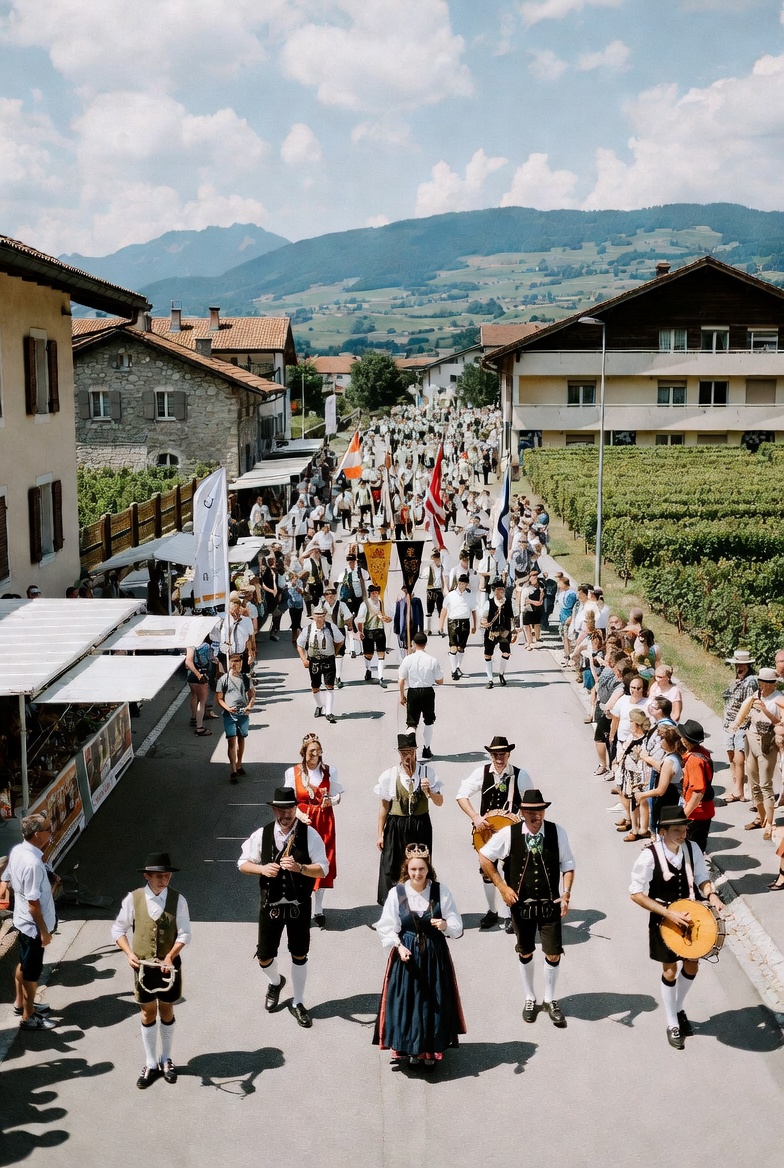
Across Switzerland’s wine regions especially Lavaux, Valais, and Geneva the Fêtes des Vendanges (Vintage Festivals) mark the grape harvest with exuberant celebrations of wine, music, and community. These autumn festivals feature parades, wine tastings, folk performances, and crowned queens, turning vineyards into stages of joy. For wine lovers and cultural travelers, the Fêtes des Vendanges provide an intoxicating glimpse into Switzerland’s lesser-known but thriving viticulture heritage.
Origins and Regional Importance
Switzerland’s wine culture dates back to Roman times, but the modern vintage festivals gained popularity in the 19th and 20th centuries as a way to celebrate successful harvests and promote local wines. In Lavaux (UNESCO World Heritage site), the tradition emphasizes terraced vineyards; in Valais, it highlights robust reds; and in Geneva, it showcases elegant whites. Each region crowns a “Reine des Vendanges” (Vintage Queen), chosen for her knowledge and representation of the area’s viticulture.
Highlights of the Festivals
Festivals typically run from September to October and include colorful parades with flower-decked floats, brass bands, yodeling groups, and traditional costumes. Participants stomp grapes in wooden barrels, offer tastings of new wines (primeur), and enjoy feasts featuring raclette, fondue, and local charcuterie. In Lavaux, the Fête des Vendanges de Lutry features torchlit processions along the lake; in Vevey, the massive Fête des Vignerons (every 20–25 years) elevates the concept to grand theater.
Why Vintage Festivals Matter Today
These events support small family wineries, boost tourism, and preserve grape varieties unique to Switzerland (like Petite Arvine or Cornalin). They foster intergenerational bonds, with children participating in junior parades and elders sharing stories. Visitors can join vineyard walks, tastings, and even harvest activities. The festivals embody Swiss appreciation for nature’s cycles and the pleasure of shared celebration.