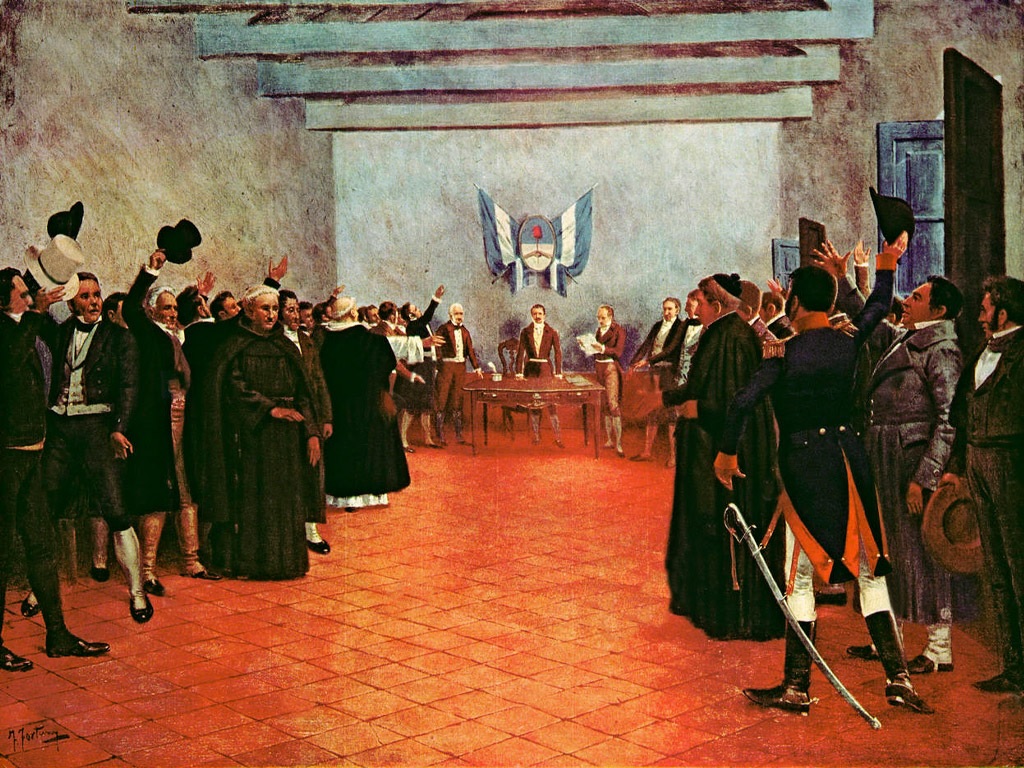
Argentina, a vibrant South American country known for its tango, beef, and football passion, has a rich and complex history spanning thousands of years. From ancient indigenous civilizations to European colonization, independence struggles, economic booms, political turmoil, and democratic recovery, Argentina’s past shapes its identity today.
Pre-Columbian and Colonial Era
Before European arrival, the region was home to diverse indigenous groups like the Mapuche, Guarani, and Diaguita. Spanish explorers first reached the area in the early 16th century, with Buenos Aires founded in 1536 (and refounded in 1580). Argentina became part of the Viceroyalty of the Río de la Plata under Spanish rule, serving as a trade hub for silver from Potosí.
Independence and Early Republic (1810–1880)
The May Revolution of 1810 marked the beginning of the independence movement from Spain. On July 9, 1816, the Congress of Tucumán formally declared independence. Leaders like José de San Martín played key roles in liberating not only Argentina but also Chile and Peru.
The 19th century saw civil wars between Unitarians (centralized government) and Federalists (provincial autonomy), alongside the iconic gaucho culture of the pampas.
Golden Age and Immigration Boom (1880–1930)
Under presidents like Domingo Sarmiento and the “Generation of ’80,” Argentina experienced rapid modernization. Massive European immigration (mostly Italian and Spanish) transformed Buenos Aires into a cosmopolitan city. By 1914, Argentina was one of the world’s wealthiest nations, fueled by beef and grain exports. Tango emerged in the working-class neighborhoods of Buenos Aires during this era.
Peronism and Political Instability (1946–1983)
Juan Domingo Perón rose to power in 1946, introducing populist policies, workers’ rights, and nationalism—known as Peronism. His wife, Eva “Evita” Perón, became an icon for the working class. Perón was overthrown in 1955, leading to cycles of military coups and civilian rule.
The 1976–1983 military dictatorship, or “Dirty War,” involved severe human rights abuses, with thousands “disappeared.” The regime’s defeat in the 1982 Falklands War (Guerra de Malvinas) against Britain hastened its collapse.
Key Historical Milestones Timeline
| Period | Event | Significance |
|---|---|---|
| Pre-1536 | Indigenous civilizations | Diverse cultures across the region |
| 1536–1810 | Spanish colonization | Establishment of Buenos Aires and viceroyalty |
| 1816 | Declaration of Independence | Formal break from Spain |
| 1880–1914 | Economic golden age | Immigration boom, wealth from exports |
| 1946–1955 | First Perón presidency | Rise of Peronism and social reforms |
| 1976–1983 | Military dictatorship | Dirty War and human rights violations |
| 1983–present | Return to democracy | Trials for junta leaders, economic challenges |
Modern Argentina
Since the return to democracy in 1983, Argentina has faced economic crises (like the 2001 default) but remains a cultural powerhouse in Latin America. Today, Buenos Aires blends historical grandeur with modern vibrancy.
Argentina’s history reflects resilience, cultural fusion, and ongoing pursuit of stability. This South American gem continues to captivate the world with its dramatic past and passionate spirit.