History of Armenia
Armenia, one of the world’s oldest civilizations, boasts a history spanning over 2,500 years. Nestled in the South Caucasus, it is renowned as the first nation to adopt Christianity as a state religion in 301 AD. Despite invasions, genocides, and geopolitical challenges, Armenian culture—marked by its unique alphabet, ancient monasteries, and enduring spirit—has survived and thrived. Mount Ararat, a national symbol visible from Yerevan yet located in modern Turkey, represents Armenia’s historical heartland.
Ancient Armenia: Urartu and the Classical Era
Armenian history traces back to the Kingdom of Urartu (9th–6th centuries BC), a powerful state known for advanced irrigation and fortresses.
The Armenian people emerged around the 6th century BC. Under King Tigranes the Great (95–55 BC), the Armenian Empire reached its zenith, stretching from the Caspian Sea to the Mediterranean.
Christianization and Medieval Period
In 301 AD, King Tiridates III converted under the influence of Gregory the Illuminator, making Armenia the first Christian nation. This era saw the creation of the Armenian alphabet in 405 AD by Mesrop Mashtots, preserving literature and identity.
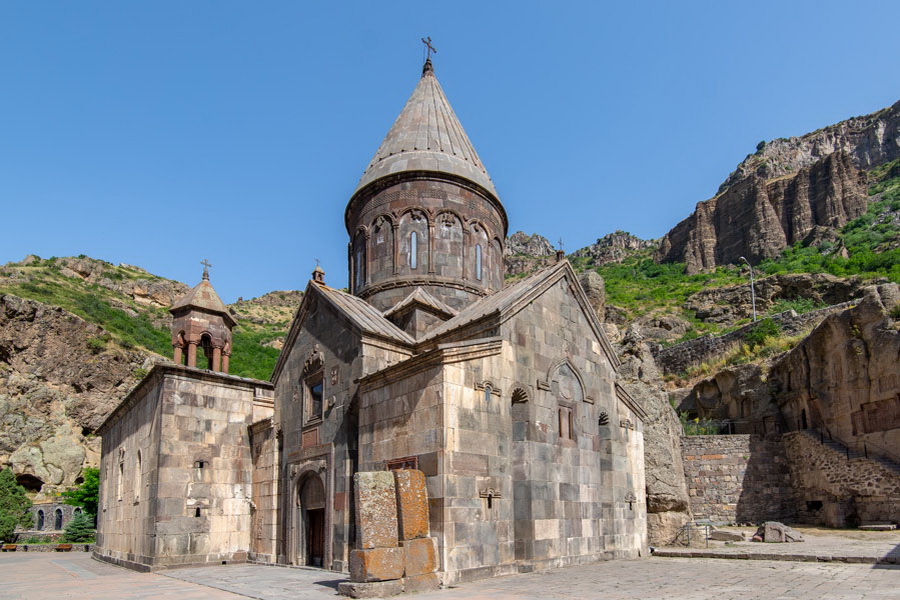
Medieval Armenia featured iconic monasteries like Geghard and Etchmiadzin Cathedral, the mother church of the Armenian Apostolic Church.
Ottoman, Persian, and Russian Rule
From the 16th century, Armenia was divided between the Ottoman and Persian Empires. The 19th century brought Russian annexation of Eastern Armenia, offering relative stability.
The Armenian Genocide and First Republic
During World War I, the Ottoman Empire systematically killed an estimated 1.5 million Armenians (1915–1923), recognized as genocide by many countries but denied by Turkey. Survivors fled, forming a global diaspora.
In 1918, the short-lived First Republic of Armenia emerged, but was sovietized in 1920.
Soviet Era and Independence
As the Armenian Soviet Socialist Republic (1920–1991), it industrialized but suffered Stalinist repressions. The 1988 earthquake devastated Spitak, killing tens of thousands.
Armenia declared independence in 1991 amid the USSR’s collapse. Conflicts over Nagorno-Karabakh led to wars with Azerbaijan (1988–1994 and 2020).
Key Historical Milestones Timeline
| Period | Event | Significance |
|---|---|---|
| 9th–6th century BC | Kingdom of Urartu | Early advanced state in Armenian highlands |
| 95–55 BC | Empire of Tigranes the Great | Peak of ancient Armenian power |
| 301 AD | Adoption of Christianity | First nation to make Christianity state religion |
| 405 AD | Invention of Armenian alphabet | Foundation of Armenian literary tradition |
| 1915–1923 | Armenian Genocide | Tragic loss of 1.5 million lives and homeland |
| 1918–1920 | First Republic of Armenia | Brief independence post-WWI |
| 1920–1991 | Soviet Armenia | Industrialization and cultural preservation |
| 1991–present | Republic of Armenia | Independence, Karabakh conflicts, democracy |
Modern Armenia
Today, Yerevan, one of the world’s oldest continuously inhabited cities, blends ancient heritage with modern life. Armenia maintains strong diaspora ties and pursues economic growth despite regional tensions.