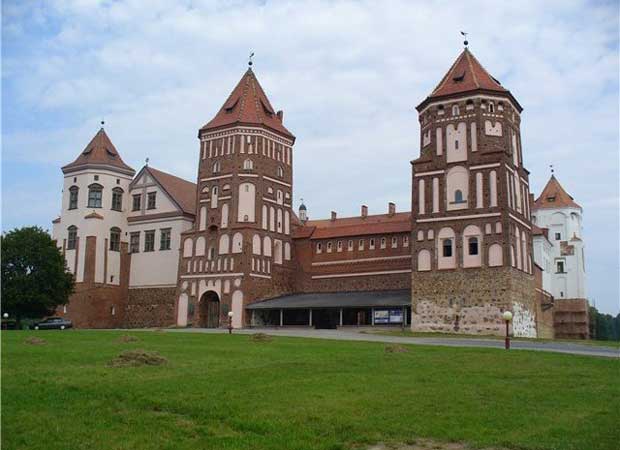
Belarus, a landlocked country in Eastern Europe, has a long and complex history shaped by powerful empires, shifting borders, and resilient cultural traditions. Located between Russia, Ukraine, Poland, Lithuania, and Latvia, Belarus has often stood at the crossroads of European civilizations. Its history reflects centuries of struggle, adaptation, and survival that eventually led to the formation of the modern Belarusian state.
Early History and Slavic Origins
The territory of present-day Belarus was first settled by Baltic and Slavic tribes as early as the first millennium AD. Among the most influential Slavic tribes were the Krivichs, Dregovichs, and Radimichs. These groups formed the foundation of Belarusian ethnic identity, language, and traditions.
By the 9th century, the region became part of Kievan Rus, a powerful medieval federation centered in Kyiv. Cities such as Polotsk emerged as important political and cultural centers. The Principality of Polotsk, one of the earliest state formations on Belarusian land, played a crucial role in regional politics and trade.
The Grand Duchy of Lithuania Era
After the decline of Kievan Rus due to internal conflicts and Mongol invasions, Belarusian lands gradually became part of the Grand Duchy of Lithuania during the 13th and 14th centuries. This period marked a golden age in Belarusian history.
The Grand Duchy was one of the largest states in Europe, stretching from the Baltic Sea to the Black Sea. Old Belarusian (Ruthenian) became the official administrative language, and local elites enjoyed significant autonomy. Legal codes such as the Statutes of Lithuania were written in Ruthenian, highlighting the importance of Belarusian culture and governance.
Union with Poland and Cultural Shifts
In 1569, the Union of Lublin created the Polish-Lithuanian Commonwealth, bringing Belarusian territories under stronger Polish influence. Catholicism expanded alongside Polish language and culture, especially among the nobility. Meanwhile, Orthodox Christianity remained dominant among the rural population.
This era saw both cultural exchange and tension. While education and printing flourished, Belarusian language and identity gradually lost their official status. By the late 18th century, internal weakness and external pressure led to the decline of the Commonwealth.
Russian Empire and National Awakening
Between 1772 and 1795, the Polish-Lithuanian Commonwealth was partitioned by Russia, Prussia, and Austria. Most Belarusian lands were absorbed into the Russian Empire. The imperial government imposed Russification policies, restricting the use of Belarusian language and suppressing local traditions.
Despite these challenges, the 19th century witnessed a Belarusian national awakening. Intellectuals, writers, and activists began to promote Belarusian history, folklore, and language. Figures such as Francysk Skaryna, an early printer and humanist, became symbols of national pride.
20th Century Turmoil and Soviet Rule
The early 20th century was a time of upheaval. Following World War I and the Russian Revolution, Belarus briefly declared independence in 1918 as the Belarusian People’s Republic. However, this independence was short-lived.
In 1922, Belarus became a founding republic of the Soviet Union. Soviet rule brought industrialization and modernization but also severe repression. The Stalinist purges of the 1930s devastated Belarusian intellectual and cultural life. World War II was especially catastrophic, with millions killed and entire cities destroyed during Nazi occupation.
Independence and Modern Belarus
After the collapse of the Soviet Union in 1991, Belarus declared independence. The country retained strong political, economic, and cultural ties with Russia, shaping its post-Soviet trajectory.
Today, Belarus remains a nation deeply influenced by its history. From medieval principalities to imperial domination and Soviet legacy, the story of Belarus is one of endurance and identity. Understanding its past is essential to understanding the challenges and aspirations of the Belarusian people in the modern era.