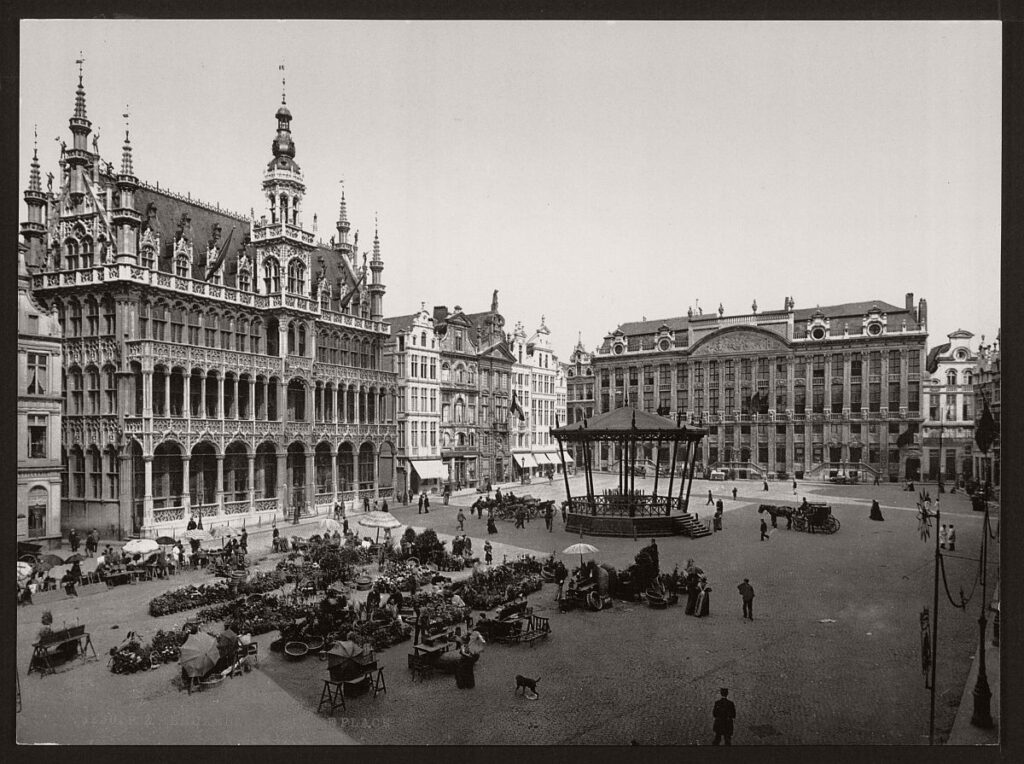
Belgium, located at the heart of Western Europe, has a rich and diverse history shaped by conquest, trade, and cultural exchange. Despite its relatively small size, Belgium has played a significant role in European history due to its strategic location between major powers such as France, Germany, and the Netherlands.
Ancient Origins and Roman Rule
The name Belgium originates from the Belgae, a group of Celtic and Germanic tribes described by Julius Caesar in his accounts of the Gallic Wars. In the 1st century BC, the region was conquered by the Roman Empire and became part of Gallia Belgica.
Under Roman rule, Belgium developed extensive road networks, urban centers, and trade systems. Cities such as Tongeren became important administrative hubs. Christianity gradually spread throughout the region during the late Roman period.
Early Middle Ages and Frankish Influence
After the fall of the Roman Empire, the region came under the control of the Frankish kingdoms. During the early Middle Ages, Belgium was divided into various feudal territories, including the counties of Flanders and Brabant.
Flanders, in particular, became one of Europe’s wealthiest regions due to its thriving textile industry and trade connections. Medieval Belgian cities such as Bruges, Ghent, and Antwerp emerged as major commercial centers.
Burgundian and Habsburg Rule
In the 15th century, much of Belgium came under the control of the Dukes of Burgundy. This period brought political stability and cultural flourishing. Art, architecture, and commerce thrived, making the region one of Europe’s most prosperous areas.
Later, the Habsburg dynasty inherited the territory, linking Belgium to the Spanish and Austrian empires. Religious conflict during the Protestant Reformation deeply affected the region, leading to wars and political fragmentation.
French and Dutch Control
In the late 18th century, Belgium was annexed by Revolutionary France. French rule introduced major reforms, including the abolition of feudal privileges and the introduction of modern legal systems.
After Napoleon’s defeat in 1815, Belgium was merged with the Netherlands to form the United Kingdom of the Netherlands. However, religious, cultural, and economic differences led to growing dissatisfaction among Belgians.
Belgian Independence and Industrial Growth
In 1830, Belgium successfully revolted against Dutch rule and became an independent constitutional monarchy. This marked the birth of the modern Belgian state.
Belgium quickly became one of the world’s first industrialized nations, driven by coal mining, steel production, and railway development. Its economy and infrastructure expanded rapidly throughout the 19th century.
20th Century Conflicts and European Integration
Belgium suffered greatly during both World War I and World War II due to its strategic position. Major battles, including those in Flanders, left lasting scars on the nation.
After World War II, Belgium played a central role in European cooperation. It became a founding member of the European Union and hosts key EU institutions in Brussels, reinforcing its importance on the global stage.
Modern Belgium
Today, Belgium is known for its multicultural society, divided mainly between Dutch-speaking Flanders and French-speaking Wallonia. Despite linguistic and political complexities, Belgium remains a stable democracy and an influential European nation.
The history of Belgium is a story of resilience, adaptation, and unity amid diversity. Its journey from ancient tribal lands to a modern European state reflects the broader evolution of Europe itself.