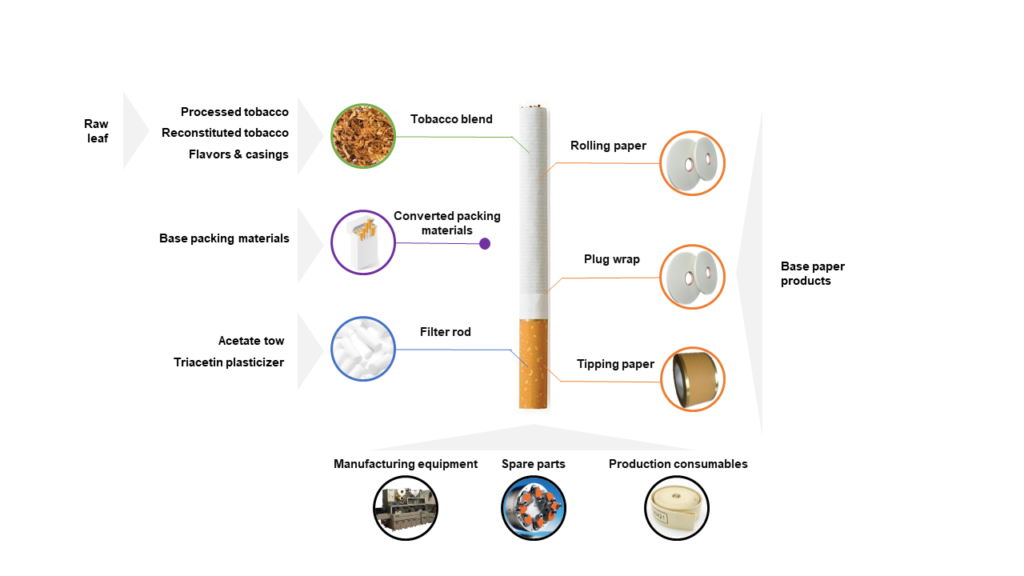
Cigarettes have been a part of human culture for centuries, but have you ever wondered about the intricate cigarette manufacturing process? From the fields where tobacco is grown to the high-speed machines in factories, the journey of how cigarettes are made is a blend of traditional farming techniques and modern industrial precision. In this article, we’ll explore the step-by-step process of cigarette production, highlighting key stages like tobacco cultivation, processing, blending, and packaging. Whether you’re curious about the tobacco industry or seeking insights into cigarette manufacturing, this guide covers it all.
The Origins Tobacco Cultivation and Harvesting
The cigarette manufacturing process begins long before the factory floor with the cultivation of tobacco plants. Tobacco is grown in various regions worldwide, where farmers select specific varieties based on climate and soil conditions. The plants are typically sown in seedbeds and then transplanted to fields after about 6-8 weeks.
Once mature, usually after 2-3 months, the leaves are harvested. Harvesting can be done by hand or machine, depending on the scale of operation. After picking, the leaves undergo curing, a critical step where they are dried to reduce moisture and develop flavor. Common curing methods include air-curing, flue-curing, fire-curing, or sun-curing, each imparting unique characteristics to the tobacco. This stage ensures the leaves are ready for further processing without spoiling.
Processing the Tobacco Leaves
Post-harvest, the cured tobacco leaves are transported to processing facilities. Here, they are sorted, graded, and stemmed meaning the central vein is removed to prepare the lamina (leaf blade) for shredding. The leaves are then moistened to make them pliable and shredded into fine strips, often referred to as “cut rag” tobacco.
Fermentation follows in some cases, where the tobacco is aged in controlled environments to enhance flavor and reduce harshness. Additives like humectants (e.g., glycerin) and sugars may be applied to maintain moisture and prevent the tobacco from drying out into powder. This processing phase is essential for achieving consistency in the final product, as different tobacco types are blended to create specific brand profiles.
Blending Creating the Perfect Mix
Blending is where the art and science of cigarette production come together. Manufacturers combine various tobacco types such as Virginia, Burley, and Oriental to achieve the desired taste, strength, and burn rate. This step also involves incorporating additives for flavor, preservation, and nicotine delivery.
The blend is carefully tested for quality, ensuring it meets regulatory standards. Once approved, the mixture is conditioned to an optimal moisture level, typically around 12-15%, making it ready for the manufacturing machines. Blending not only defines the cigarette’s character but also ensures uniformity across billions of units produced annually.
The Core Manufacturing Process From Rod to Cigarette
At the heart of how cigarettes are made is the high-speed manufacturing line. The process starts by creating a long “rod” of tobacco. A spool of cigarette paper, which can be up to 7,000 meters long, is unrolled, and a continuous stream of blended tobacco is deposited onto it. The paper is then wrapped around the tobacco, forming an endless rod that’s glued along the seam.
Next, filters are attached. Filters are made from cellulose acetate, resembling cotton with tiny holes for airflow, and are produced separately before being joined to the rod. The combined rod is cut into individual cigarette lengths usually 84-120 mm using precise rotary blades. Modern machines, like the Mark 9, can produce thousands of cigarettes per minute, ensuring each one is uniform in size, weight, and density.
Quality control is rigorous throughout, with sensors checking for defects like loose tobacco or uneven packing. Rejected cigarettes are discarded to maintain standards.
Packaging and Final Preparation
Once manufactured, cigarettes are grouped into packs, typically 20 per pack, using machines like the HLP that operate at speeds of 250 packs per minute. Packs are wrapped in foil for freshness, inserted into cardboard boxes, and sealed with cellophane. Branding, health warnings, and barcodes are printed on the packaging to comply with legal requirements.
The final products are boxed into cartons for distribution. Factories produce trillions of cigarettes yearly, with automation ensuring efficiency and hygiene. Environmental and safety regulations, including waste management and worker protections, are integral to modern operations.
Industry Insights and Considerations
The cigarette manufacturing process has evolved significantly, incorporating technology to boost efficiency while adhering to strict health and safety standards. However, it’s important to note the health risks associated with smoking, as emphasized by global regulations. Innovations like reduced-harm alternatives are emerging, but traditional cigarette production remains a massive industry.
If you’re interested in learning more about tobacco processing or factory tours, resources from major manufacturers provide deeper dives. Understanding how cigarettes are made sheds light on this complex supply chain, from farm to pack.
In summary, the cigarette manufacturing process is a fascinating interplay of agriculture, engineering, and quality assurance. By following these steps, factories produce consistent products on a global scale. For more details on specific machines or tobacco varieties, explore related resources in the tobacco industry.