Gas lighters, those handy devices used for igniting cigarettes, stoves, and more, are marvels of modern manufacturing. The gas lighter manufacturing process combines precision engineering, high-tech machinery, and rigorous quality control to produce reliable, safe products. In this article, we’ll dive into the step-by-step journey of how gas lighters are made, from raw materials to final packaging. Whether you’re interested in the lighter production process or exploring the cigarette lighter manufacturing industry, this guide provides detailed insights to satisfy your curiosity.
Raw Materials The Foundation of Gas Lighter Production
The gas lighter manufacturing process begins with sourcing high-quality raw materials. Key components include plastic granules (like Delrin for durability), stainless steel for the flint wheel and springs, brass or aluminum for valves, and butane gas as the fuel. Flint stones, made from ferrocerium alloy, provide the spark, while piezo-electric crystals are used in electronic models to generate voltage through mechanical deformation.
These materials are carefully selected for their properties: plastics must withstand high pressures, metals need to be corrosion-resistant, and butane ensures a consistent flame. Factories often source these from specialized suppliers to maintain consistency and comply with safety standards.
Injection Molding and Forming Shaping the Lighter Body
Once materials are prepared, the process moves to forming the lighter’s body. Injection molding machines heat plastic granules to a molten state and inject them into multi-cavity molds under high pressure. This creates the outer shell, which is tough and ergonomic. For metal parts like the inner casing or valve bodies, die-casting machines melt zinc, aluminum, or brass and inject the liquid into precise molds at temperatures up to 400°C.
Brass components may undergo pressing and heat-treatment to soften and reshape them, followed by cleaning. This stage ensures parts are accurate to the 1/100th of a millimeter, crucial for safety and functionality. Automated systems handle these operations, producing hundreds of units per minute.
Assembly: Putting It All Together
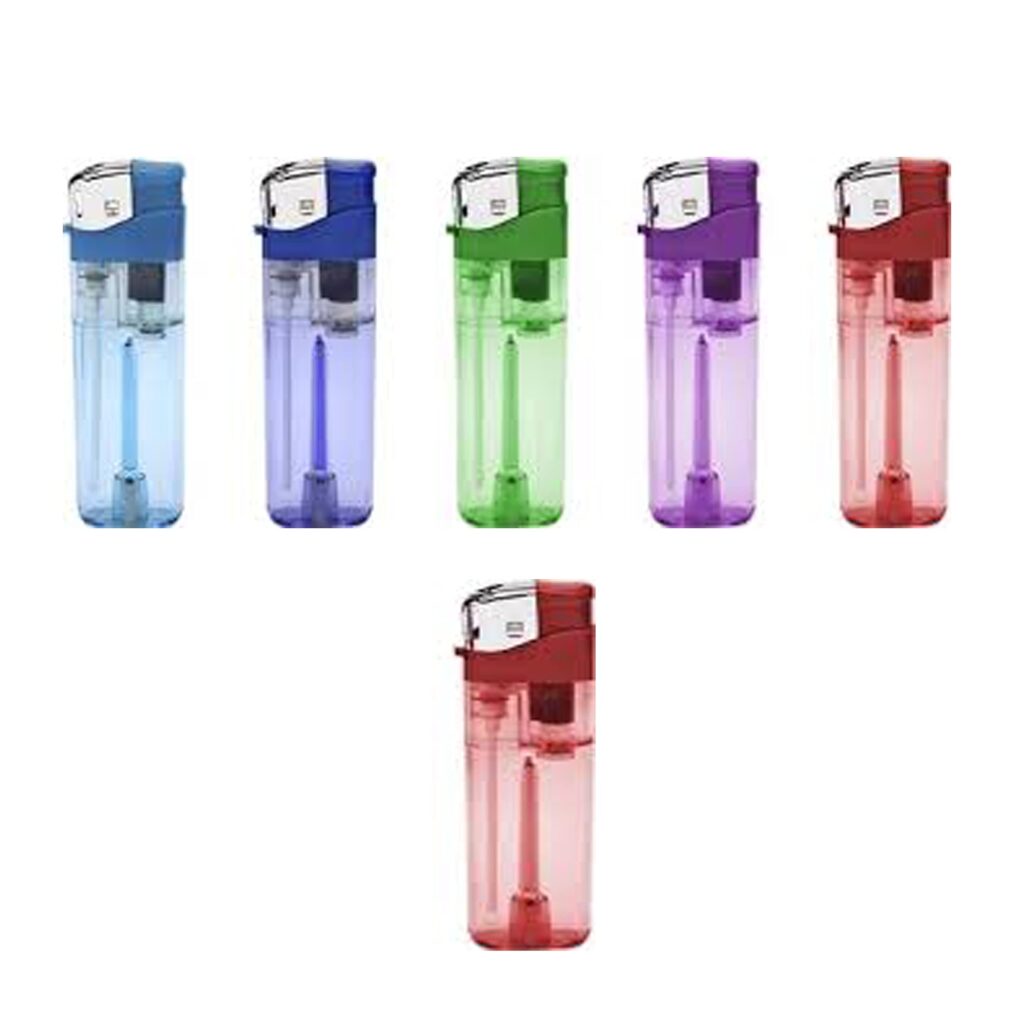
Assembly is the heart of the lighter production process. Robotic arms or semi-automatic stations fit the ignition system into the molded body. This includes installing the steel flint wheel, spring-loaded flint, gas release valve, and sometimes a cotton wick or fuel sponge to absorb the butane.
For electronic gas lighters, the piezo-electric crystal is integrated, allowing a spark from mechanical pressure without batteries. Welding secures components like the nozzle, ensuring no leaks. The process uses CNC machining for precision valves and cold stamping for metal parts. Quality checks at this stage verify alignment and functionality.
Gas Filling and Testing Ensuring Safety and Performance
After assembly, lighters are filled with pressurized butane or isobutane gas through automated heads. Isobutane provides stable pressure, maintaining consistent flame height throughout the lighter’s life.
Rigorous testing follows: flame generation requires deliberate action (e.g., 15N force), extinction prevents reignition, and height adjustments stay within safe limits. Leak tests, drop tests, and heat resistance checks ensure compliance with standards like BIS in India. Defective units are discarded, emphasizing safety in the gas lighter manufacturing process.
Packaging and Distribution The Final Steps
Completed lighters undergo printing for branding and quality control before packaging. They are sealed in blister packs or boxes to preserve freshness and prevent tampering. Modern factories produce millions annually, with automation boosting efficiency.
Environmental considerations include waste management and recycling programs, as seen in brands like BIC. The finished products are distributed globally, ready for use in everyday scenarios like lighting cigarettes.
Industry Insights Innovations and Considerations
The gas lighter manufacturing process has evolved with technology, incorporating sustainable materials and advanced robotics. Brands like BIC emphasize reliability, offering up to 3,000 lights per unit. However, safety regulations are paramount due to the flammable nature of butane.
If you’re exploring lighter production equipment or starting a business, understanding these steps is essential. For more on specific models or factory tours, check resources from leading manufacturers. This overview of how gas lighters are made highlights the blend of craftsmanship and innovation driving the industry.