The question “How many galaxies are there?” sparks awe, highlighting the universe’s immensity. Estimates have evolved from thousands to trillions, thanks to advancing telescopes peering deeper into space. This article delves into current figures, methodologies, factors influencing counts, and implications for cosmology, offering an informative look at our vast cosmic neighborhood.
Estimating the Number: From Hubble to Modern Surveys
Early 20th-century estimates pegged galaxies at around 100,000, but Hubble’s deep fields revealed more. The Hubble Ultra-Deep Field imaged 10,000 galaxies in a tiny sky patch, extrapolating to 100-200 billion in the observable universe.
Recent data from JWST pushes this to 2 trillion, considering faint, distant ones. The observable universe spans 93 billion light-years, with galaxy density about 0.0001 per cubic megaparsec.
The Role of Dark Matter and Galaxy Formation
Galaxies form from dark matter halos collapsing post-Big Bang. Hierarchical merging builds larger ones from dwarfs. Simulations like Illustris model this, estimating 10^11 to 10^12 galaxies.
Dark matter, 85% of mass, scaffolds structures. Without it, fewer galaxies would form. Early universe reionization affected counts, with JWST spotting ancient, small galaxies.
Observable vs. Entire Universe: The Horizon Limit
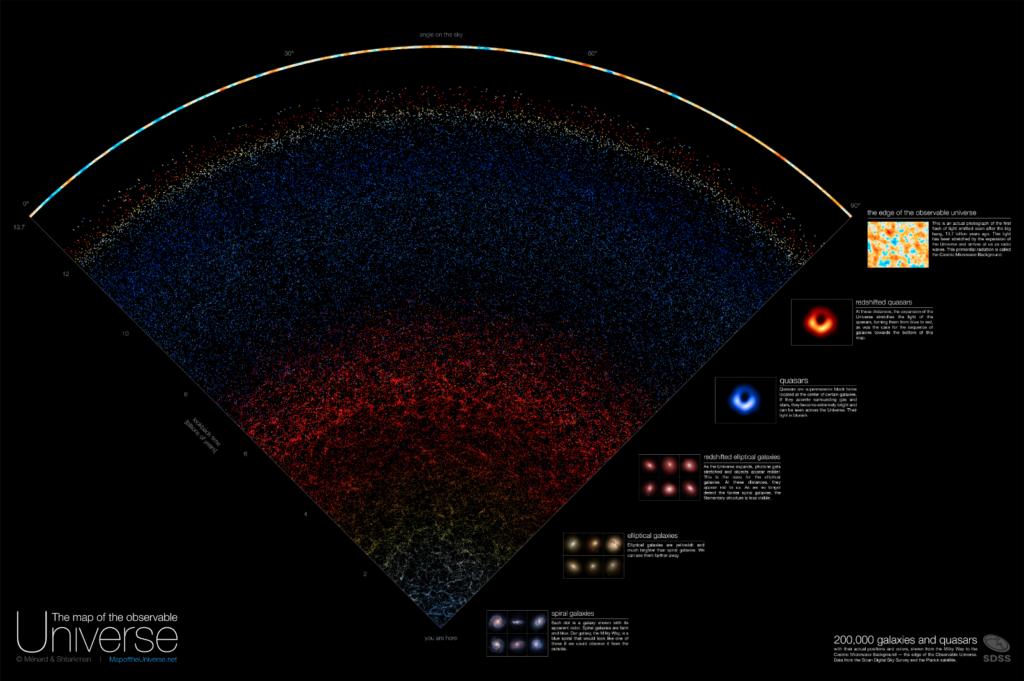
We see only to 13.8 billion light-years back, but expansion means the full universe could be infinite, with infinite galaxies. Observable estimates: 100 billion to 2 trillion, varying by faint galaxy inclusion.
Surveys like Sloan Digital Sky Survey map millions, revealing large-scale structures like voids and filaments influencing distribution.
Types and Sizes: Impact on the Total Count
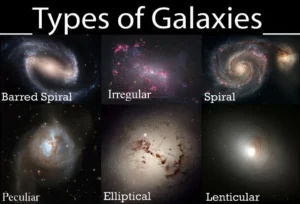
Dwarf galaxies, under 1 billion stars, outnumber giants 10:1. Ultra-faint dwarfs, detected via gravitational lensing, boost totals. Spirals and ellipticals are visible, but dwarfs dominate numerically.
Cluster environments pack more galaxies; Virgo has thousands. Isolated fields have fewer, affecting averages.
Technological Advances in Counting Galaxies
Telescopes like Hubble, Spitzer, and JWST use infrared to pierce dust, revealing hidden galaxies. Machine learning analyzes data, classifying millions automatically.
Future missions like Euclid and Roman will survey billions, refining estimates. Gravitational wave detections hint at unseen mergers.
Implications for Life and the Cosmos
Trillions of galaxies suggest billions of habitable planets, fueling SETI. The count informs dark energy models, as expansion accelerates, potentially isolating galaxies.
Philosophically, it underscores our smallness, inspiring exploration.
In conclusion, while estimates range from 100 billion to 2 trillion in the observable universe, ongoing discoveries refine this. The quest to count galaxies deepens our understanding of existence.