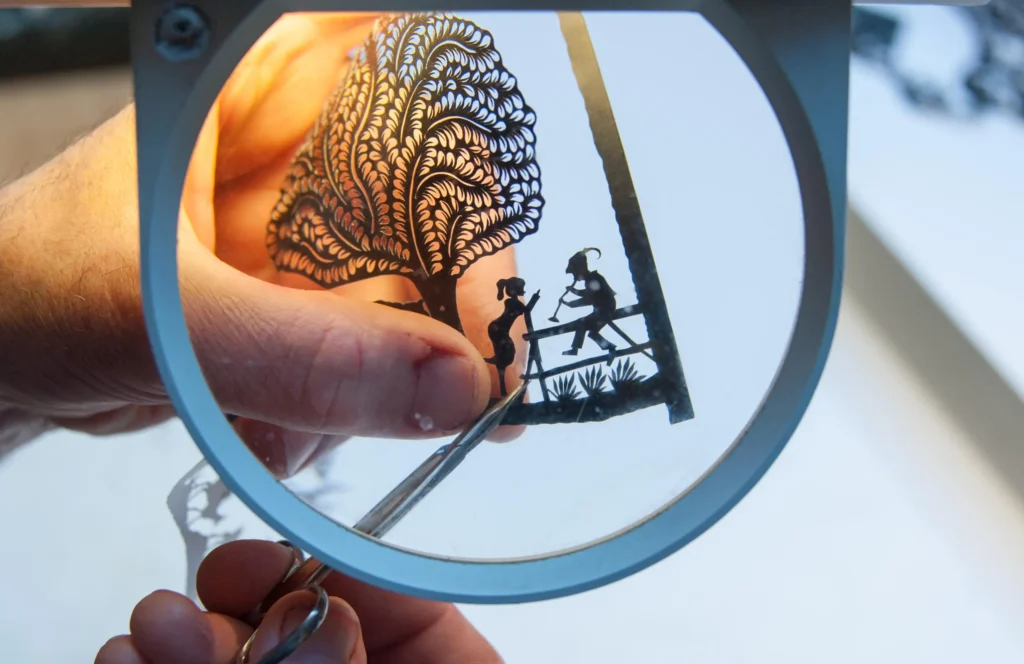
Switzerland’s cultural tapestry includes delicate crafts that blend precision and creativity, and Scherenschnitte the art of paper cutting stands out as a cherished folk tradition. Originating in the rural regions, this intricate scissor work creates symmetrical silhouettes depicting alpine life, nature, and folklore, often framed as keepsakes or decorations. For art lovers and cultural explorers, Scherenschnitte offers a window into Swiss ingenuity and patience.
Origins of Scherenschnitte
Emerging in the 16th century among Swiss farmers in areas like the Bernese Oberland and Appenzell, Scherenschnitte began as a pastime during long winters. Influenced by Asian shadow puppets and European lacework, it evolved into a symbolic art form representing love, fertility, and rural scenes. Early pieces were simple black-and-white cuts, but today they incorporate color and complexity, preserved through museums and artisan guilds.
The Technique Behind the Cuts
Artists fold paper (often black or white) and use small, sharp scissors or knives to snip intricate patterns without drawing lines—relying on symmetry and freehand skill. Designs feature motifs like chalets, cows, flowers, and edelweiss, taking hours or days to complete. Workshops in places like Pays-d’Enhaut teach the craft, emphasizing steady hands and storytelling through negative space.
Cultural Significance and Modern Appeal
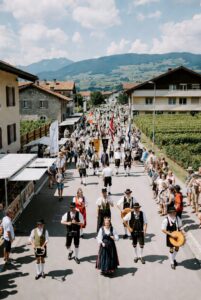
Scherenschnitte symbolizes Swiss heritage, appearing in festivals, souvenirs, and even contemporary design. It’s UNESCO-recognized for its role in preserving folk art, with pieces sold at markets or displayed in homes. Visitors to Switzerland can explore exhibitions in Bern or join classes to create their own, blending tradition with personal expression.
This paper-cutting tradition highlights Switzerland’s blend of artistry and alpine simplicity, making it a timeless craft for creative souls.