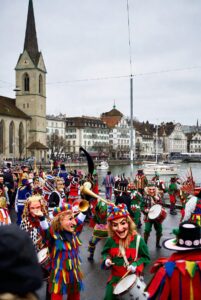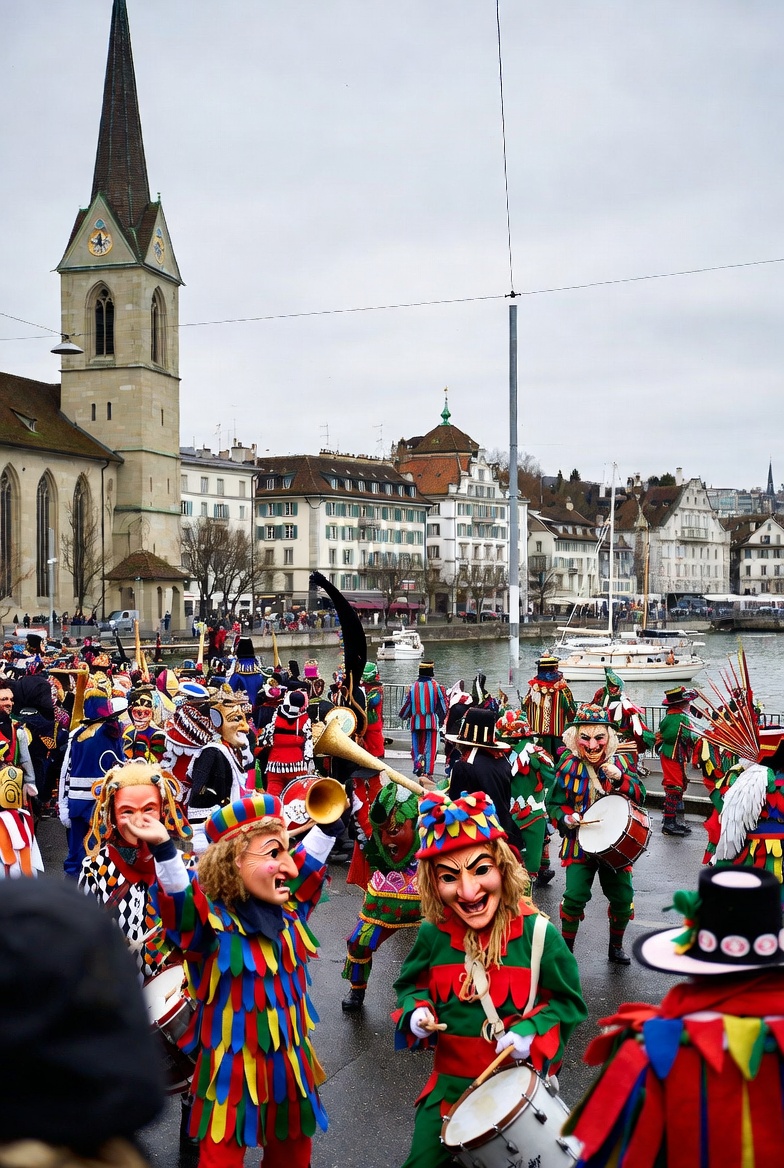
Switzerland’s carnival season reaches new heights in Lucerne with Lucerne Fasnacht, a whirlwind of masks, music, and mayhem that kicks off the pre-Lent festivities. Known for its Guggenmusik bands and elaborate parades, this event transforms the lakeside city into a colorful chaos of satire and celebration, drawing revelers to experience Ticino’s northern counterpart in joyful abandon.
Origins and Evolution of Lucerne Fasnacht
Tracing back to the 15th century, Lucerne Fasnacht began as a religious observance but morphed into a secular explosion of creativity, influenced by neighboring Basel’s traditions yet uniquely focused on brass-heavy Guggenmusik. Held annually in February or March, it emphasizes community participation, with guilds and groups crafting themes that poke fun at politics and society.
The Parades, Music, and Costumed Chaos
The festival starts with the “Fritschi” awakening—a symbolic figure hoisted from the town hall—followed by monster parades where thousands in grotesque masks and vibrant outfits march with rhythmic bands. Confetti cannons, street parties, and spontaneous dances fill the air, while food stalls offer raclette and sausages. It’s inclusive, with family-friendly daytime events and wilder nights.
Why Lucerne Fasnacht Stands Out in Swiss Culture
This carnival fosters artistic expression and social bonding, boosting winter tourism in central Switzerland. If visiting Lucerne during Fasnacht week, immerse yourself in the energy—it’s a perfect blend of tradition and modern fun. Lucerne Fasnacht captures the playful, rhythmic heart of Swiss festivities.