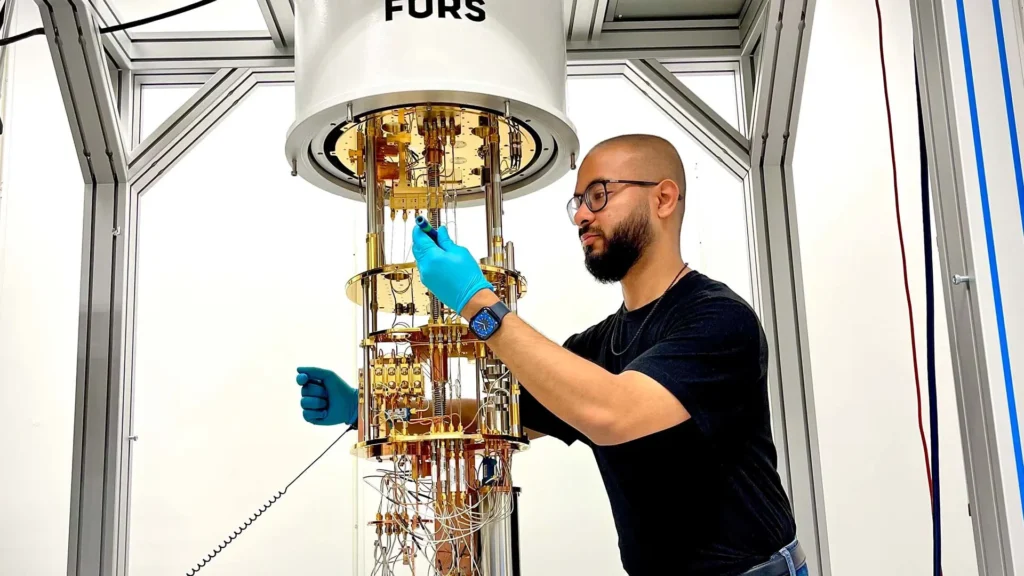
Quantum computing is emerging as one of the most futuristic innovations capturing global attention. Unlike conventional computers that use binary bits of 0 and 1, quantum computers utilize qubits, which can exist in multiple states simultaneously (superposition) and connect with each other through entanglement. This combination allows quantum computers to process data at speeds far beyond the capabilities of today’s digital devices.
This technology is no longer just a theoretical physics concept. Global companies like IBM, Google, Microsoft, as well as tech startups such as Rigetti and IonQ, have developed increasingly stable quantum computer prototypes. Although not yet used on a mass scale, these advancements mark a significant step toward a new computation era.
What Makes Quantum Computing So Different?
Traditional computers process information linearly. When faced with complex problems, the process can take days, months, or even years. This is where quantum computing demonstrates its superiority.
With qubits capable of storing combined information at the same time, quantum computers can:
- Process millions of possible solutions in a single operation
- Solve complex calculations in mere seconds
- Analyze massive data and detect hidden patterns with high efficiency
This level of performance opens extraordinary potential across fields that rely on simulation and high-level optimization.
Benefits of Quantum Computing Across Industries
1. Pharmaceuticals and Drug Development
Quantum computing can analyze molecular structures with unprecedented precision. The drug research process, which normally takes 10–15 years, can be shortened drastically.
This technology enables the simulation of:
- Chemical interactions at the atomic level
- Molecular stability
- Drug effectiveness before clinical trials
It could speed up the discovery of treatments for chronic or rare diseases.
2. Next-Generation Cybersecurity
Quantum computers can break traditional encryption algorithms extremely quickly. On the other hand, they can also create new security systems that are nearly impossible to breach.
Quantum cryptography offers:
- Ultra-secure communication
- Real-time hacking detection
- Encryption systems based on the laws of physics
This may become the future backbone of global digital security.
3. Finance and Market Prediction
In the financial industry, the ability of quantum computers to analyze complex patterns makes them ideal for:
- Risk assessment
- Portfolio optimization
- Market movement prediction
- Advanced fraud detection
Banks and fintech companies are exploring how this technology can give them a major competitive edge.
4. Artificial Intelligence (AI) and Machine Learning
The future of AI will be greatly influenced by quantum computing. With its power to process massive datasets simultaneously, quantum computers can:
- Train AI models much faster
- Handle complicated nonlinear calculations
- Improve predictive accuracy
This will result in AI systems that are smarter, quicker, and more efficient.
5. Energy and Environmental Solutions
Quantum simulations can help create:
- Next-generation batteries
- More efficient renewable energy technologies
- Advanced materials for future solar panels
- Energy optimization solutions for smart cities
This offers great hope for accelerating eco-friendly technological development.
Challenges of Quantum Computing
Despite its promise, this technology still faces major challenges:
- Qubit instability, which is highly sensitive to interference
- Extremely high research and development costs
- Special infrastructure requiring near absolute-zero temperatures
- Global security risks if misused
Even so, the technology continues to advance rapidly and is expected to become mainstream within the next 10–15 years.
Quantum computing is more than just a technological breakthrough it is a revolution that may reshape the world, from healthcare and finance to security and energy. With its enormous computational power, quantum technology opens the door to solutions once thought impossible.