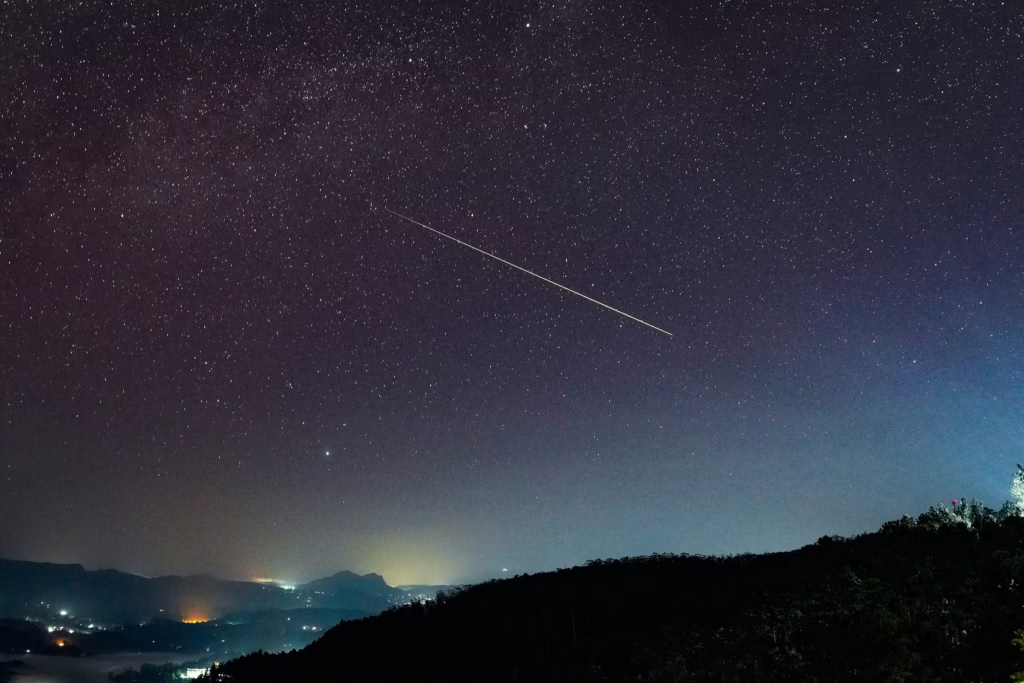
Meteor showers, nature’s fireworks, occur when Earth passes through comet debris, creating streaks of light. These events, visible without equipment, draw millions annually, offering a gateway to astronomy and celestial appreciation.
Understanding Meteor Showers: Causes and Mechanics
Meteors are space debris mostly comet particles burning up in Earth’s atmosphere at speeds up to 72 km/s. Showers happen when Earth intersects a comet’s orbit, like Halley’s for the Orionids. The radiant point, where streaks appear to originate, names the shower, e.g., Perseids from Perseus.
Intensity is measured by Zenithal Hourly Rate (ZHR); Perseids peak at 100 meteors/hour. Factors like moon phase and light pollution affect visibility. Sporadic meteors occur randomly, but showers are predictable.
Major Annual Meteor Showers When and Where to Watch
The Quadrantids in January peak with 120 meteors/hour from Comet 2003 EH1, best in the Northern Hemisphere. April’s Lyrids, from Comet Thatcher, offer 20/hour with fireballs.
May’s Eta Aquariids, Halley’s remnants, favor the Southern Hemisphere. July’s Delta Aquariids and August’s Perseids—from Comet Swift-Tuttle—are summer highlights, with Perseids known for bright trails.
October’s Orionids, also from Halley, reach 20/hour. November’s Leonids, from Comet Tempel-Tuttle, can storm with thousands/hour, as in 2001. December’s Geminids, from asteroid 3200 Phaethon, deliver 120 colorful meteors/hour.
Historical Meteor Storms and Cultural Impact
The 1833 Leonid storm, with 100,000 meteors/hour, inspired scientific study and cultural lore. Native American tribes viewed them as spirits; ancient Chinese recorded them for omens.
Modern events like the 1998 Leonids spurred global watching parties. Meteorites surviving meteors provide samples, like the Chelyabinsk event in 2013.
Best Practices for Viewing Meteor Showers
Find dark sites using light pollution maps. Lie down with a wide sky view, no optics needed. Peak times are post-midnight when Earth’s rotation faces the stream.
Apps like SkySafari predict showers. Dress warmly, bring chairs, and avoid screens to preserve night vision. Group viewings enhance the experience.
Scientific Insights from Meteor Showers
Studying meteors reveals comet compositions and solar system history. Radar and cameras track them, aiding hazard assessment. Fireballs indicate larger objects, potentially yielding meteorites for analysis.
Amateur contributions via the International Meteor Organization help refine predictions. Showers underscore Earth’s place in a dynamic cosmos.