The Andromeda Galaxy, also known as M31, is the closest spiral galaxy to the Milky Way and a stunning sight for astronomers. At 2.5 million light-years away, it’s visible to the naked eye under dark skies. But beneath its beauty lies a dramatic future: a collision with our Milky Way in about 4.5 billion years. This article delves into Andromeda’s characteristics, discovery, similarities to the Milky Way, the collision threat, and its implications, providing a thorough overview of this galactic giant.
Discovering and Observing Andromeda
First recorded by Persian astronomer Al-Sufi in 964 AD, Andromeda was long thought a nebula until Edwin Hubble confirmed it as a separate galaxy in 1923, expanding our universe view. It’s the largest in the Local Group, spanning 220,000 light-years twice the Milky Way’s width.
Observing tips: Look northeast in autumn; it appears as a fuzzy patch. Telescopes reveal its core and arms. Hubble images show billions of stars, dust lanes, and satellite galaxies like M32 and M110.
Structure and Composition of Andromeda
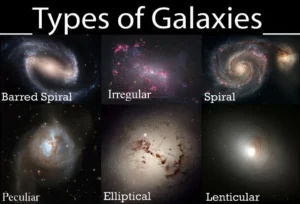
A barred spiral like the Milky Way, Andromeda has a central bulge, bar, and arms rich in star-forming regions. It contains about 1 trillion stars, more than our galaxy’s 250 billion. Its mass is around 1.2 trillion solar masses, dominated by dark matter.
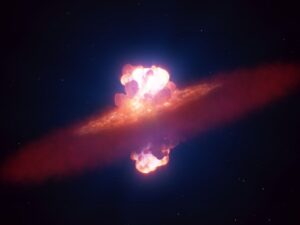
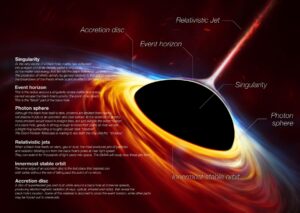
The core likely harbors a supermassive black hole of 100 million solar masses. Dust rings and molecular clouds fuel star birth at a rate twice ours. Recent studies reveal a double nucleus, possibly from a merger.
Similarities and Differences with the Milky Way
Both are spirals in the Local Group, with similar ages (around 10-13 billion years). Andromeda is larger and more massive, with a brighter halo. Our galaxy has more gas for star formation, while Andromeda shows signs of past interactions, like stellar streams.
Comparisons via simulations help model galaxy evolution. Both rotate at 225 km/s, but Andromeda approaches us at 110 km/s, setting the stage for merger.
The Collision Threat: Timeline and Process
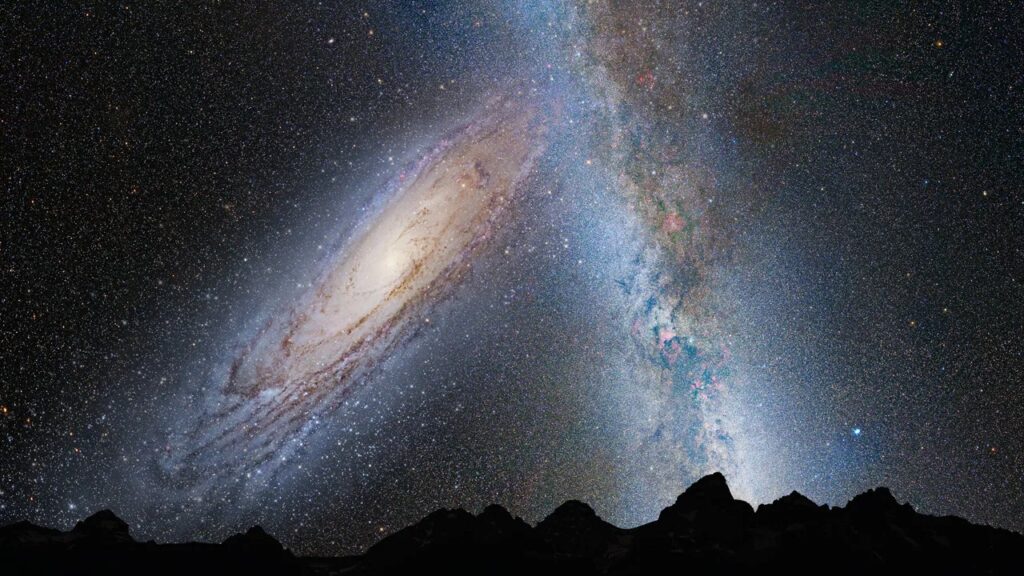
The “threat” is a head-on collision in 4.5 billion years. Not a destructive crash galaxies are mostly empty space, so stars rarely collide. Instead, gravity will distort shapes, triggering starbursts.
Simulations show Andromeda first grazing the Milky Way, then merging over 2 billion years into an elliptical galaxy, Milkomeda. The Sun’s system might be flung outward but survive. Earth, if habitable, could see spectacular skies with intertwined arms.
Implications for Life and the Universe
For future life, the merger boosts star formation but increases radiation risks. It won’t affect current humanity, but studying it reveals galaxy interactions’ role in evolution mergers build larger structures.
Broader context: Such events are common; the universe is full of merging galaxies like Antennae. Andromeda’s study aids understanding dark matter and cosmology.
Ongoing Research and Future Missions
Hubble and Gaia data refine collision predictions. JWST will image Andromeda’s hidden regions. Ground telescopes like Vera C. Rubin Observatory map its halo.
In conclusion, Andromeda is both a beautiful neighbor and a harbinger of change. Its impending collision reminds us of the dynamic universe, encouraging continued exploration.