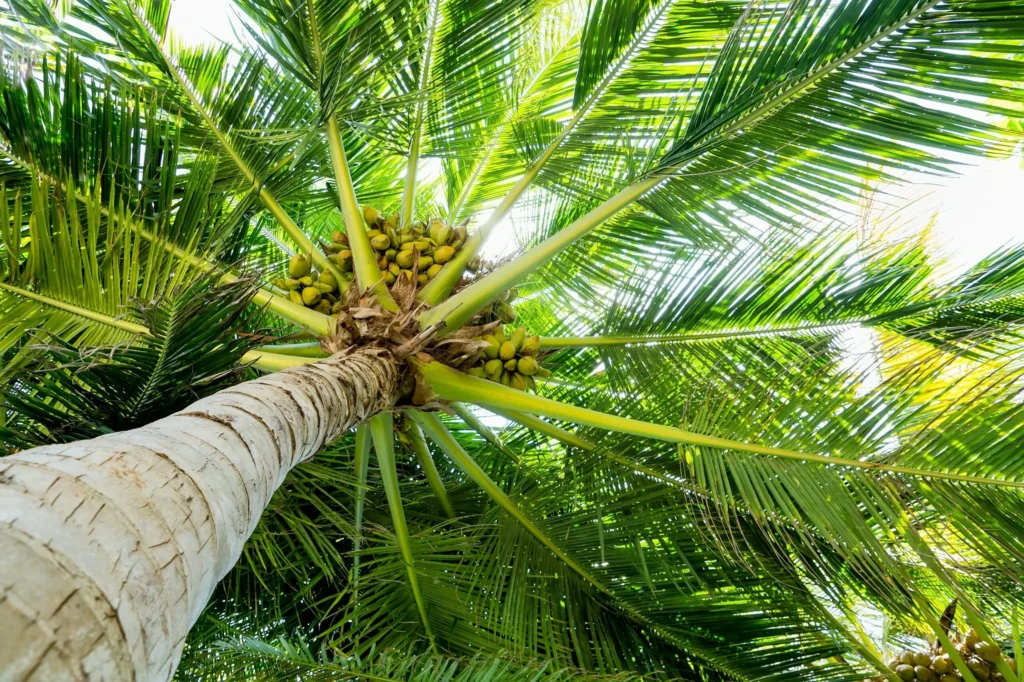
The coconut tree, scientifically known as Cocos nucifera, is often called the “Tree of Life” for good reason. Native to tropical regions, this versatile palm provides food, shelter, medicine, and materials almost every part of the tree is useful. From beaches in Southeast Asia to plantations in the Pacific, the coconut palm supports millions of livelihoods and ecosystems.
In this comprehensive guide, we’ll explore the benefits of the coconut tree, its uses, health advantages, environmental impact, and why it’s a sustainable superstar in today’s world.
Why Is the Coconut Tree Called the Tree of Life?
No other tree matches the coconut palm’s utility. It thrives in sandy, coastal soils and can live up to 100 years, producing fruit year-round. One mature tree can yield 50-200 coconuts annually!
Every Part Has a Purpose:
- Fruit: Fresh coconut water, milk, flesh, and oil.
- Husk and Shell: Coir for ropes, mats, and brushes; shells for charcoal and crafts.
- Leaves: Thatching for roofs, weaving baskets, and brooms.
- Trunk: Timber for construction and furniture.
- Roots: Traditional medicine and dyes.
Health and Nutritional Benefits of Coconut Products
Coconut products have surged in popularity due to their nutrient-rich profile:
- Coconut Water: Natural electrolyte drink, low in calories, rich in potassium perfect for hydration.
- Coconut Milk and Flesh: High in healthy medium-chain triglycerides (MCTs) for energy and metabolism boost.
- Coconut Oil: Used in cooking, skincare, and hair care; lauric acid offers antimicrobial properties.
- Other Derivatives: Coconut sugar (low glycemic), flour (gluten-free), and vinegar.
Studies highlight benefits like improved heart health, weight management, and antioxidant effects.
Economic and Cultural Importance
The coconut industry employs over 10 million people worldwide, especially in countries like Indonesia, Philippines, and India the top producers.
From traditional uses in Polynesian cultures to modern exports (oil, desiccated coconut), it’s a cornerstone of tropical economies. Sustainable farming ensures long-term viability.
Environmental Benefits of Coconut Trees
Coconut palms play a vital role in sustainability:
- Coastal Protection: Roots prevent erosion and act as natural barriers against storms.
- Carbon Sequestration: Absorb CO2 while providing shade.
- Biodiversity: Habitat for birds, insects, and marine life.
- Soil Improvement: Drought-tolerant and salt-resistant, ideal for challenging environments.
Planting coconut trees supports reforestation and climate resilience.
Growing Your Own Coconut Tree
If you’re in a tropical climate (USDA zones 10-11), planting a coconut is rewarding. Start with a fresh coconut, sprout it, and watch it grow into a productive palm in 6-10 years.
Final Thoughts: Embrace the Versatility of the Coconut Tree
The coconut tree isn’t just a plant it’s a lifeline for health, economy, and the environment. Whether enjoying fresh coconut water on a beach or using virgin coconut oil in your routine, this “Tree of Life” enriches our world.