Laos, the landlocked “heart” of Southeast Asia, is known for its serene landscapes, Buddhist heritage, and the mighty Mekong River. The history of Laos spans prehistoric settlements, powerful kingdoms, colonial rule, devastating wars, and a socialist path since 1975. This timeline traces its journey from ancient origins to the latest economic and political developments in 2026.
Prehistoric Roots and Early Settlements
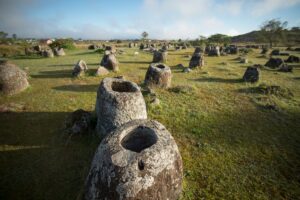
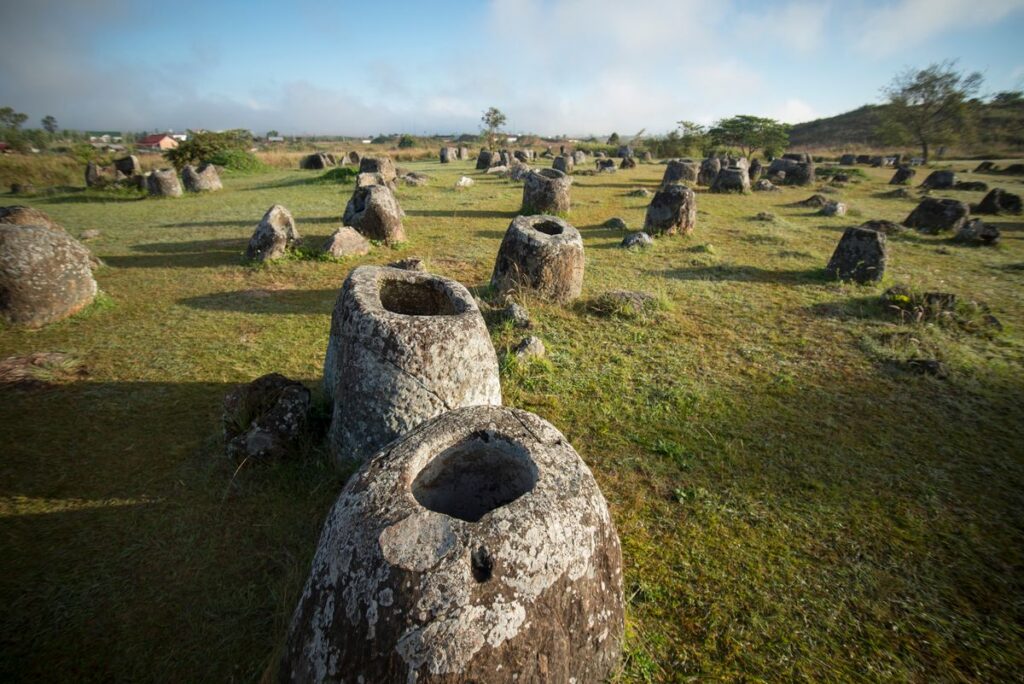
Human activity in Laos dates back to the Paleolithic era, with evidence of hunter-gatherers along the Mekong. By the Bronze Age (around 1000 BCE), communities produced sophisticated bronze tools and engaged in rice farming. The mysterious Plain of Jars in Xieng Khouang province thousands of massive stone urns dating from 500 BCE to 500 CE remains one of the world’s great archaeological enigmas, possibly used for burial or ritual purposes.
Tai-speaking peoples migrated southward from southern China between the 8th and 13th centuries CE, blending with Mon-Khmer groups and introducing wet-rice agriculture and animist-Buddhist beliefs.
The Golden Age: Lan Xang – Kingdom of a Million Elephants (1353–1707)
Laos’s unified history begins with Fa Ngum, who founded Lan Xang (“Land of a Million Elephants”) in 1353 with Khmer support from Angkor. He unified scattered principalities, adopted Theravada Buddhism, and made Luang Prabang the capital. His son Samsenthai (r. 1372–1417) brought prosperity and stability.
The kingdom reached its peak under Setthathirath (r. 1548–1571), who moved the capital to Vientiane and built iconic temples. Wars with Burma (Myanmar) and Ayutthaya (Thailand) weakened Lan Xang, but Souligna Vongsa (r. 1637–1694) ushered in a “golden age” of peace, art, and diplomacy. After his death, succession disputes led to division into three rival kingdoms: Luang Prabang, Vientiane, and Champasak by 1707.
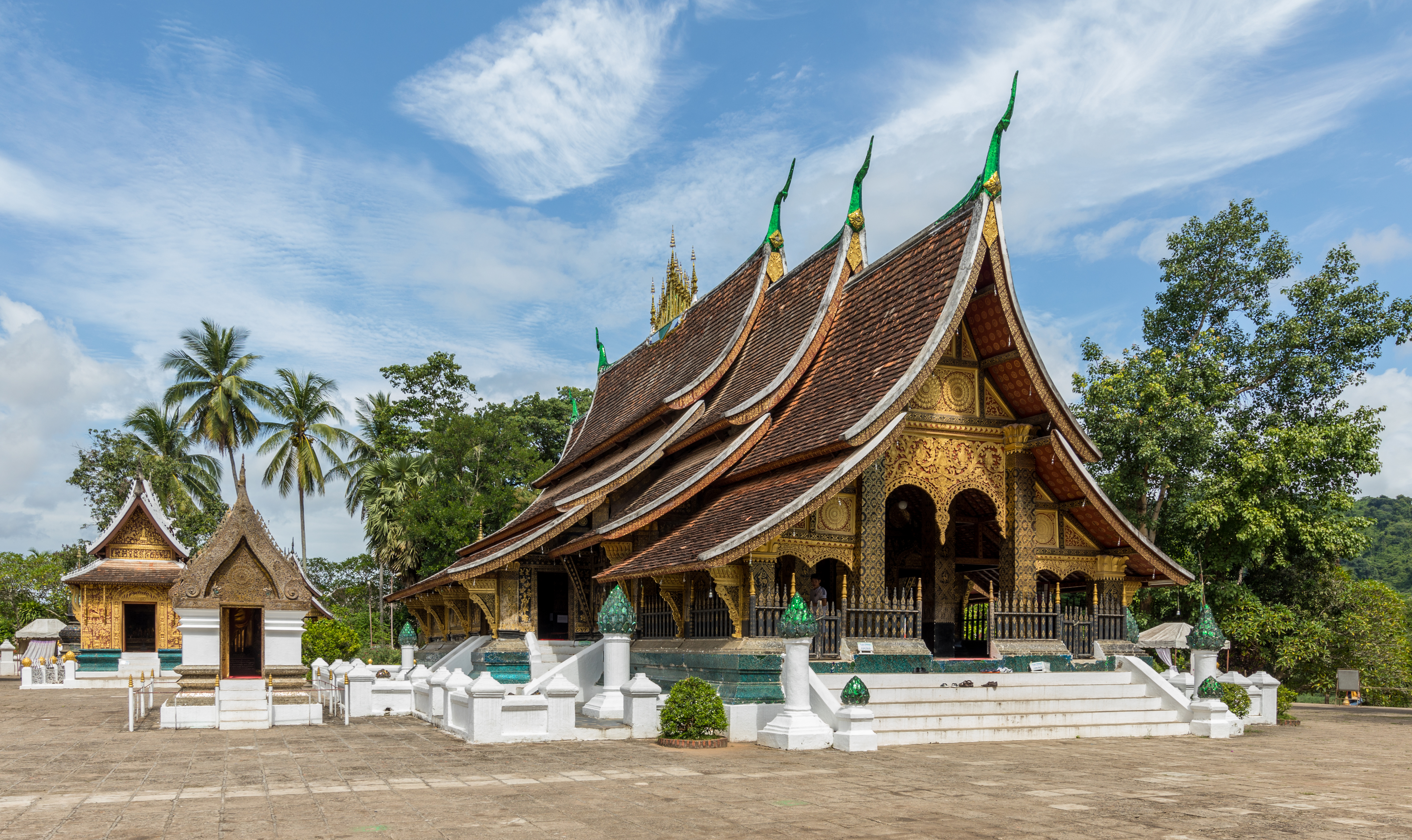
Wat Xieng Thong – Wikipedia
Siamese and French Colonial Rule (1707–1953)
The three kingdoms fell under Siamese (Thai) suzerainty in the late 18th century. In 1779, Siam captured Vientiane and destroyed much of its heritage. French explorers arrived in the 1860s, and by 1893, France incorporated Laos as a protectorate within French Indochina to counter Siamese and British influence. Colonial rule focused on resource extraction (tin, teak) but left infrastructure limited.
During World War II, Japan occupied Laos briefly (1945). Post-war, the Lao Issara independence movement briefly declared sovereignty, but France reasserted control until the 1954 Geneva Conference granted full independence as the Kingdom of Laos.

Civil War, Vietnam War Involvement, and the Pathet Lao Victory (1953–1975)
Independence brought instability. The neutralist government under Souvanna Phouma faced conflict between royalists, neutralists, and the communist Pathet Lao (backed by North Vietnam and the Soviet Union). The Vietnam War spilled over, with the U.S. conducting massive bombing campaigns (1964–1973) — Laos became the most heavily bombed country per capita in history.
The 1973 Paris Accords led to a coalition, but in 1975, as Saigon fell, the Pathet Lao seized power peacefully. King Savang Vatthana abdicated; the Lao People’s Democratic Republic (LPDR) was proclaimed on December 2, 1975.
Socialist Era and Economic Reforms (1975–2026)
The new regime nationalized industry, collectivized agriculture, and suppressed dissent, prompting an exodus of over 300,000 refugees. Economic hardship and isolation followed until the 1986 New Economic Mechanism (similar to Vietnam’s Doi Moi) introduced market reforms.
Laos joined ASEAN in 1997 and the WTO in 2013. The Laos-China Railway (opened 2021) boosted connectivity. In 2025–2026, the 12th Party Congress consolidated leadership, with GDP growth at ~4.8% in 2025, inflation down to 5.6%, and reserves rising to US$3.5 billion. The 2026–2030 plan targets 6% annual growth, focusing on hydropower exports, tourism, agriculture, and reducing debt while aiming for LDC graduation by 2026.
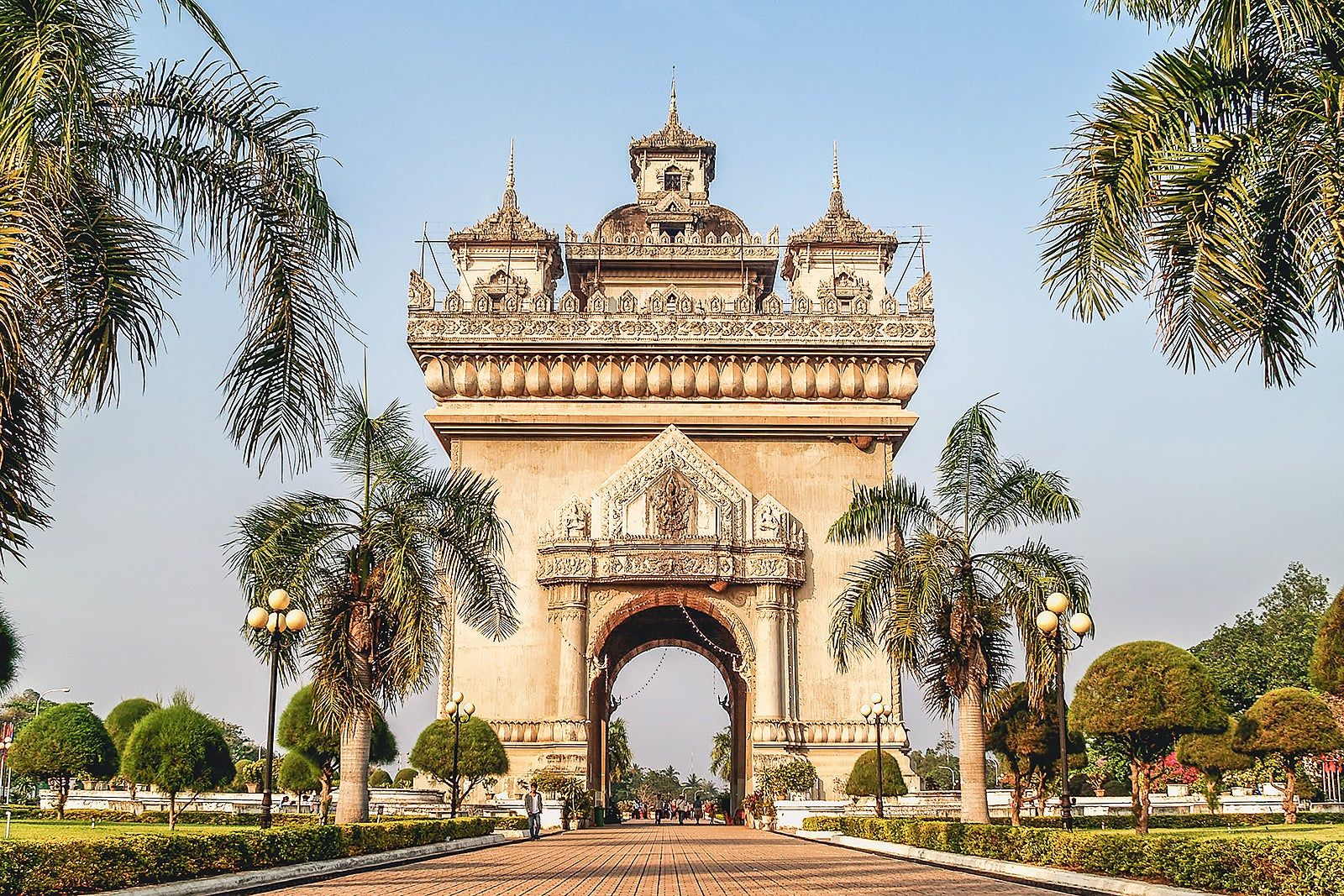
Patuxai Victory Gate – Vientiane Attractions – Go Guides